Preparing an Agrios Seasonal Service and Spare-Parts Plan
Plan seasonal readiness using equipment identities, actual service guidance, critical-component availability, support responsibilities, and documented return-to-use checks.
Start from the intended season
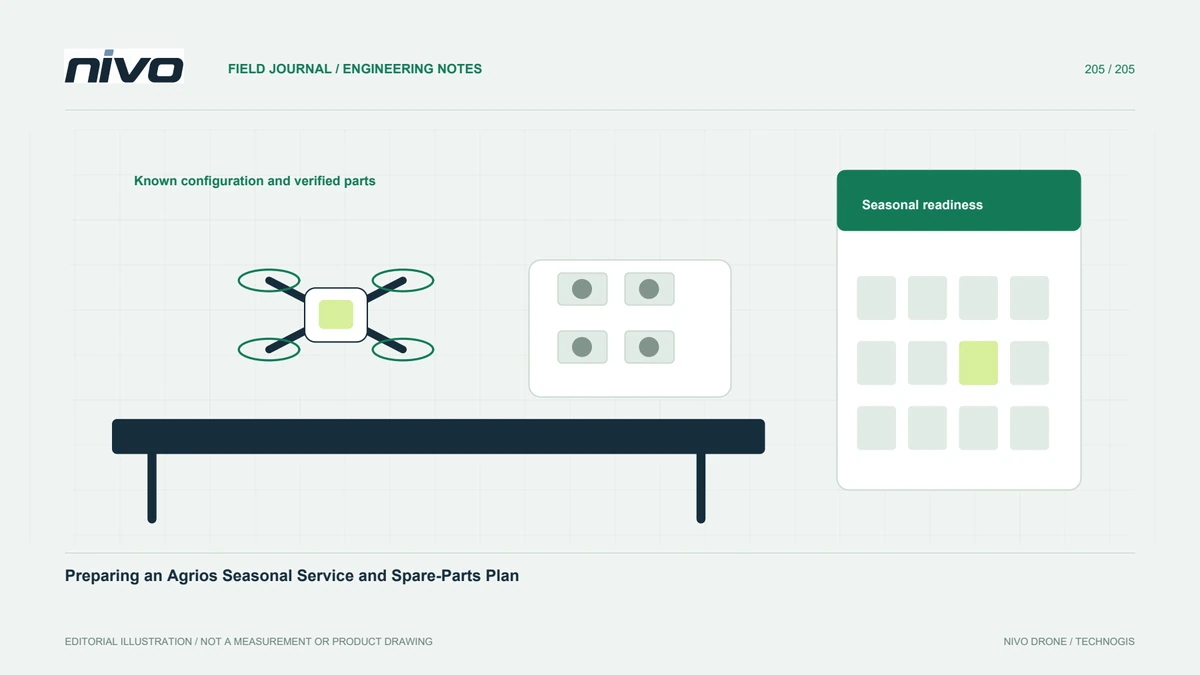
List the expected assignments, operating locations, team arrangements, and periods when equipment availability matters. A seasonal plan differs from the cleaning routine after one task. It must connect service time, support access, and parts availability with the work calendar. Do not estimate readiness from purchase date alone. Use the actual equipment history and current manufacturer guidance, keeping unconfirmed assumptions visible instead of promising that every unit will remain available throughout the season.
Build a configuration-based inventory
Record each aircraft and relevant application, energy, control, and support components by identifiable configuration. Different Agrios capacities should not be assumed to use interchangeable parts. Confirm compatibility and approved replacements through NiVO or the appropriate supplier. Separate installed components, service spares, and items awaiting assessment. A simple inventory should let staff identify which part belongs to which unit and whether its status is known before an urgent field requirement arises.

Prioritize parts by operational consequence
Identify components whose absence could stop the intended workflow, considering actual failure history, technical advice, supply time, and support arrangements. This is a planning assessment, not a prediction that a particular component will fail. Avoid buying every possible accessory without a documented role. A modest, verified stock with clear identities can be more useful than a large mixed box of unconfirmed replacements. Record the reason for each stocked item and who reviews the quantity.
Schedule service through qualified procedures
Use the actual maintenance instructions and competent personnel for inspections, replacements, cleaning, and any specialist work. FAO and extension guidance provide background on equipment care, but they do not replace current device-specific procedures. Do not dismantle beyond competence or invent a universal cleaning mixture. Plan facilities, time, and handling requirements before the busy period. Keep the service task distinct from ordinary readiness checks so neither is silently skipped because the other was marked complete.
Verify changes before return to use
A replaced component or revised setting can affect the operating configuration. Follow the appropriate checks and determine whether calibration or another acceptance test is required. Record what changed, why, who performed it, and the evidence supporting readiness. A unit should not return to the ready list merely because the spare physically fits. Preserve outstanding findings and specialist requirements so the next operator understands the actual status rather than relying on an unexplained completed label.
Review the plan after the season
Compare planned availability with actual interruptions, waiting times, parts use, and unresolved support issues. Keep product and task history where relevant to explaining equipment condition. Update the next plan from evidence rather than one memorable incident. Bring the inventory and service record to NiVO Agrios support discussions. The useful outcome is a repeatable readiness system with clear responsibilities and confirmed parts, without unsupported promises of maintenance-free operation, universal interchangeability, or a fixed service interval invented for every capacity.