Testing Camera Cards and Buffers for Sustained Aerial Capture
Test sustained capture with the actual camera, card, format, and trigger interval, then distinguish storage capacity from reliable image-writing performance.
Separate capacity from sustained capture
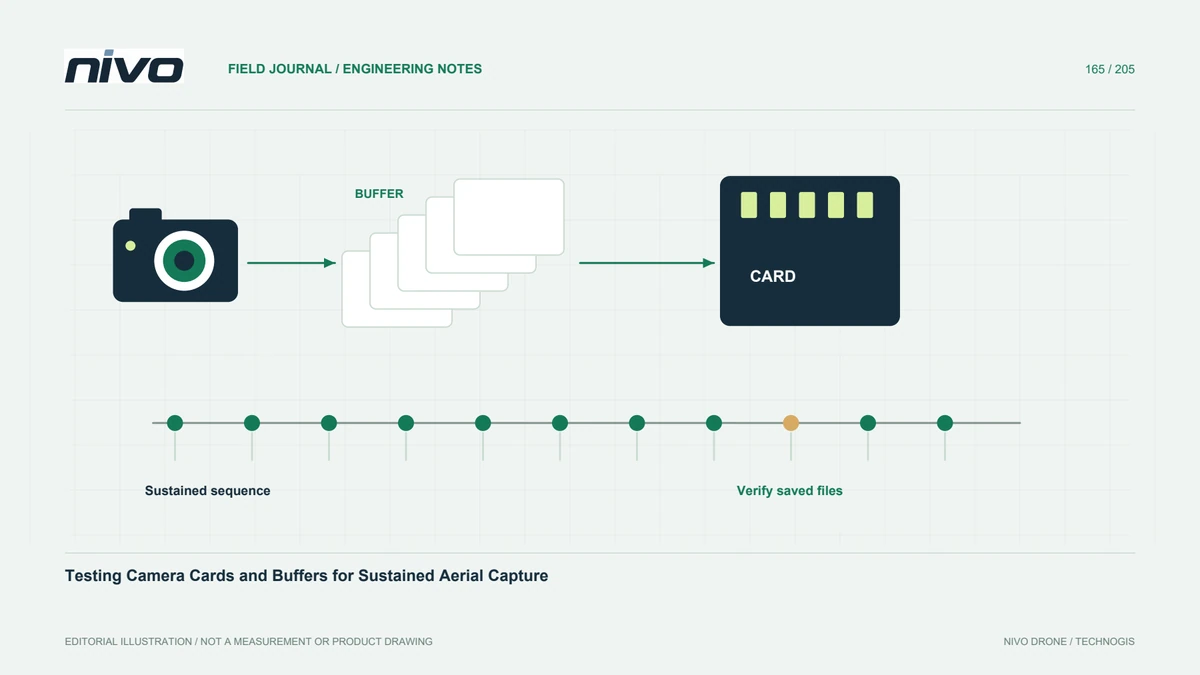
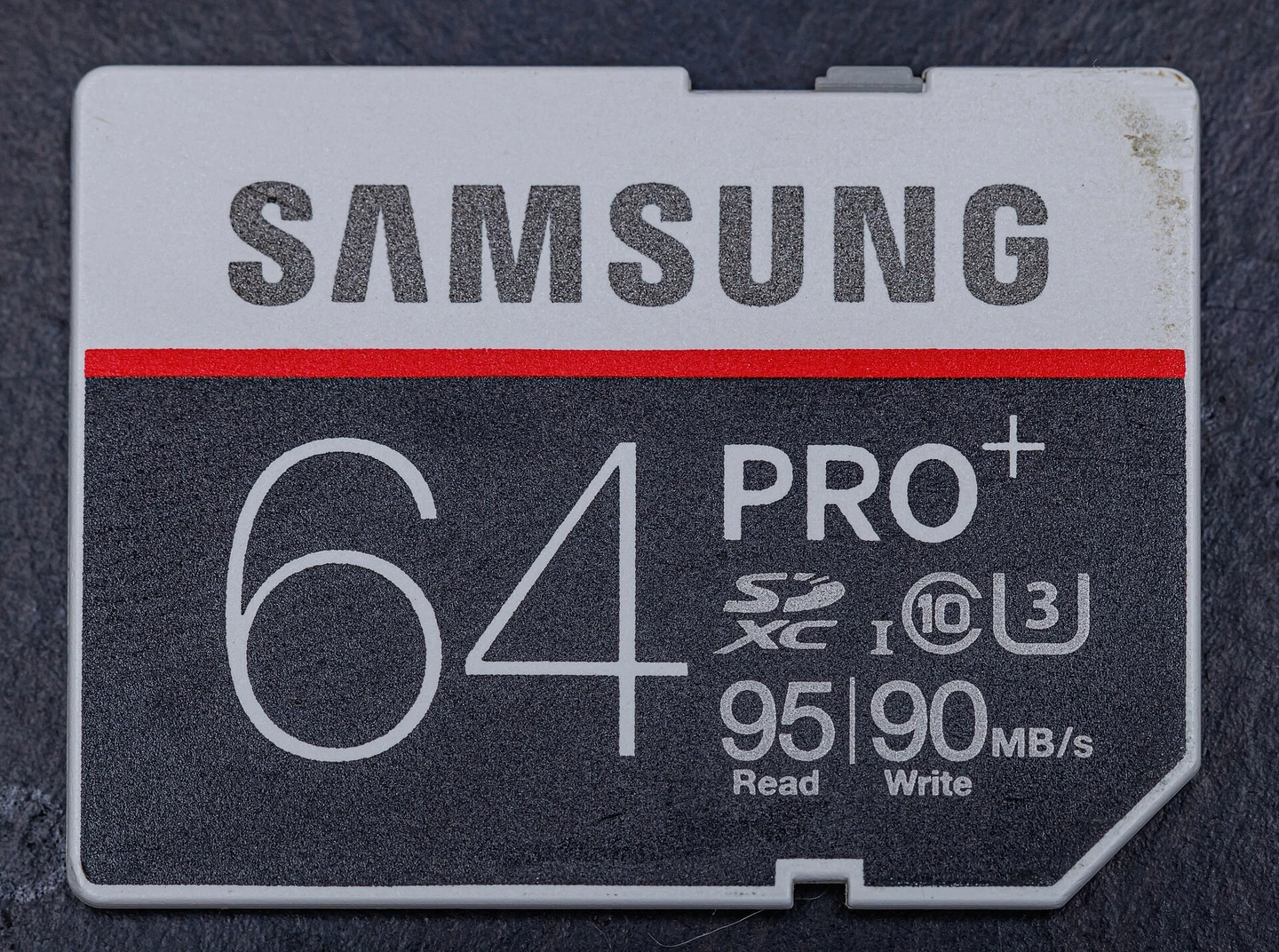
A card with enough free space may still be unsuitable for the intended capture sequence. Storage capacity answers how much can be retained; sustained writing concerns whether the camera keeps recording at the required cadence. Treat these as separate acceptance questions. Use the actual card and camera arrangement proposed for the project, because a card label or a brief demonstration cannot describe the complete installed workflow under repeated triggering.
Define a representative sequence
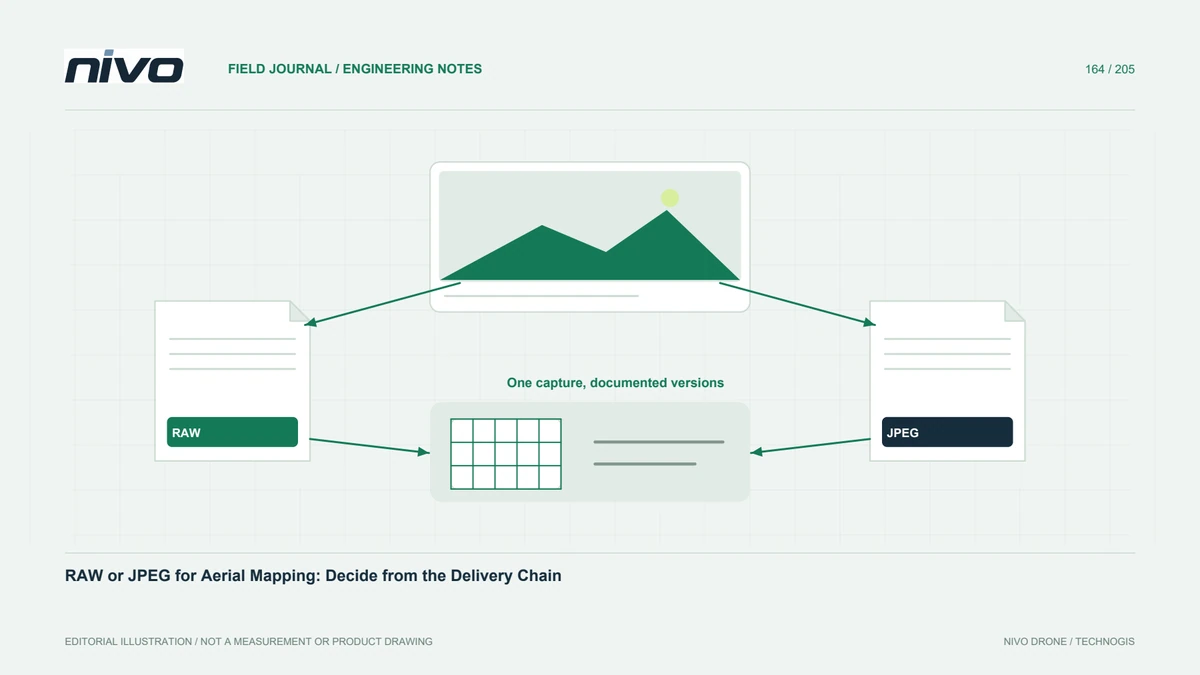
Build a controlled ground test around the planned file format, image dimensions, trigger method, and sequence length. Include the longest expected uninterrupted capture period in the test design, using confirmed mission information. Record environmental circumstances and camera configuration. A short burst followed by a long pause can hide limitations relevant to a continuous mapping line. Do not convert one successful sequence into a universal speed claim for another camera or card.
Observe the camera while it writes
Sony display guidance identifies writing indicators and remaining images awaiting storage on supported models. Consult the correct manual to understand what your camera shows. Record whether commands continue producing saved exposures throughout the trial. A visible shutter response is not the same as a verified file. Note warnings, delays, and any changes in the sequence instead of only recording the total number shown at the end.
Audit files after the test
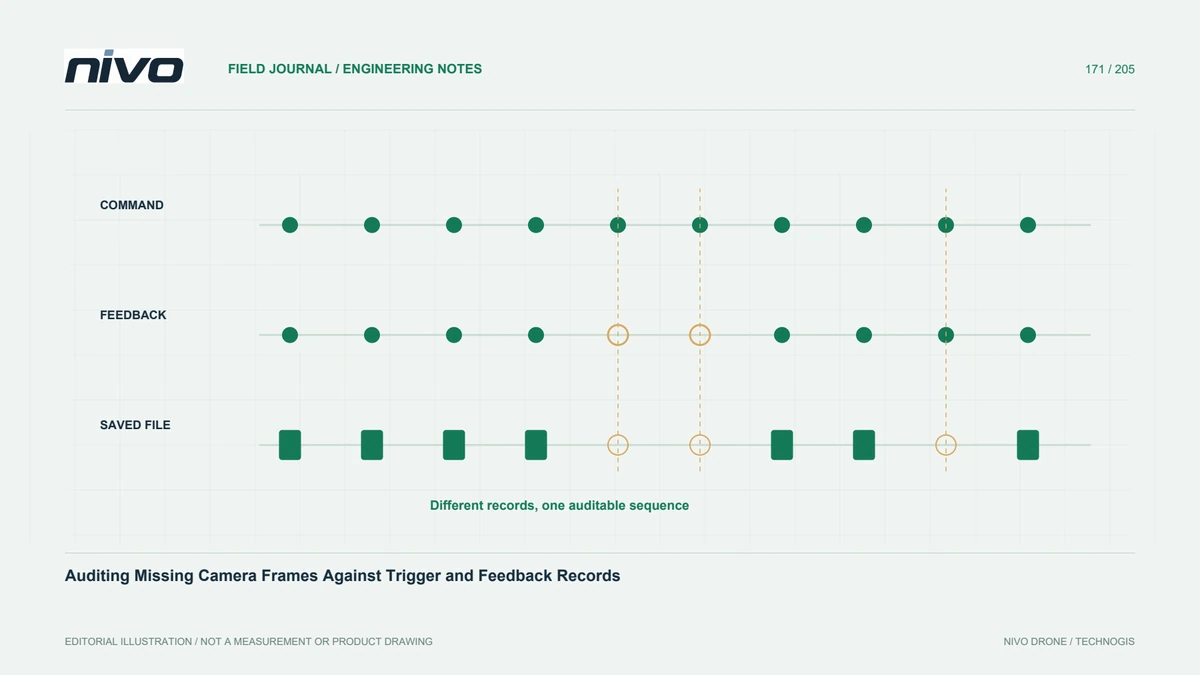
Copy and verify the resulting files, then compare their sequence and timestamps with the intended commands. Investigate missing, unreadable, or duplicated entries. File numbering alone may contain unrelated gaps, so relate it to the test log. Open representative images from the beginning, middle, and end. The acceptance evidence should show that a complete usable sequence was stored, rather than relying on the absence of an error message during operation.
Plan operational card handling
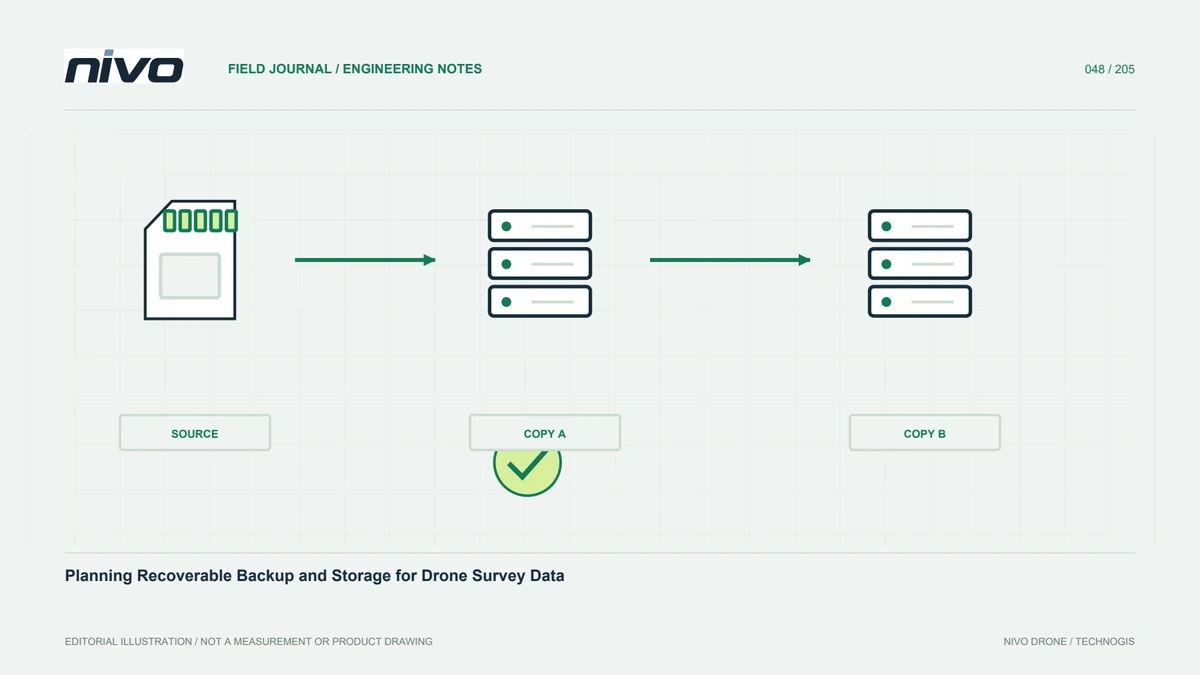
Assign each card an identity and state: prepared, in use, awaiting copy, verified, or cleared for reuse through the agreed process. Keep cards from different missions distinguishable. Confirm backups before any destructive formatting. Include readers, cables, and copying software in the readiness check, since acquisition can succeed while transfer fails. A practical handling plan should remain clear when two crews return at once and the usual data manager is unavailable.
Retest changes that affect the chain
Repeat the relevant trial after changing format, card type, trigger configuration, or other components that can alter recording behavior. Retain the previous result for comparison, with tested circumstances clearly stated. Discuss unresolved limitations with the NiVO technical team instead of borrowing another model's advertised burst figures. The final operating decision should connect a tested capture cadence with the actual source files needed for the planned mapping product and delivery schedule.