RAW or JPEG for Aerial Mapping: Decide from the Delivery Chain
Choose an aerial image format by testing conversion, geometry, metadata, storage, and recipient needs before committing an entire survey to one workflow.
Name the working deliverable
A mapping assignment needs a usable processing input, not simply the largest camera file. Establish whether the processor expects camera JPEGs, developed TIFFs, or another supported format. Ask who will develop RAW files and how that stage fits the delivery deadline. Recording RAW can preserve editing choices, but it adds a decision and processing responsibility that must be assigned before the survey begins, rather than discovered after the memory cards arrive.
Distinguish sensor files from rendered images
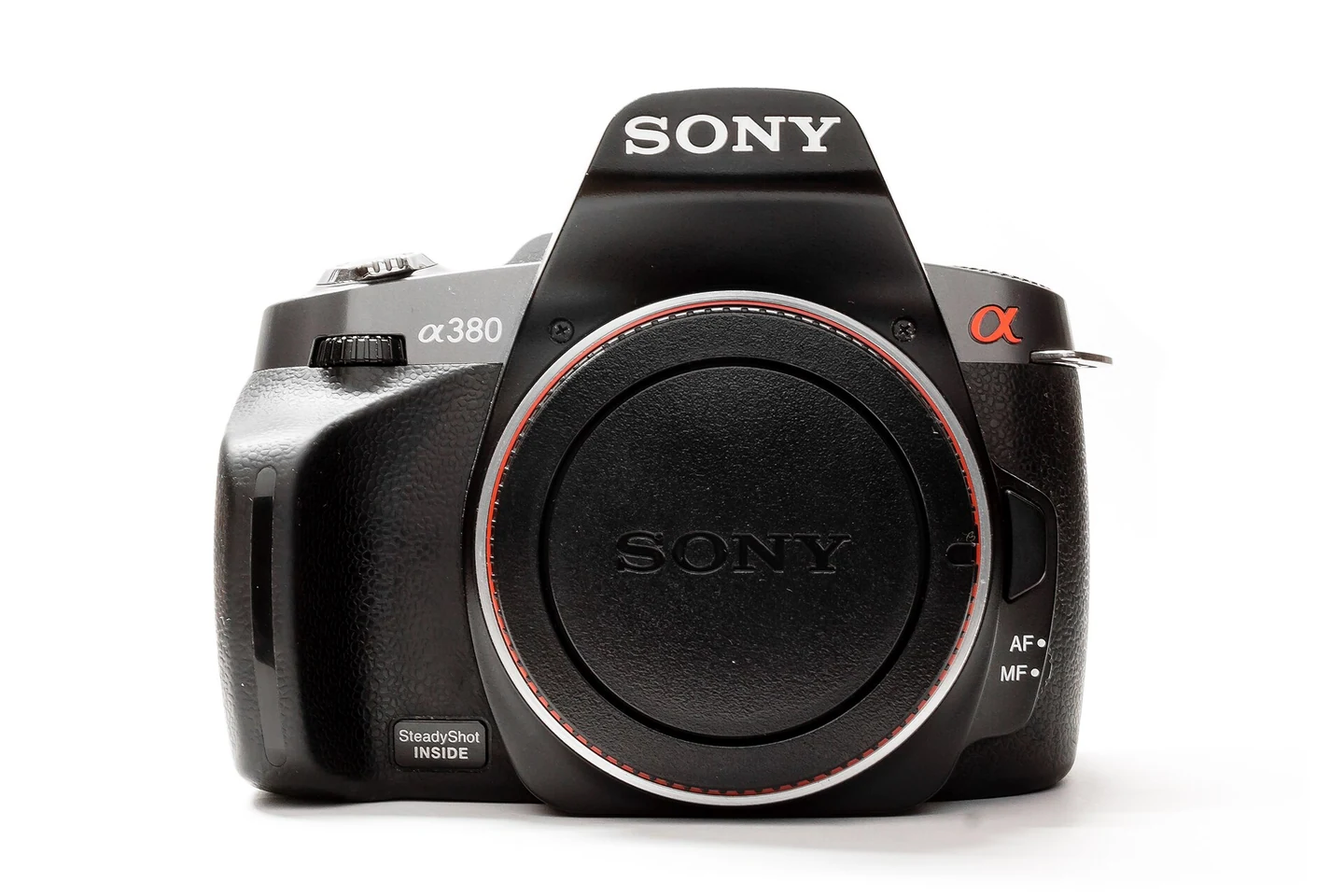
Sony documents several RAW options for the alpha 7R V, with different file sizes and output dimensions. Use the manual for the actual camera rather than assuming all RAW files are equivalent. JPEGs already contain rendering decisions. Neither extension proves that an image is sharp, correctly exposed, or suitable for reconstruction. Keep those quality questions separate from the format choice when comparing representative photographs and planning the capture configuration.
Trial the conversion path
Process a small connected sample through the intended software. If RAW development is required, record the converter, version, settings, output size, and metadata handling. Avoid per-image creative changes that make adjacent photographs inconsistent. Check that cropping or lens correction does not silently change the geometry expected downstream. The trial should end with a usable reconstruction and an understandable record of exactly which images entered that reconstruction.
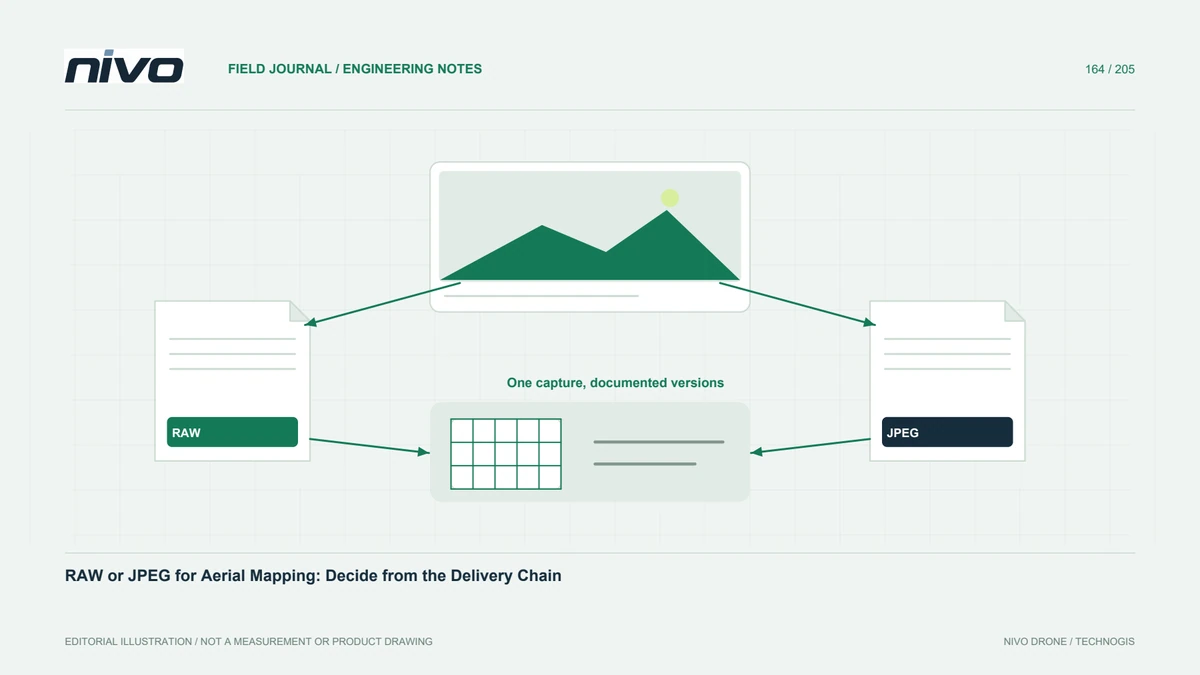
Preserve identity between versions
A developed file should remain traceable to its source exposure. Maintain a simple correspondence between camera name, source filename, and processing filename. Keep originals read-only in the project archive and place derived files separately. Renaming thousands of images without a mapping table can break later checks against flight or trigger records. Test whether another team member can locate one source exposure from a processed image without consulting the person who converted it.
Include storage and turnaround costs
Estimate storage from sample files produced with the selected settings, including copies and derived products. RAW plus JPEG can provide useful alternatives, but it also increases transfer, verification, and archival work. Measure the actual card-to-processing turnaround in the trial. Do not assume a faster aircraft solves a slow conversion queue. Compare format choices through the complete delivery chain while keeping any observed timing specific to the equipment tested.
Approve a repeatable format decision
Document the chosen format, retained originals, converter rules, supported software, and exceptions requiring review. If JPEG is adequate for the agreed task, explain its verified role. If RAW is retained, state why and who maintains the development recipe. Bring this evidence to NiVO payload consultation when selecting a Sony configuration. Acceptance should demonstrate reliable information delivery, with no claim that one file extension automatically improves positioning accuracy or aircraft compatibility.