Crack Photographs: Separate Visible Features from Validated Measurements
Define photographic evidence and measurement requirements separately, then review perspective, image support, references, uncertainty, and the need for qualified examination.
Define the intended statement
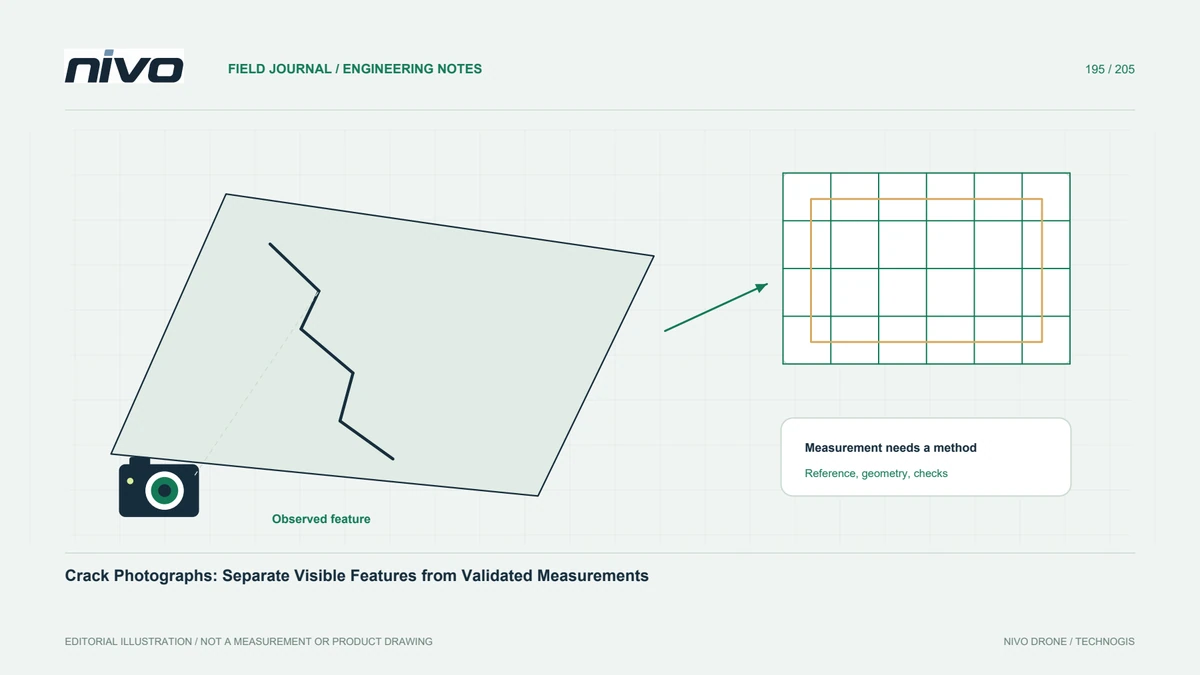
A photograph showing a line on a surface is different from a validated measurement of a crack's width, length, or development. Agree which statement the assignment must support. The examiner may first need an identifiable observation for closer review. Do not add precise dimensions because a zoomed image looks detailed. The report should distinguish directly visible features, provisional identification, and any measurement claim that requires a separately defined method and verification basis.
Check whether the feature is resolved
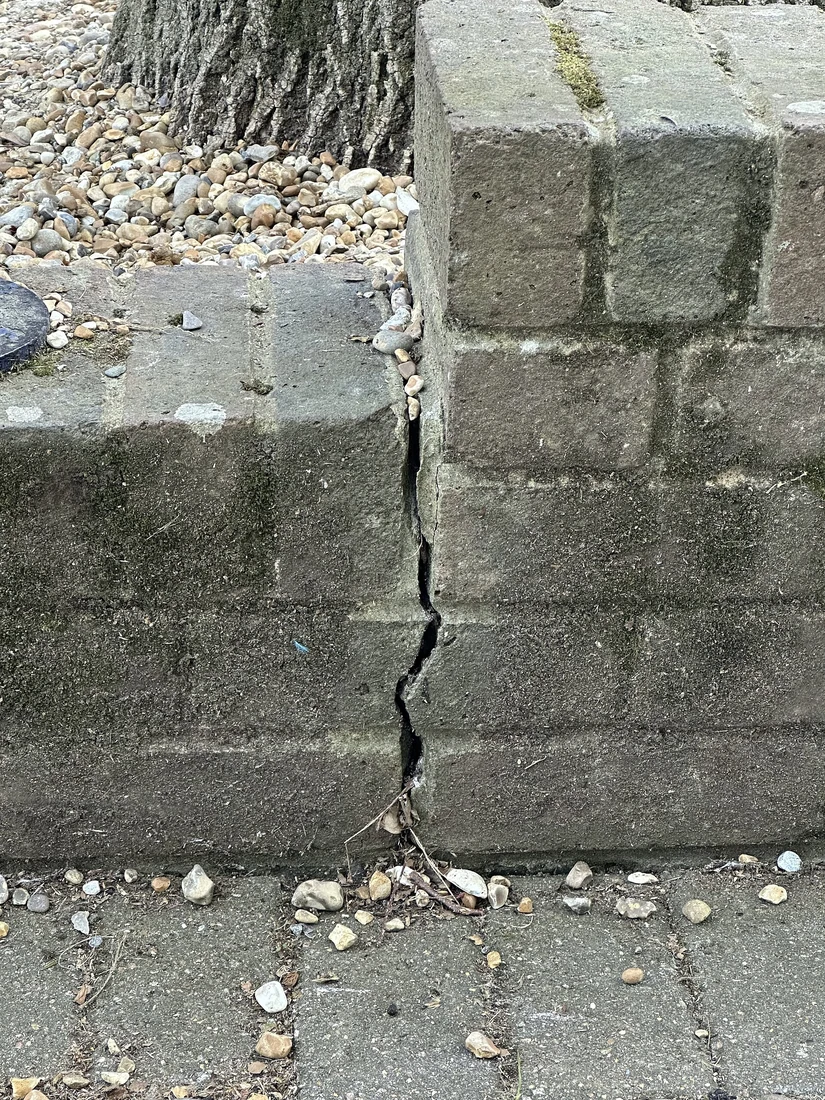
Review original files at a consistent scale and assess focus, movement, contrast, and compression. A dark line may be a joint, stain, edge, shadow, or feature requiring examination. Enlargement does not create additional captured detail. Ask the qualified examiner whether the available evidence supports the intended visual question. Keep ambiguous examples rather than classifying every line confidently. The practical limit depends on the actual image and target, not the camera's nominal megapixel count alone.
Respect perspective and surface geometry
Oblique images do not have a uniform object scale across the entire frame. A feature on a curved or projecting surface adds further complexity. Do not place a ruler graphic on a screenshot and imply it establishes a physical dimension. If a reference or reconstruction method is proposed, explain its relationship to the target plane and the checks required. Historic England's measured-survey guidance provides context for specifying such work, not automatic approval of an improvised measurement technique.
Validate the measurement method separately
Where dimensions are necessary, establish suitable references, image geometry, processing, independent checks, and uncertainty with the responsible specialist. Test representative targets before the full assignment. A source photograph, an orthographic product, and a textured model have different roles and may support different claims. Record which output was actually evaluated. If the method cannot resolve the required dimension reliably, retain the visual observation and request another examination rather than reporting a convenient but unsupported number.
Control comparisons across visits
A feature can appear wider or darker because of viewpoint, lighting, wetness, or rendering differences. Preserve reference views and capture conditions before discussing change. Link observations through stable component and finding identities. Do not infer physical growth from two differently enlarged report illustrations. If a change measurement is intended, its method and uncertainty need an explicit basis. Otherwise describe a visual difference requiring review, retaining both originals and any contradictory contextual evidence.
Deliver an honest evidence level
Provide location, overview, readable detail, source links, acquisition circumstances, and verification status. State whether dimensions were measured by a validated method or remain unestablished. Qualified personnel determine significance and the need for direct assessment. During NiVO payload consultation, use representative features and the actual reporting requirement to design a trial. Acceptance should demonstrate the supported evidence level, without promising that optical zoom alone measures every crack or replaces the structural examiner's judgment.