Planning Crop Thermal Observations Around an Irrigation Question
Design crop thermal trials with relevant timing, canopy separation, weather context, irrigation records, and ground evidence rather than diagnosing water stress from color alone.
Define the water-management question
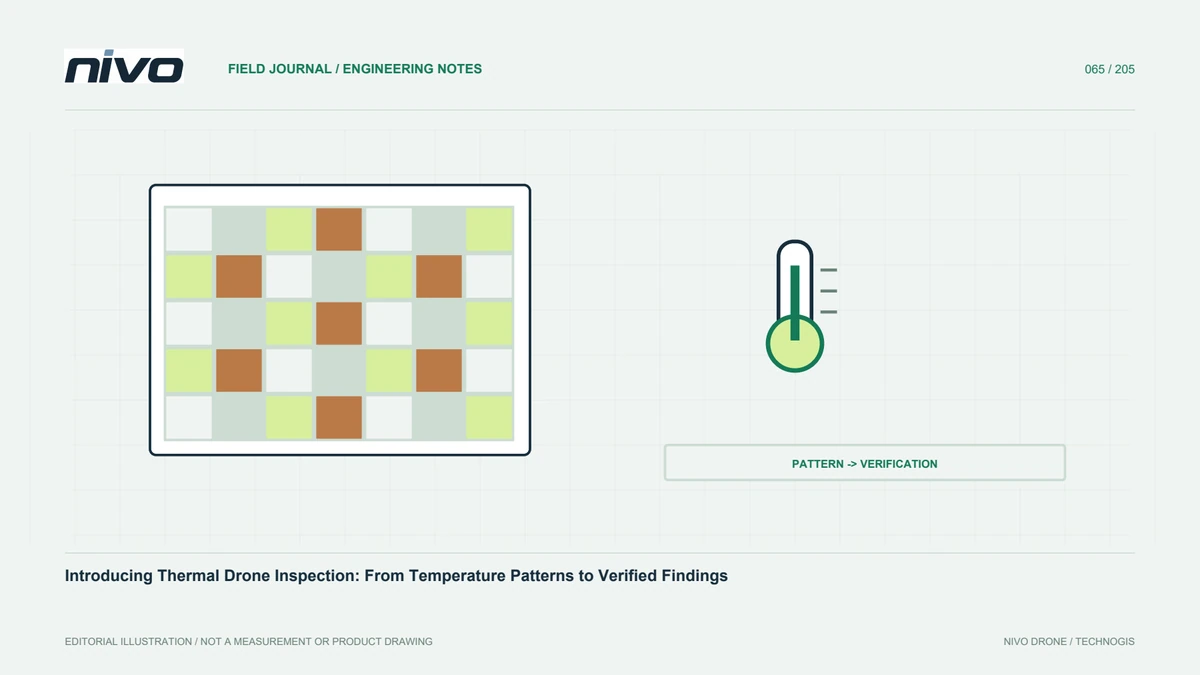
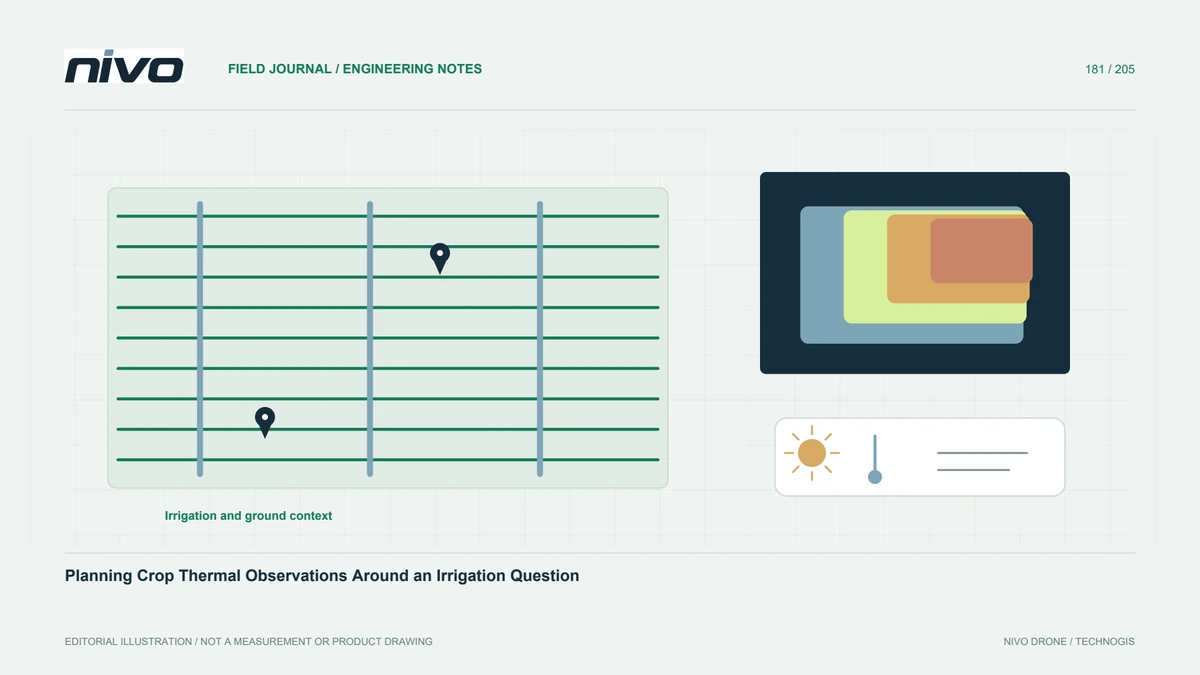
Thermal crop imagery should serve a specific question, such as selecting zones for soil-moisture checks or comparing observations around a known irrigation event. It is not an automatic irrigation prescription. USDA research demonstrates thermal approaches under defined experimental circumstances, while FAO describes the broader weather, crop, and management context of water use. Use those principles to design a local trial, without transferring a research relationship directly into a universal operational threshold.
Check the actual thermal output
Confirm what the selected camera records and whether it supports the required pattern review or quantitative analysis. A color video and a radiometric dataset are not interchangeable. Review representative files in the intended software before collection. Do not assume a listed NiVO thermal payload is already validated for crop-water measurements. Define target readability, metadata requirements, and the analytical support needed to assess the proposed use through a focused technical consultation.
Choose a meaningful observation window
Canopy appearance can respond to radiation, air conditions, wind, water availability, and recent management. Agree timing with the crop adviser and record weather and irrigation events. Matching clock time alone does not guarantee comparable conditions between visits. Avoid prescribing one universal flight hour in a general article. The useful window is one in which the planned observation can test the actual question, with environmental changes documented rather than hidden in the resulting mosaic.
Separate canopy from surrounding surfaces
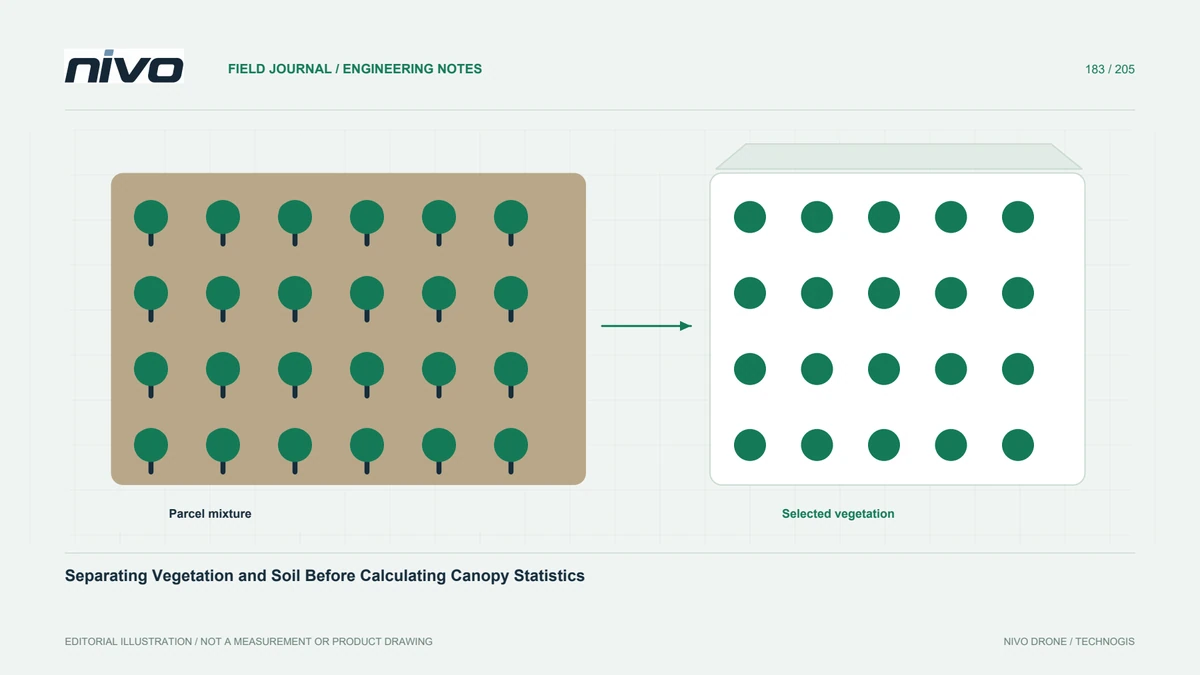
Bare soil, wet ground, shadows, and mixed pixels can affect a zone summary. Inspect RGB context and thermal source images to determine what the analysis actually observes. Define any canopy mask and report the valid area retained. A warm mixed pixel should not automatically be labeled a stressed leaf. Test representative open and closed canopy areas separately, keeping exclusions and uncertain cases available for review instead of allowing the parcel average to conceal their different composition.
Collect independent field evidence
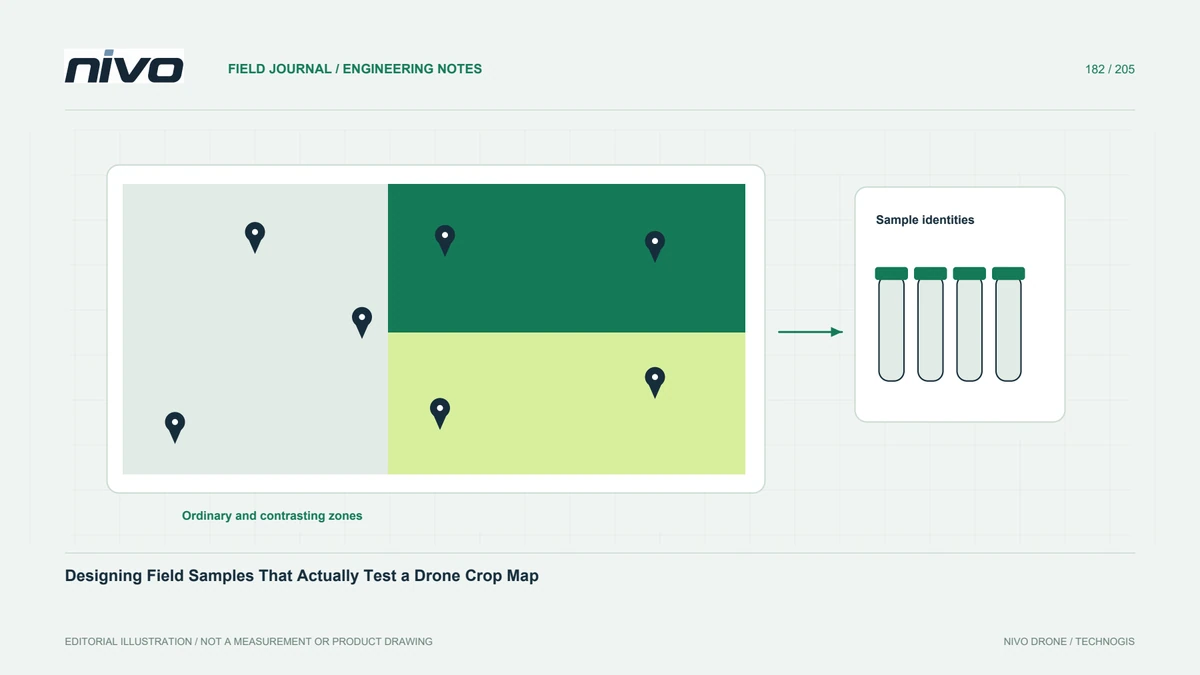
Select field observations across contrasting and ordinary zones. Record crop stage, soil-moisture evidence, irrigation history, and other information required by the responsible adviser. Keep dates and spatial identities aligned with the imagery. Do not sample only the hottest-looking patches. If the thermal pattern and ground evidence disagree, investigate timing, surface composition, and measurement limitations before choosing an explanation. A useful trial retains such disagreements because they reveal where the method may not answer the intended question.
State what the trial established
Deliver the observed patterns, source files, context, field checks, and limits of the analytical method. Keep any irrigation recommendation separate and attributed to the appropriate assessment. A repeat plan should specify what evidence would justify continued use or a revised design. When consulting NiVO, bring crop examples and the desired decision rather than requesting a generic water-stress map. Acceptance should establish a local evidence workflow, with no unsupported claim of measured savings, yield improvement, or universal thermal diagnosis.