Introducing Thermal Drone Inspection: From Temperature Patterns to Verified Findings
Plan thermal drone inspections by understanding surface radiation, observation conditions, target readability, RGB context, data formats, and technical verification of findings.
Define an inspection question the system can answer
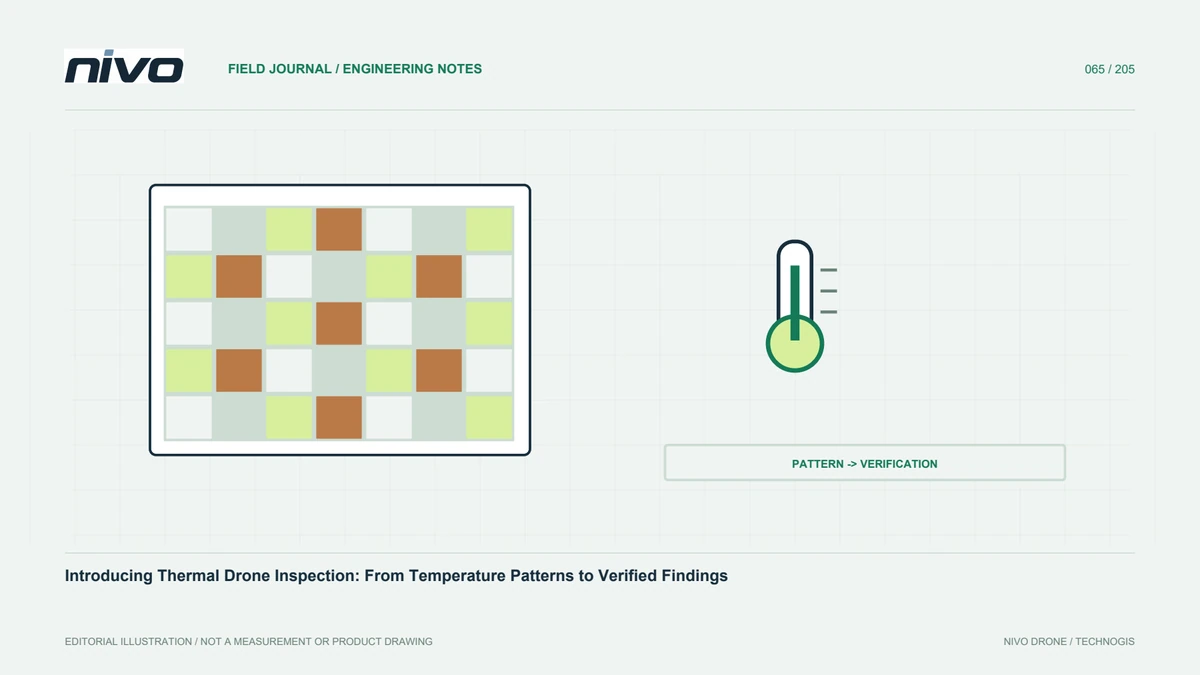
Thermal drones observe radiation patterns related to surface conditions. Identify the asset and question before choosing the camera. Solar-module screening, roof investigation, and industrial equipment review need different operating conditions, timing, and verification. Do not promise that one flight reveals every hidden defect. State what will be observed and how findings reach the technical team. Clear scope makes the camera a targeted evidence tool rather than an automatic diagnosis detached from asset knowledge and the circumstances in which the observation was recorded.
Understand surface radiation rather than internal visibility
Thermal imagery is not a view through an object's interior. Interpretation depends on the sensor's spectral range, surface characteristics, and surroundings. Emissivity, reflection, viewing angle, and atmospheric conditions can matter. Shiny materials deserve special attention because reflected patterns can resemble anomalies. Separate pattern observations from claims about internal temperature or failure causes. Record material and capture circumstances as evidence. A brighter or darker region in a chosen palette is a reason for investigation, not a self-sufficient explanation of what is happening inside the asset.
Distinguish pattern screening from temperature measurement
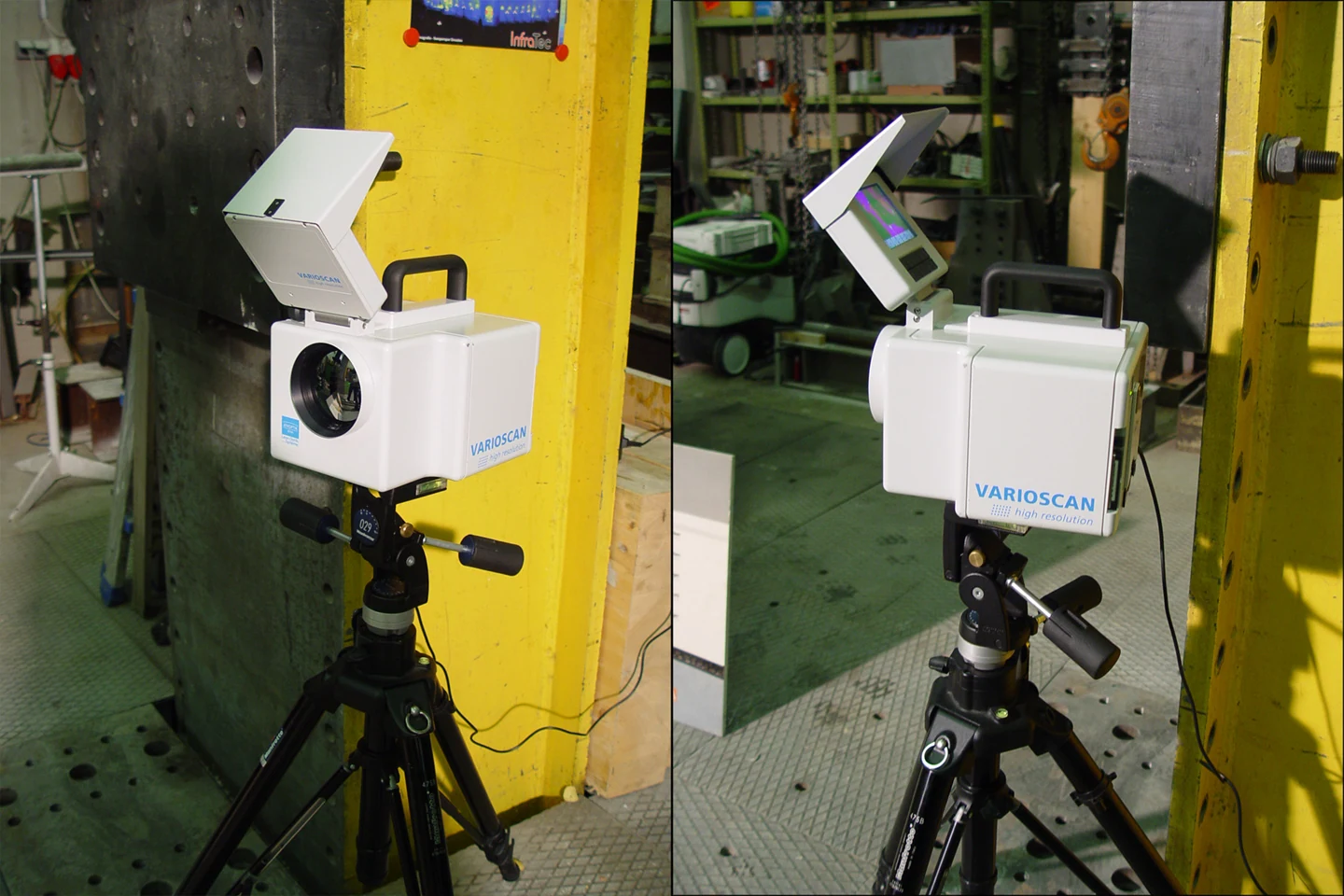
Some assignments only need to locate different patterns, while others require traceable temperature measurements. These are not identical specifications. Confirm radiometric features, output formats, and analytical workflow against the agreed purpose. A clear color video does not automatically include all metadata needed for measurement. Establish how relevant parameters are stored and reviewed. If the evidence supports only relative screening, report it at that level. This prevents recipients from treating a visual output as a measurement that has not actually been performed or demonstrated.
Design distance and angle for target readability
Sensor pixels influence target representation at a given distance, but interpretation must be tested with actual target sizes and backgrounds. Very small features in the frame may not be distinguishable reliably. Capture representative examples at the planned geometry. Review viewing angle, obstructions, and reflection. Digital enlargement does not create new thermal detail. Balance readability with the aircraft's operational boundaries and the site's assessment. Position and distance choices belong to the responsible operator and site process, not solely to the desire to obtain a larger-looking target.
Observe when relevant differences can develop
Some anomalies are clearer only under suitable operating and environmental conditions. Asset load, solar heating, wind, moisture, and changing weather can influence surface patterns. Agree necessary conditions with technical personnel before scheduling. An idle asset may answer a different question from an operating one. Record its state so an inconclusive observation is not mistaken for proof that no problem exists. If conditions are unsuitable, revise scope or timing. Attractive images do not establish that the opportunity was technically relevant to the inspection question.
Use RGB to explain the finding
RGB images connect thermal patterns with asset shape, material, component identity, and surrounding conditions. On dual-sensor systems, understand different fields of view and positional relationships. Do not assume corresponding screen points observe exactly the same place without checking geometry. Preserve file identities and times so evidence pairs can be retrieved. Show both locating context and relevant detail in the report. This helps technicians consider whether a pattern relates to material, obstruction, reflection, or an asset condition that genuinely needs closer investigation.
Verify anomalies before assigning causes
A different pattern warrants review, not an immediate failure diagnosis. Where the plan permits, another angle or time can help test alternative explanations. Compare relevant similar components and available operating data. Follow-up work on electrical, structural, or industrial systems belongs to authorized personnel with appropriate methods. Record possible explanations, supporting evidence, and uncertainty. State when the cause remains unknown. The report should help choose the next investigation without turning an initial suspicion into a conclusion that appears more firmly established than the evidence allows.
Report findings so that action is possible
Each finding needs asset identity, location, time, conditions, thermal evidence, RGB context, and the reason for review. Where temperatures are reported, include the available measurement context and limitations. Separate inspection priority from confirmed defect severity when diagnosis is incomplete. Managers should locate the target without relying on operator memory. Make status updates possible after verification. This connects drone work to a traceable follow-up process rather than ending with image delivery. Clear evidence and interpretation boundaries preserve usefulness for maintenance decisions.
Evaluate the payload within the complete workflow
Discuss camera model, resolution, outputs, gimbal, controls, power, and documentation with the NiVO technical team. Appearance or mass alone does not establish compatibility. Build acceptance trials around representative targets and the people who will assess the output. Retain the tested arrangement and circumstances under which evidence was adequate. Revisit the workflow if the requirement changes from pattern screening to particular measurements. Inspection value comes from a suitable sensor, relevant observation, traceable processing, and asset verification working together toward the actual operational decision.
Illustrative case: investigating a bright thermal patch
Consider a hypothetical inspection in which a bright region appears on a reflective surface. A viewer immediately calls it an overheating defect, although the available record contains only a color image and no explanation of material, viewing direction, or operating state. The inspection lead keeps the observation but changes its initial description to a pattern requiring review. The team checks whether the file supports the measurement claim being proposed and obtains RGB context that identifies the actual component and surrounding reflective objects.
Within the reviewed observation plan, another suitable view is considered to help test whether the pattern follows the surface or a reflection. The owner supplies relevant operating information, and a qualified examiner decides what additional assessment is needed. No one treats the second picture alone as a complete diagnosis. The finding register preserves both views, times, conditions, file identities, and the remaining uncertainty. Its follow-up request names the component and the question to investigate rather than prescribing an unsupported repair. This hypothetical workflow demonstrates how thermal imagery can direct useful technical attention while keeping pattern screening, temperature measurement, and fault confirmation distinct, preventing an attractive palette from creating more certainty than the evidence actually supports.
The next-step discussion compares a qualified technical investigation with another aerial observation under better-defined conditions. Neither option is described as an automatic repair decision. Handover requires sufficient asset context, original evidence, known operating circumstances, and a clear explanation of why reflection remains relevant. The receiving examiner must understand which statements are observations and which are hypotheses. If the files do not support a proposed numerical temperature claim, that claim is removed rather than guessed. This retains the useful alert while preventing the report from overstating the diagnostic authority of the camera operator.