SIYI ZT6: Evaluating a Thermal and RGB Gimbal Payload for Inspection
Assess the SIYI ZT6 through its confirmed thermal and RGB configuration, target-readability trials, gimbal operation, installed-system integration, and actionable evidence.
Identify the configuration using official references
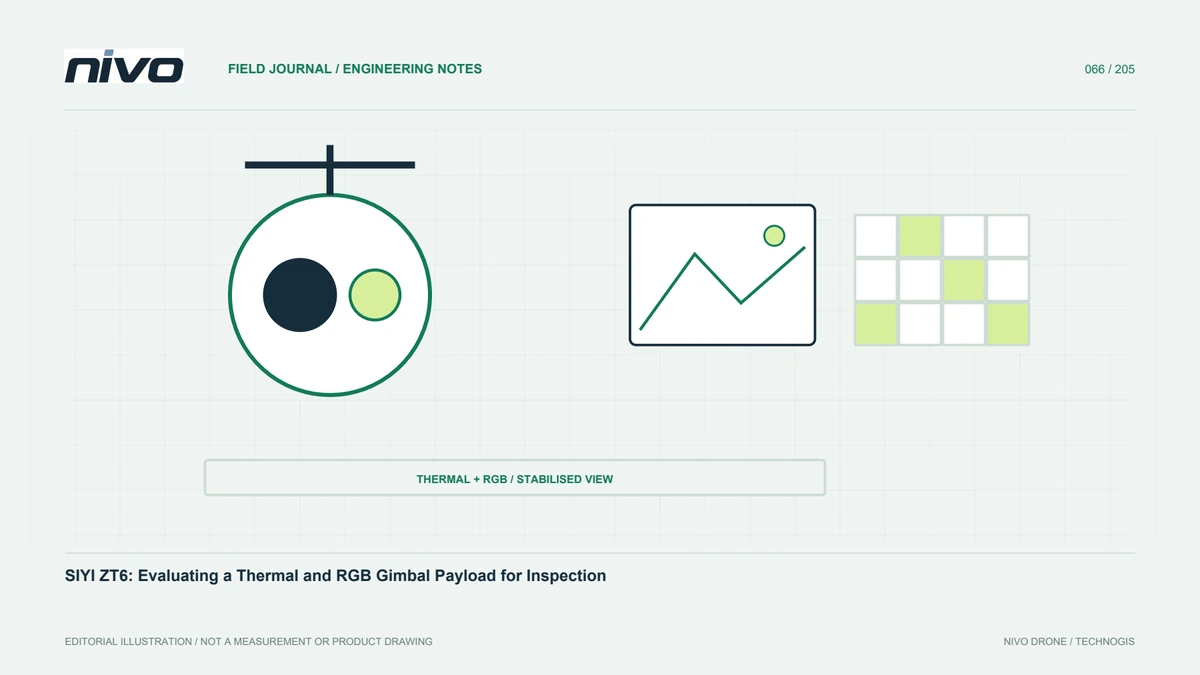
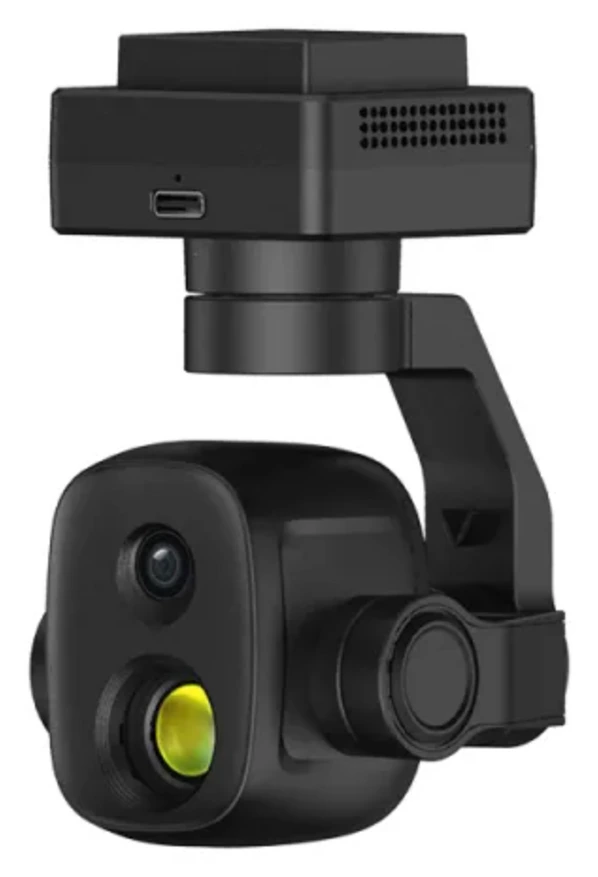
The NiVO catalog configuration of SIYI ZT6 combines 640 × 512 thermal imaging, an 8-megapixel RGB camera, and three-axis gimbal stabilization. These characteristics inform testing but do not answer every integration or asset-quality question. Use the appropriate official specifications and manual to confirm device version, interfaces, and settings. Do not transfer features from another SIYI model because the family looks similar. Clear configuration identity establishes what will be tested and what level of information can responsibly be promised to the inspection recipient.
Define separate thermal and RGB tasks
The two channels often answer complementary questions. Thermal imagery helps observe surface radiation patterns, while RGB provides shape, material, and asset identity. Decide what evidence each channel must supply. An anomaly may require thermal context and a visible photograph identifying its component. Do not assume equal detail or fields of view. Connect paired evidence through file identity and timing. Defined tasks tell operators when to switch views, save data, or mark a target for an additional observation that is genuinely relevant to the inspection.
Test the target at the intended geometry
Sensor resolution alone does not establish readability. Target size, distance, angle, and background determine what is visible. Trial representative assets at the planned geometry and inspect whether important differences can be recognized without excessive digital enlargement. Assess the target's relationship between thermal and RGB views. If the result is inadequate, revise position and sensor requirements with the responsible operator and site manager. Do not casually reduce distance around structures. The trial should find adequate evidence within operational boundaries already assessed for the actual assignment.
Learn gimbal control and viewing orientation
Stabilization helps maintain a view, but operators still need to understand modes, angular limits, response, and evidence capture. Practice in a controlled trial before inspecting assets. Establish how direction is commanded, displayed, and returned to a known position. Avoid confusion between aircraft heading and camera orientation. Record the control arrangement used. Assess it together with video links and teamwork: stable imagery is insufficient if targets are recognized too late or the operator cannot associate a view with the correct asset location.
Confirm what the recorded files contain
Inspection requirements may involve visual documentation, pattern screening, or temperature analysis with particular metadata. Confirm that the selected ZT6 outputs support the agreed purpose. A color-mapped recording is not automatically a complete measurement file. Review sample files in the intended analytical workflow and understand settings influencing interpretation. Where only relative patterns can be evaluated, state that limitation. Retain originals and paired RGB evidence. Clear output expectations prevent promising information that will not actually remain available after the flight is complete.
Review power, mounting, and communication
NiVO integration must include the mount, wiring, power, and control system. Confirm unit-specific voltage and interfaces, then validate the approved arrangement. Additional mass affects balance and the installed system. Check gimbal clearances, connector strain, and reproducible startup procedures. Test appropriate responses to communication or power interruptions within safe trial boundaries. A listed payload does not mean every aircraft accepts an identical installation. Record exactly which equipment and mounting method were demonstrated rather than implying approval for an untested combination of components.
Plan observation conditions with the asset owner
Asset operation and surroundings influence thermal patterns. Agree when the target will be in a state relevant to the inspection question. Record weather, surface heating, viewing direction, and known operating circumstances. Unsuitable conditions may still permit documentation without answering a particular technical question; explain that distinction before work starts. Identify obstructions and areas beyond the planned view. This directs camera use toward meaningful observation opportunities instead of maximizing image numbers irrespective of whether those images can support the required engineering assessment.
Accept the complete evidence workflow
Trial gimbal operation, target readability, storage, finding identification, and a sample report. Involve the recipient so operators do not define evidence quality alone. Check whether technicians can recognize the component and relocate the anomaly from the paired views. Where numbers are used, confirm their origin and limitations. Record gaps and change variables progressively during retesting. End-to-end acceptance is stronger than showing that the camera powers up and transmits video, because the project succeeds only when the evidence supports a practical follow-up decision.
Document the arrangement for future work
Retain ZT6 identity, installation, controls, sample files, and finding-naming procedures. Mark firmware or component changes requiring renewed tests. Prepare concise checks appropriate to manufacturer guidance. After the project, review ambiguous anomalies, missing coverage, and incomplete image pairs. Use those lessons to improve the next plan. This places ZT6 within a traceable inspection system and keeps NiVO discussions focused on demonstrated configurations and recipient needs, instead of assuming that an untested list of features delivers the same outcome on every assignment.
Illustrative case: accepting ZT6 evidence beyond the live view
Imagine a hypothetical team testing a SIYI ZT6 configuration for an inspection assignment. The live thermal and RGB views are stable, and the first demonstration is considered successful. The intended recipient then asks for a sample finding that can be reviewed after the flight, including target identity and the information needed for the agreed analysis. That request reveals that camera control, file retrieval, paired-view identification, and report preparation have not yet been tested as one workflow. The team therefore extends acceptance beyond the fact that video is visible.
A representative target is observed using the planned geometry, and operators save the actual files they expect to deliver. The recipient checks readability and confirms whether the recorded format supports pattern screening or the particular measurement requirement. Any unsupported requirement is marked for technical clarification instead of being inferred from the palette. The trial also records mounting, controls, power arrangement, file naming, and known field-of-view differences between channels. A sample report links the evidence to a relocatable asset and states unresolved interpretation limits. This hypothetical scenario shows why accepting a thermal payload requires a usable evidence chain from observation to follow-up, while avoiding claims that one demonstration proves compatibility or performance across every NiVO aircraft configuration.
The acceptance decision explicitly contrasts readable live video with a reproducible stored evidence package. The first may support piloting or target selection without satisfying the second. Handover is approved when another reviewer can retrieve the intended files, associate the channels, identify the target, and apply the agreed analytical method. Any need for additional recording settings or technical support is resolved before full deployment. The record also states what was not tested, preventing a successful local demonstration from being reused as a blanket approval for a different mount, aircraft, or inspection requirement.