Drone Spare-Part Identity and Verified Interchangeability
Manage spares through part identity, revision, storage condition, installation requirements, and acceptance evidence instead of relying on visual similarity.
Define a spare by its approved identity
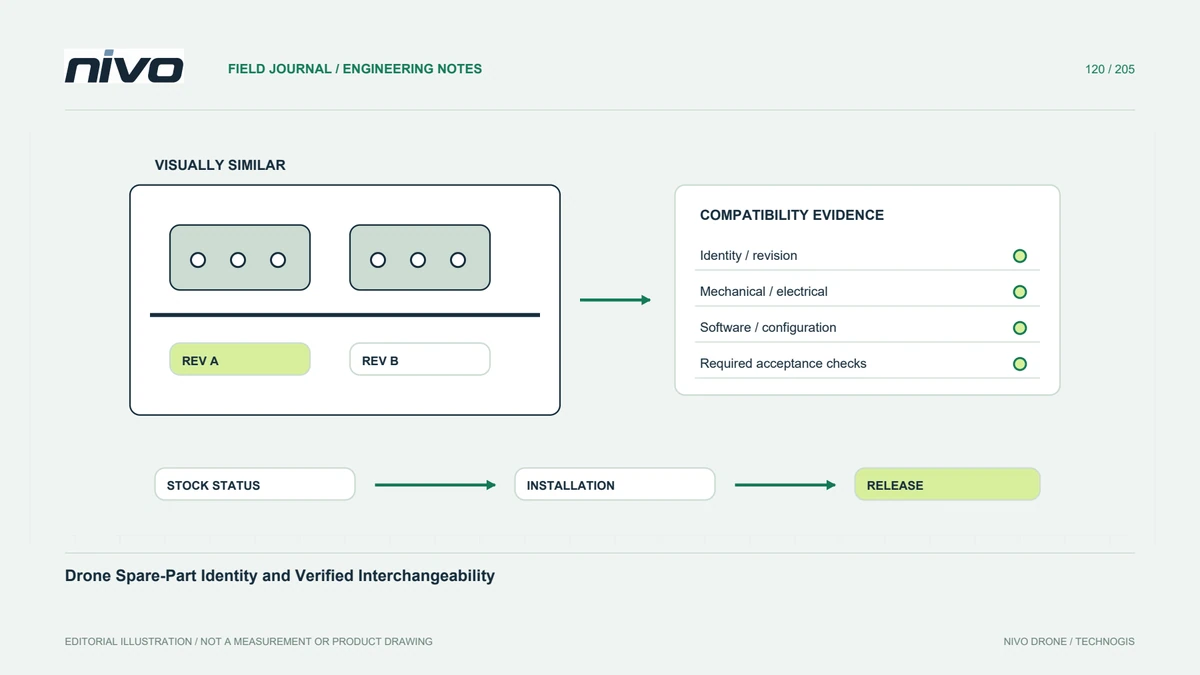
A spare is more than an item that looks like the installed component. Record manufacturer, part reference, revision, serial or batch identity where relevant, and the aircraft configuration it is approved to support. Keep packaging and technical information traceable. This prevents stock organization from becoming an informal engineering decision in which a familiar shape or convenient connector is treated as sufficient evidence that a replacement is interchangeable.
Separate storage status from availability
A component may be physically present but awaiting inspection, affected by handling, reserved for another configuration, or lacking the information needed for release. Use understandable stock statuses and preserve their reasons. Record storage conditions and relevant manufacturer requirements. Do not list every item in the ready-spares inventory merely because it has not yet been installed. Availability should describe a supported replacement option, not just an object located on a shelf.
Review compatibility across several dimensions
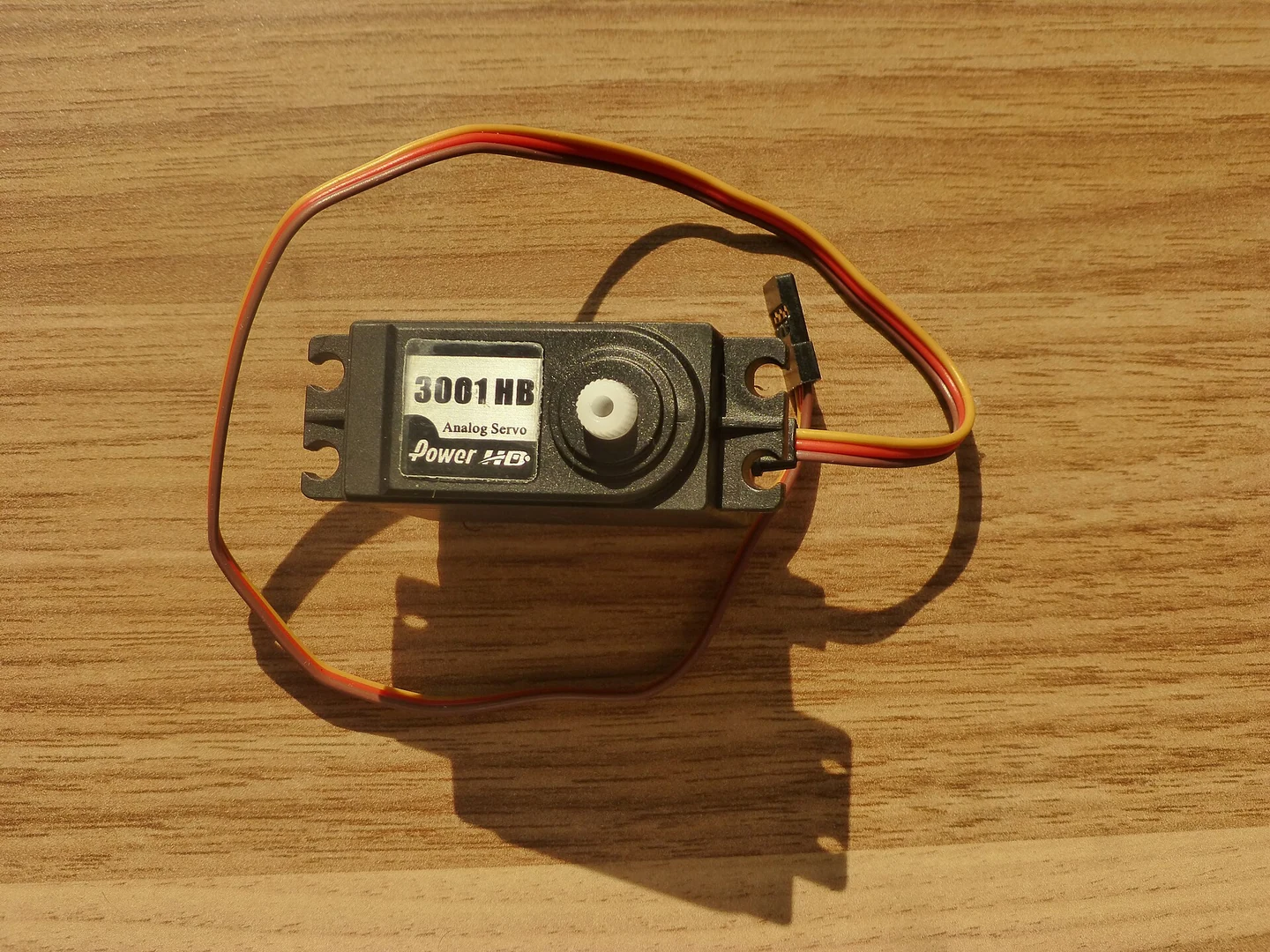
Mechanical fit, electrical requirements, software support, material specification, and installation geometry can all matter. The relevant dimensions depend on the component. A matching bolt outline, antenna connector, or servo case does not establish equivalence. Use the applicable aircraft and component documentation and request technical clarification where identity is uncertain. Keep any approved substitution decision explicit, including the configuration and conditions to which it applies.
Link replacement to required follow-up
Installing a spare can trigger calibration, configuration, geometry checks, or other validation under the actual maintenance procedure. Identify those requirements before field deployment. A replacement receiver or payload mount may change information relationships even when the aircraft powers up normally. Do not assume a successful startup completes the work. Preserve removed-part identity and the reason for replacement so later troubleshooting can distinguish the original finding from consequences of the change.
Plan stock around credible field needs
Use observed service history, logistics, configuration variation, and authorized repair capability to select practical spares. Carrying many unsupported parts can add confusion rather than resilience. Identify which work the field team may perform and which requires another service route. Keep tools, documentation, and acceptance resources aligned with those tasks. A smaller identifiable kit can be more useful than a large assortment whose compatibility and readiness nobody can establish.
Maintain the replacement history
Connect stock issue, installation, configuration change, checks, and return-to-use decision with the aircraft and component identities. Update the spare's status and preserve unresolved findings. This gives NiVO support and fleet managers a reliable service record while helping future technicians identify the actual assembly. Verified interchangeability remains a documented conclusion for a particular application, rather than a permanent assumption that every visually similar part can replace every other one.