Fastener Witness Marks and Traceable Drone Maintenance
Use fastener identity, approved torque information, inspection context, and witness-mark history without treating paint alignment as proof of joint integrity.
Start with the joint's actual specification
A fastener belongs to a joint with particular materials, geometry, locking features, and maintenance requirements. Similar appearance does not establish interchangeability or a shared tightening value. Identify the location, part reference, and applicable aircraft instructions before work. Record whether the joint was disturbed during transport preparation or servicing. This makes the inspection specific enough to distinguish a missing requirement from a technician's general impression that the attachment feels secure.
Understand the limited meaning of a witness mark
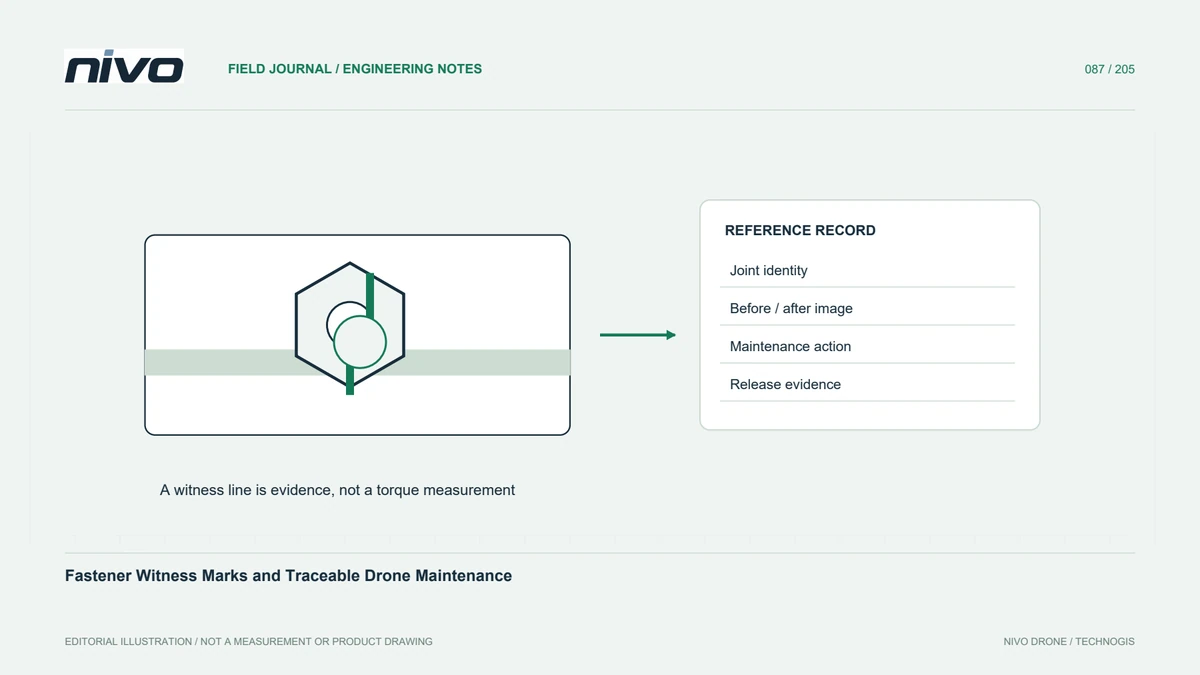
A witness mark can help reveal relative movement or show that a documented inspection step occurred. It does not independently measure clamp force or prove correct installation. Its usefulness depends on knowing when and why it was applied. Preserve photographs and the maintenance reference. A mark added after an unexplained change cannot reconstruct the original joint condition, and matching paint should not replace the inspections required for that attachment.
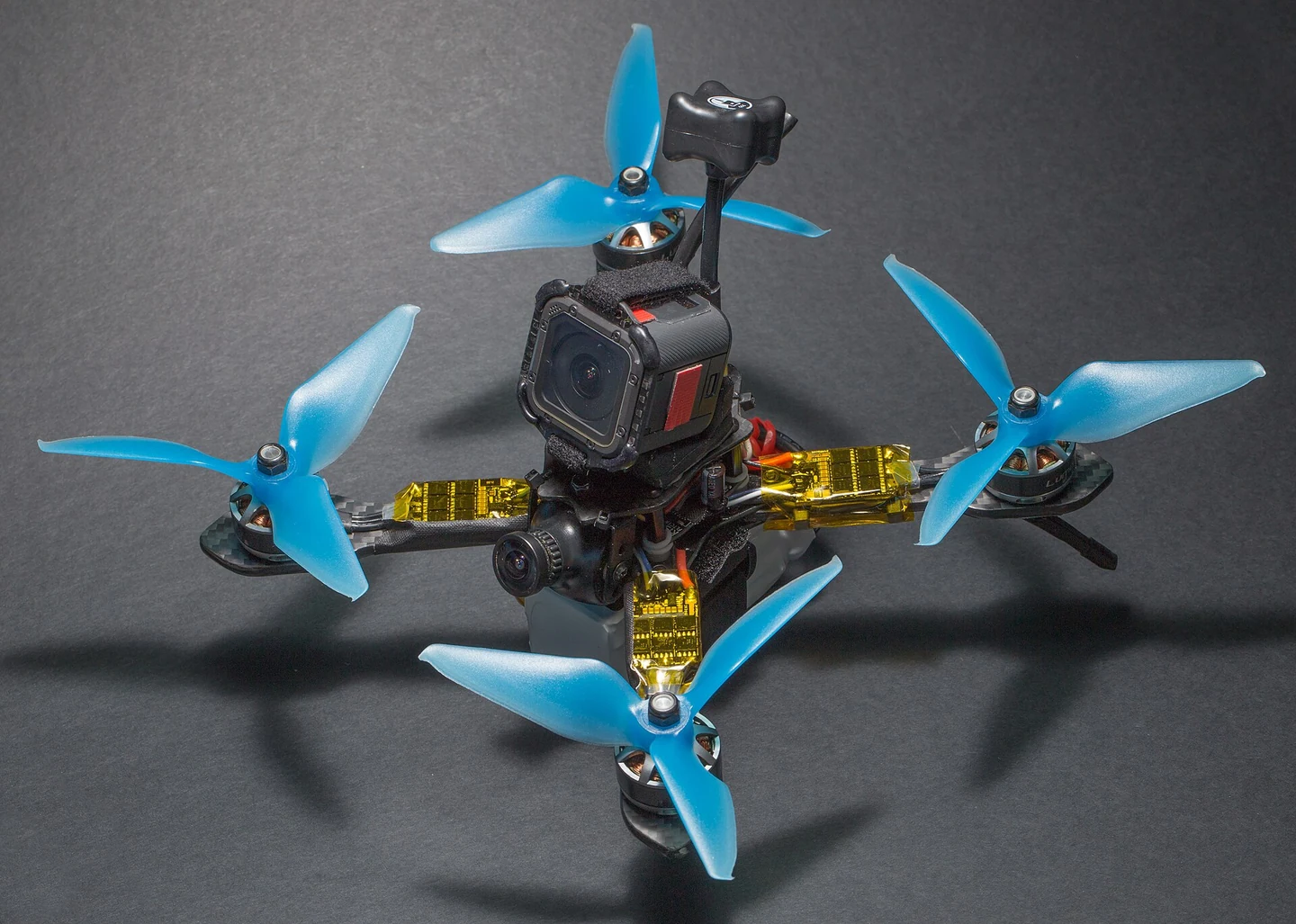
Keep tools and procedure linked
Where a specified tightening process applies, use the appropriate equipment and personnel under the manufacturer's instructions. Tool identity, calibration status where required, and the actual procedure belong in the record. Do not choose values from a general table without establishing applicability to the materials and joint. Lubrication, locking arrangements, and reused parts can matter. This article explains documentation discipline rather than providing a universal torque recipe for drone assemblies.
Inspect the surrounding structure
An apparently tight fastener can coexist with damaged mounting material, enlarged holes, distorted brackets, or an incorrectly assembled stack. Review those conditions through the approved inspection method. Photograph the joint before changing it when evidence needs preservation. Repeatedly tightening an attachment without investigating movement may hide the developing problem. The maintenance entry should distinguish a fastener issue from a structural finding requiring a different technical response.
Define when the mark must be renewed
A controlled maintenance process should explain how marks are treated after authorized disassembly, replacement, or inspection. Retain the prior record and identify the new accepted configuration. Do not silently repaint a broken mark to make the assembly look ready. If its significance is uncertain, report that uncertainty. Clear handling rules help field teams recognize which observations require review rather than guessing whether a visible difference is cosmetic or important.
Make handover understandable to the next team
Provide joint location, work performed, parts used, procedural reference, and acceptance evidence. Include photographs where they clarify the intended arrangement. Transport and maintenance teams should share the same attachment identities. A useful record lets the next technician establish what changed without reconstructing private conversations. This supports NiVO service and spare-part control while keeping witness marks in their proper role as aids to inspection, not substitutes for engineering requirements.