Managing Drone Fleet Configurations for Geospatial Projects
Track aircraft, payloads, batteries, firmware, missions, maintenance, and accepted changes so fleet readiness and survey outputs remain explainable across projects.
Manage more than an inventory
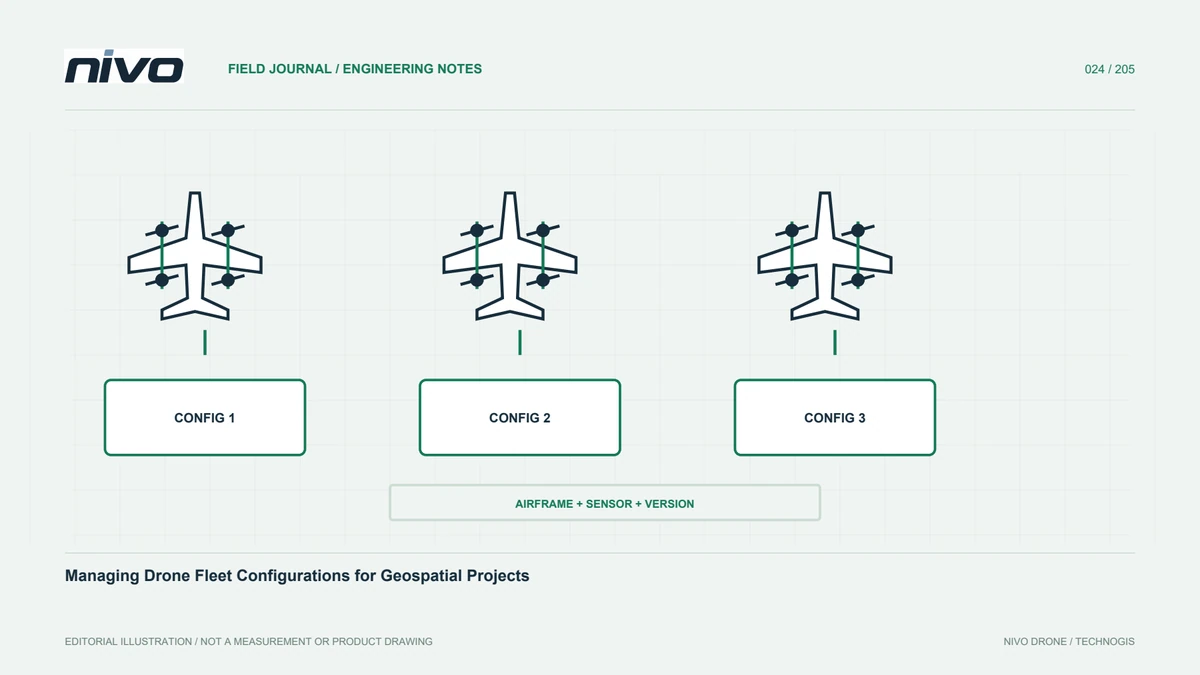
Inventory records what an organisation owns. Configuration management explains the arrangement currently applying to each unit and its acceptance evidence. Identical model names may conceal different sensors, firmware, or supporting equipment. If those differences are invisible, staff can make incorrect assumptions. Begin with aircraft identity and a recoverable baseline. The purpose is practical: know what is in use, which changes were accepted, and which jobs match the current state. This supports realistic assignment and gives technical support a reliable starting point when questions arise.
Separate physical identity and configuration version
Physical identity describes a particular item; a configuration version describes its arrangement and settings at a particular state. One unit can change over time, while several units may share a similar design without sharing component identities. Link both relationships. Use relevant model and unit identifiers rather than field nicknames alone. Mission and data records should lead to the correct configuration. This becomes important when projects run simultaneously or personnel change. A clear reference prevents an arrangement belonging to one unit being assumed valid for another similar-looking aircraft.
Build usable configuration cards
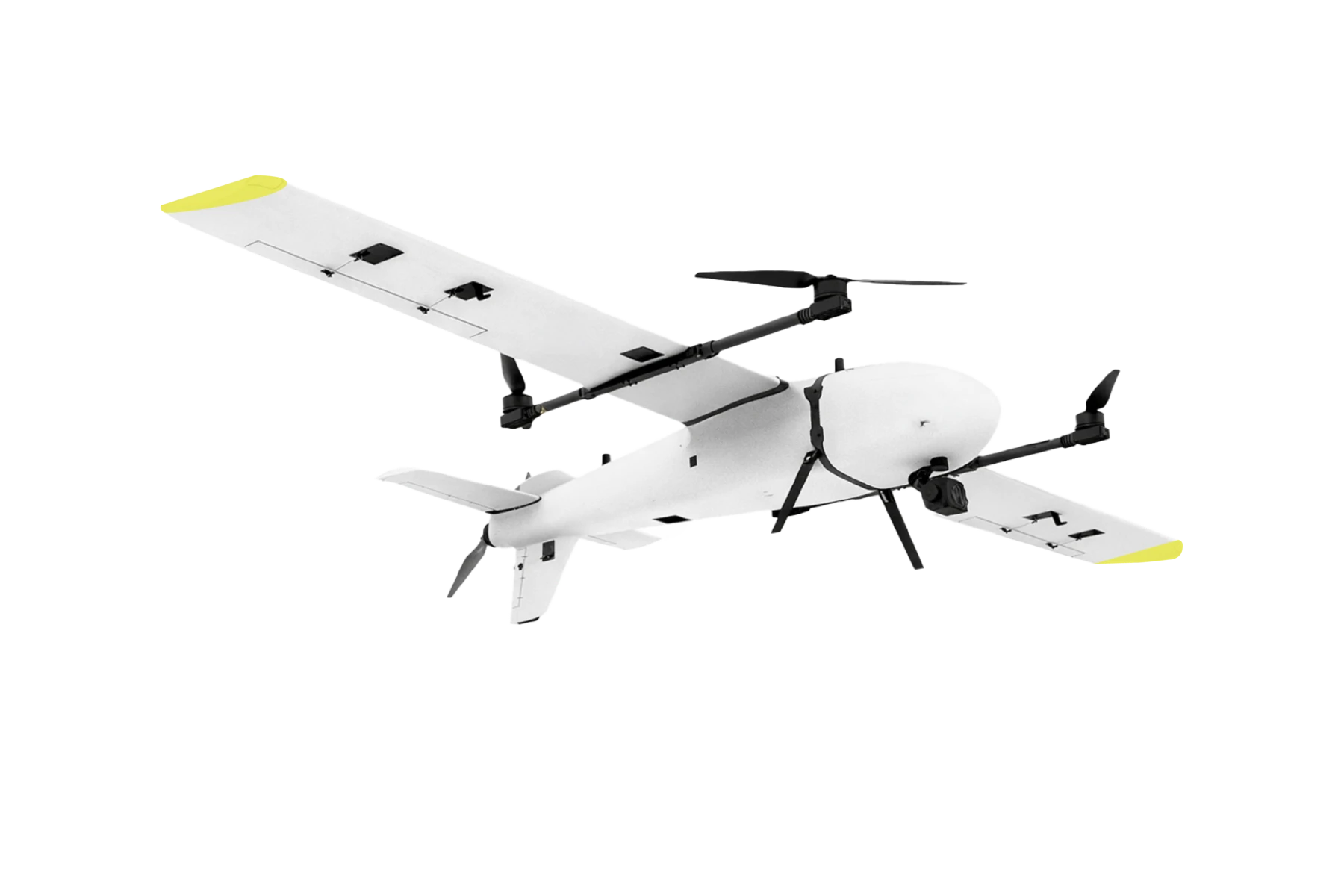
A card may identify aircraft, payload, mount, suitable battery arrangement, communications, GNSS source, and relevant software. Link procedures and acceptance records instead of putting every development detail on one page. Operators should be able to verify the installed state. Mark functions still awaiting integration. An options list should not imply unrestricted interchangeability. Detailed technical material can remain separate if references are clear. A concise accurate card is more useful than a large form that fails to change when field equipment changes or temporary modifications become permanent.
Use a clear change process
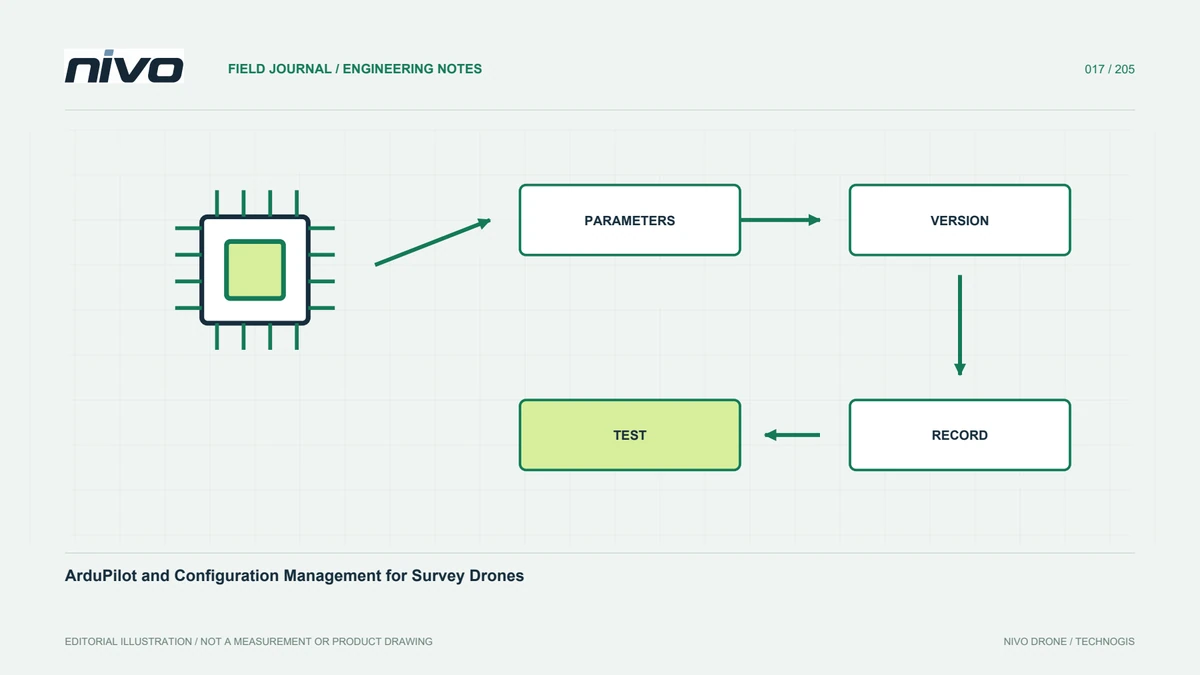
Record reason, responsibility, scope, and suitable evidence. Changes differ in complexity, but those affecting function or interpretation need traceability. Move from one approved state to another and update the operator reference. Do not leave temporary arrangements without status or an endpoint. For a project-specific change, define whether and how the prior state returns. This preserves flexibility without losing control. It also helps the next team understand whether an unfamiliar arrangement is an accepted change or an intervention whose assessment remains incomplete.
Link maintenance and replacement
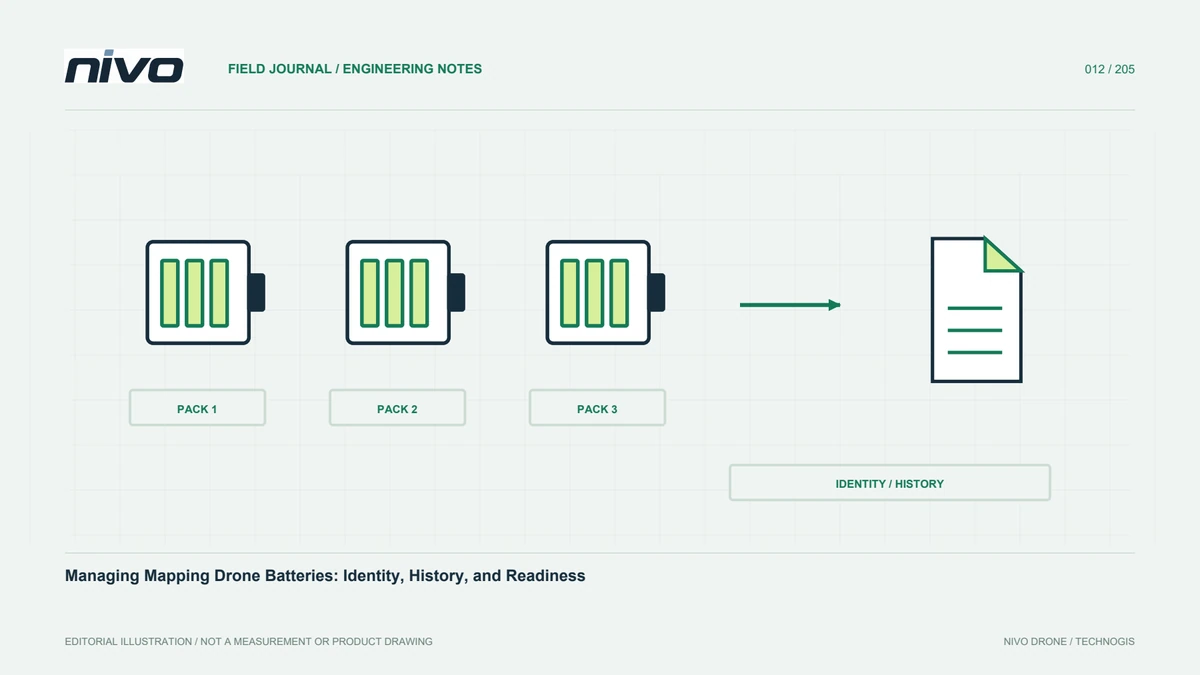
Record the removed and installed components, aircraft, reason, and acceptance results. A transferred component's history should follow it rather than remain with its old airframe. Operators need access to unresolved maintenance status. Reassembly alone does not establish readiness. The required evidence follows the actual procedure. These links help technicians investigate patterns and managers plan from true availability. Counting aircraft in storage without considering accepted condition can create a misleading impression of fleet capacity and put avoidable pressure on the next project schedule.
Connect the configuration with the dataset
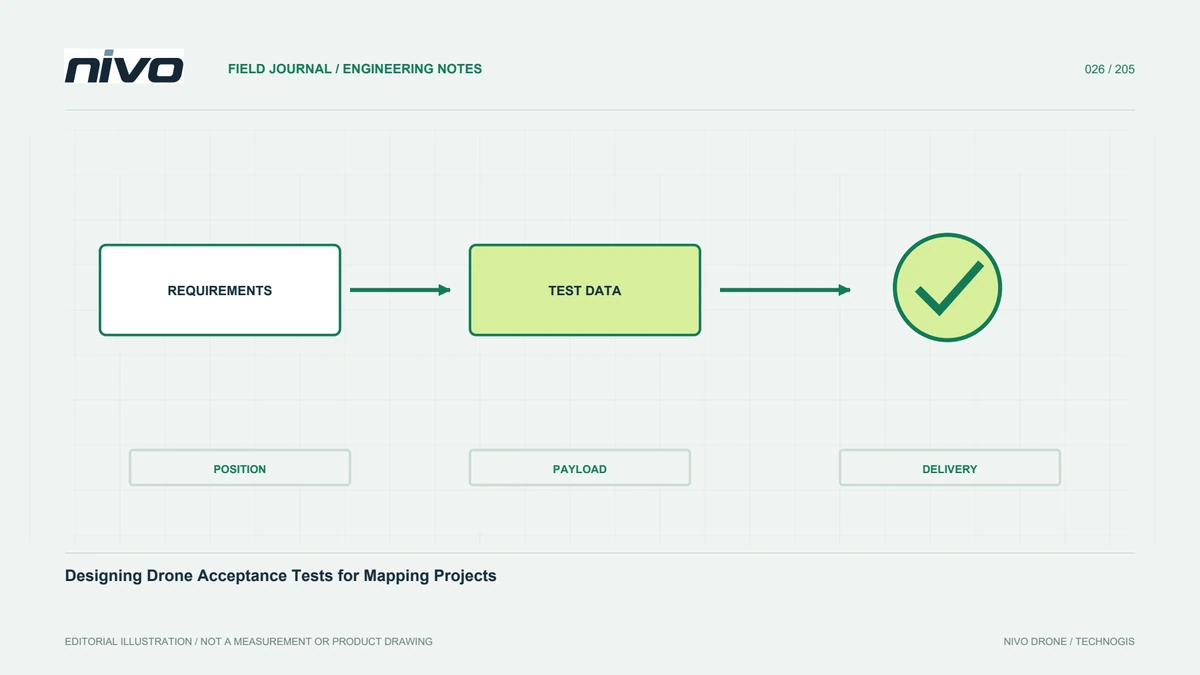
A project should identify which arrangement produced its records. Link aircraft, sensor, battery where relevant, mission version, and date. In repeated surveys, sensor or processing changes need separating from site change. Do not wait for user questions before reconstructing equipment state. A reference in the data package lets another processor understand the source and applicable method without contacting every field participant. This also supports reprocessing and comparison when a later project uses a different configuration or a different team.
Provide controlled access to references
Relevant personnel need usable documents with clear change responsibility and current versions. Field copies must link to the source. Prepare required access where connectivity is uncertain. Avoid filenames such as latest final without meaningful identity. Remote support should use the same reference so discussions do not mix old and current states. Clear access improves speed and traceability together. Staff can answer what is installed, what settings are accepted, and which record applies without searching unrelated personal folders or relying on informal messages.
Check records against reality
Periodically compare selected units and projects with their documentation. Look for unrecorded spares, unversioned plans, or payload changes without updated cards. Administrative gaps can undermine technical evidence. Improve the underlying process rather than temporarily filling fields for an inspection. Include operators and processors so the format remains useful. A sustainable system is more valuable than a comprehensive procedure nobody follows. Sampling actual equipment and data also reveals whether the identity links still work after normal transport, maintenance, and staff turnover.
Use configuration information to plan services
For a new request, identify suitable units, accepted sensors, and outstanding support needs. Distinguish an existing integration from new engineering work. Include testing and training where needed instead of promising an option as ready. Clear links among inventory, configuration, maintenance, and evidence make the fleet easier to manage. The organisation then knows more than how many aircraft it owns: it understands which demonstrated capabilities it can responsibly assign to the requested geospatial result. This turns configuration records into a practical planning tool rather than a file archive consulted only after problems occur.
Illustrative case: transferring a payload between fleet aircraft
Suppose a hypothetical fleet manager wants to move an accepted sensor from one aircraft to another for an upcoming assignment. The inventory confirms ownership, but that does not establish that the destination unit has the same accepted integration. The configuration lead checks the receiving aircraft's mount, power arrangement, firmware references, geometric definitions, and required recording workflow. Component identities and maintenance status follow the transferred equipment instead of remaining only in the original unit's record. The operator receives the configuration version that actually applies after the approved work, while the processor receives the information needed to interpret its data. If some function still requires assessment, it is shown as pending rather than being inferred from the sensor's earlier successful use elsewhere. This is a hypothetical management example, not a statement that unspecified components are interchangeable. Its evidence links inventory, configuration, maintenance, acceptance, and mission identity. The scheduler can therefore distinguish equipment that is physically present from a configuration ready for the proposed service. A subsequent analyst can also identify which arrangement produced the dataset, preventing a fleet-wide model name from concealing differences that matter to repeat surveys or later technical support.
Keeping the sensor on its original accepted aircraft may be preferable if the new arrangement has unresolved dependencies. Completing the transfer can be preferable when the necessary integration and verification are available. The schedule distinguishes these options rather than treating physical availability as readiness. The handoff updates component history, configuration identity, applicable procedures, and the data definitions needed by processing staff. Any earlier acceptance evidence reused is identified with its reason. A future manager can therefore see which capability belongs to which unit and which change remains pending, without assuming that ownership of a sensor proves fleet-wide interoperability.