ESC Temperature Telemetry: Reviewing the Installed Cooling Arrangement
Interpret ESC temperature records through sensor identity, reporting capability, operating demand, airflow, and configuration-specific technical limits.
Identify what the temperature channel represents
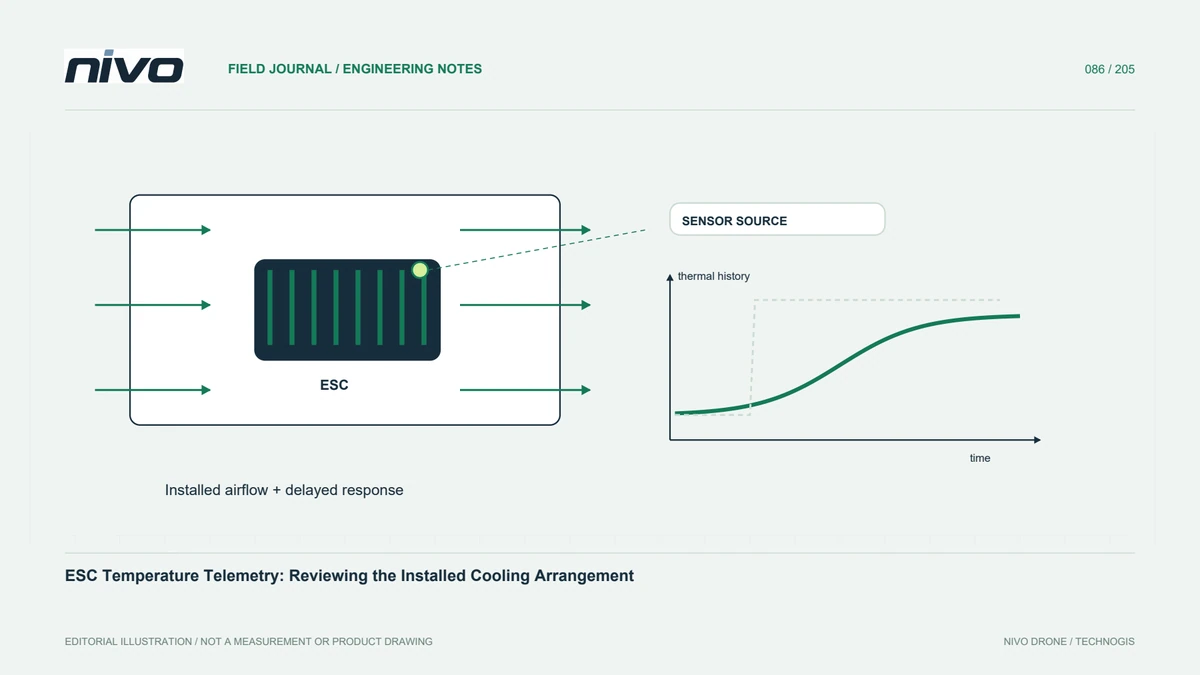
A ground-station temperature field is useful only when its source is understood. Confirm whether the installed ESC actually reports temperature, which instance the record identifies, and whether another sensor supplies that channel. Missing data is different from a low reading. Keep firmware and telemetry details with the log. This avoids comparing unrelated measurements or treating an unsupported display field as evidence that every controller remained cool.
Relate temperature to the operating timeline
Review available temperature alongside propulsion demand, current, rotational speed, flight phase, and ambient conditions. Heating and cooling can continue after the demand changes, so timestamps matter. Compare equivalent intervals rather than the largest number from each flight. Record when the aircraft was waiting on the ground. The investigation should describe the thermal history, without assuming that a delayed temperature increase proves an immediate electrical malfunction.
Inspect the actual airflow path
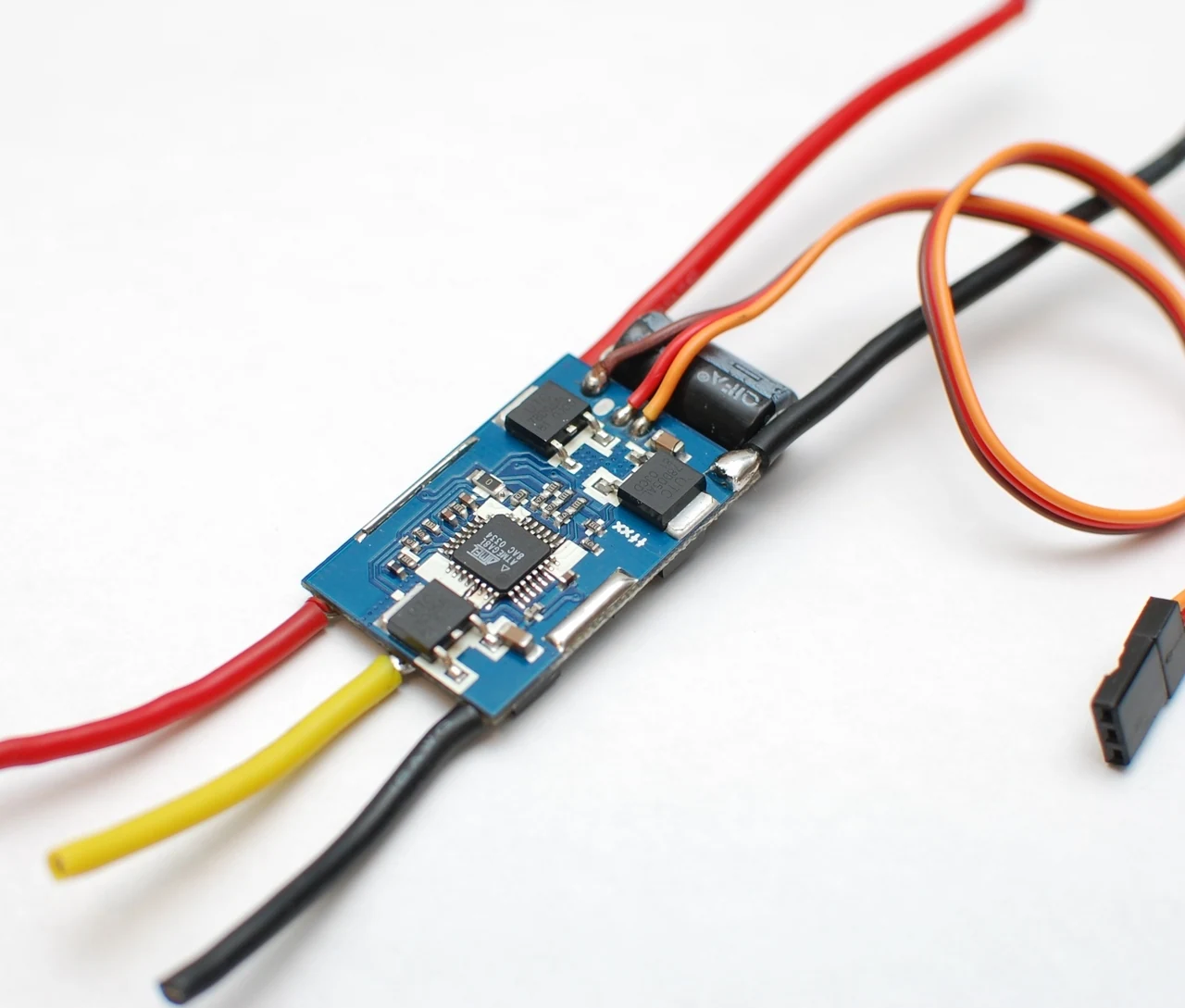
Cooling depends on the installed environment, including covers, mounting contact, neighboring equipment, and routes for air movement. Compare photographs before and after maintenance or payload additions. A controller's external appearance does not establish its internal condition or approved operating limit. Do not remove protection or relocate equipment simply to expose it to airflow. A technical change must account for mechanical retention, wiring, environmental protection, and the aircraft's accepted configuration.
Check comparability between devices
Different ESCs can report different quantities, update rates, or measurement locations. Even matching product labels do not prove identical firmware or installation. Establish those details before interpreting one device as hotter than another. If the comparison remains uncertain, record the limitation and request the appropriate documentation. The purpose is to find actionable differences, not manufacture a ranking from numbers whose physical meaning and reporting behavior are not equivalent.
Define the response through documentation
Use the actual ESC and aircraft instructions for applicable limits, inspection actions, and release criteria. A general article should not supply universal temperature cutoffs or encourage disabling warnings. Unexplained heating requires a clear equipment status and responsible follow-up. When an installation correction is approved, retain its rationale and verify the complete arrangement. A lower displayed value alone cannot establish that the propulsion system is ready for operational use.
Preserve a useful thermal baseline
Save representative logs, channel definitions, installation photographs, and conditions for the configuration that was evaluated. Future comparisons can then account for changed payloads, waiting periods, and ambient circumstances. Note which conclusions are confirmed and which remain hypotheses. This baseline gives NiVO technical support a concrete starting point and helps maintenance teams recognize meaningful change without treating every seasonal temperature difference as a newly failed component.