Using IMU Temperature History to Review Drone Readiness
Distinguish temperature-related sensor behavior from installation problems through recorded conditions, applicable calibration information, and controlled review.
Separate readiness from elapsed waiting time
A fixed waiting period after power-up does not prove that every inertial sensor is ready under every condition. The relevant question is whether the installed system meets its documented requirements. Record the controller model, configuration, ambient conditions, and sensor temperatures available in the log. A board with temperature-management features can behave differently from another board, so fleet instructions should identify the actual equipment rather than assume interchangeability.
Recognize the temperature-related question
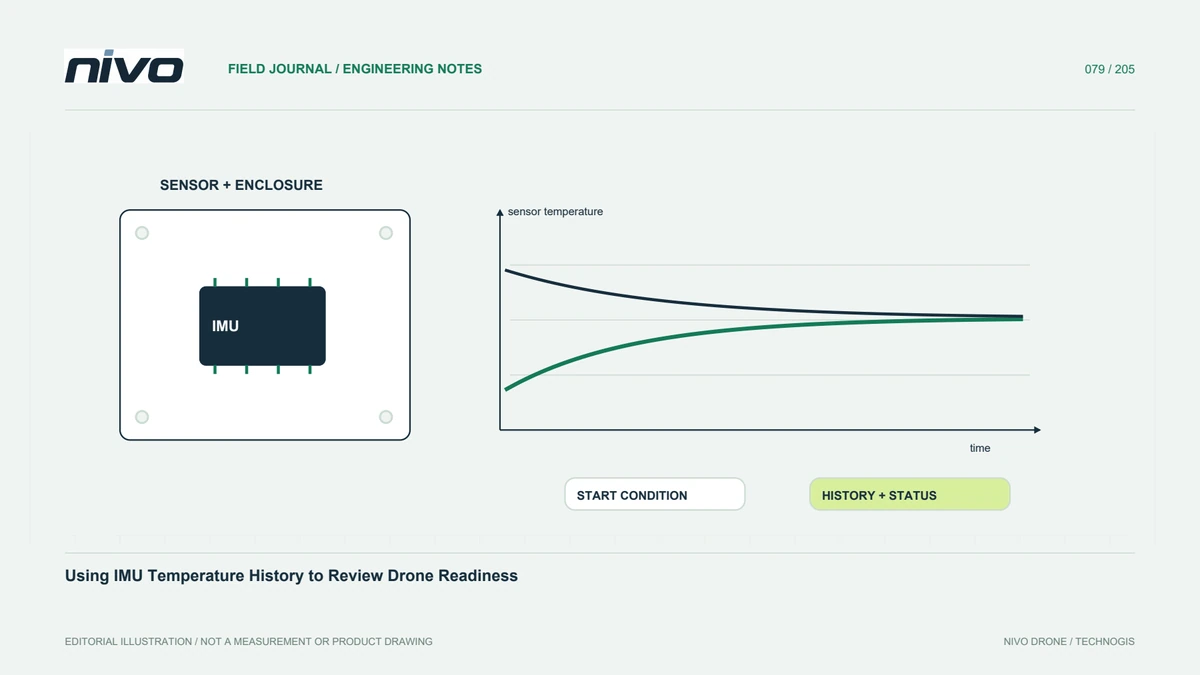
Inertial measurements can vary as temperature changes, which is why supported systems provide temperature-calibration workflows. That does not mean every attitude discrepancy is thermal drift. Movement during startup, mounting problems, inconsistent calibration, or other sensor issues can resemble one another. Describe when the observation appears and how it evolves. Preserve a timeline joining power-up, environmental changes, readiness messages, and the operator's recorded observations.
Check calibration provenance
Identify which unit was calibrated, the applicable firmware, the method used, and the recorded temperature range. A parameter file from another controller is not proof of calibration for this one. Distinguish factory information from subsequent workshop changes. Where records are incomplete, request technical clarification before calling the calibration valid. The review should establish what the evidence covers without inventing a universal temperature threshold for all aircraft.
Preserve installation and environmental context
Controller ventilation, enclosure changes, direct sunlight, and nearby heat-producing equipment can alter the temperature history. Document them before comparing sessions. Avoid improvised heating or cooling intended to reproduce an internet procedure. Calibration and inspection must follow the relevant manufacturer and autopilot guidance with competent personnel. The article's purpose is to organize evidence, while approved instructions determine physical handling and the conditions under which checks may proceed.
Compare sessions with a stated purpose
Choose recordings that address the same question and show their different starting conditions explicitly. Review the temperature traces alongside relevant sensor and estimator information, noting interruptions or movement. A declining discrepancy may be useful evidence, but it does not independently approve flight. Record alternative explanations and the next discriminating check. This prevents a simple warm-up narrative from replacing a documented assessment of the actual system.
Turn findings into equipment-specific instructions
The final record should identify the controller, accepted calibration reference, observation requirements, and conditions requiring renewed review. Update training examples when hardware or enclosure arrangements change. Keep a clear route for reporting unexplained behavior instead of teaching staff to ignore it after a familiar delay. Useful temperature history supports repeatable readiness decisions and maintenance communication while leaving aircraft release with the responsible technical process.