Building a Pre-Mission Drone Checklist That Teams Actually Use
Connect aircraft condition, payload readiness, mission versions, staff roles, site assessment, and data requirements in a concise and traceable pre-mission checklist.
Follow the actual aircraft and work
A generic checklist can suggest questions but cannot replace manufacturer procedures or operator judgement. Identify the aircraft, payload, software, and team, then determine the relevant checks. This article addresses document design rather than a control sequence. The objective is connecting inspection with survey planning and data needs. A useful checklist is practical in the field and clearly linked to its manuals and records. It should help staff understand what must be confirmed, not encourage them to treat an unrelated example as an operating procedure.
Separate project preparation from field checks
Client requirements, sensor availability, and site access should generally be addressed during preparation. A concise field list verifies that those decisions still apply. Putting every project discussion into one form makes it difficult to use during setup. Link supporting documents so evidence can be found when needed. Unfinished requirements must remain visible. A tick should not disguise a pending assessment. This separation keeps the last review focused while preserving access to the reasoning and approvals that established the plan.
Verify identity and configuration status
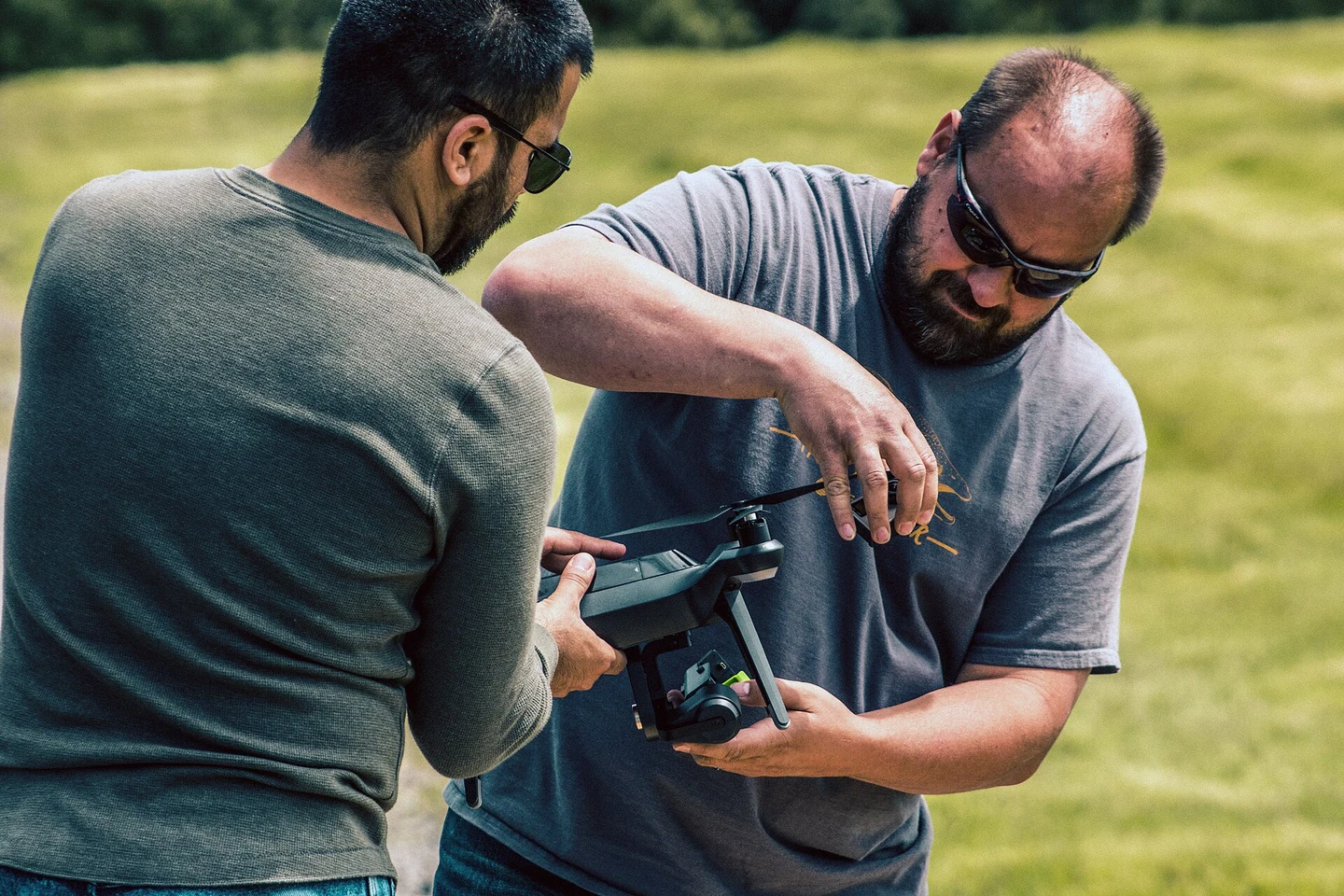
Confirm the prepared unit matches the mission. Aircraft, battery, payload, and storage identities prevent unintended substitutions. Review outstanding maintenance findings and changes. Staff need to know whether the installed arrangement has completed its acceptance process. A newly fitted sensor may need technical review, not just another tick. Clear identity also helps processors when several aircraft or cameras contribute to one project. The checklist should point to accepted configuration evidence rather than assume that devices with similar names are interchangeable.
Connect the site with the mission version
Conditions may change after planning. Confirm that the field assessment matches the version about to be used. Changed operating points or boundaries need review of departure, acquisition, and return. Use clear version names to avoid opening the wrong file. Assess access and site availability under the procedure. A map appearing on screen is not enough. The requirement is alignment between the approved plan, current surroundings, and the aircraft actually prepared to execute it, including any documented changes made since the initial review.
Include data-recording readiness
An aircraft ready to fly is not automatically ready to produce a complete dataset. Verify sensor state, storage, naming, and time or position recording as configured. Define how sample records are checked and where data goes afterward. Raw GNSS observations or event records must be prepared before they are needed. Information never recorded may be impossible to recover later. Involve the processor so the list addresses completeness for the intended method, not only whether each individual device appears to be powered and functioning.
Assign clear responsibility
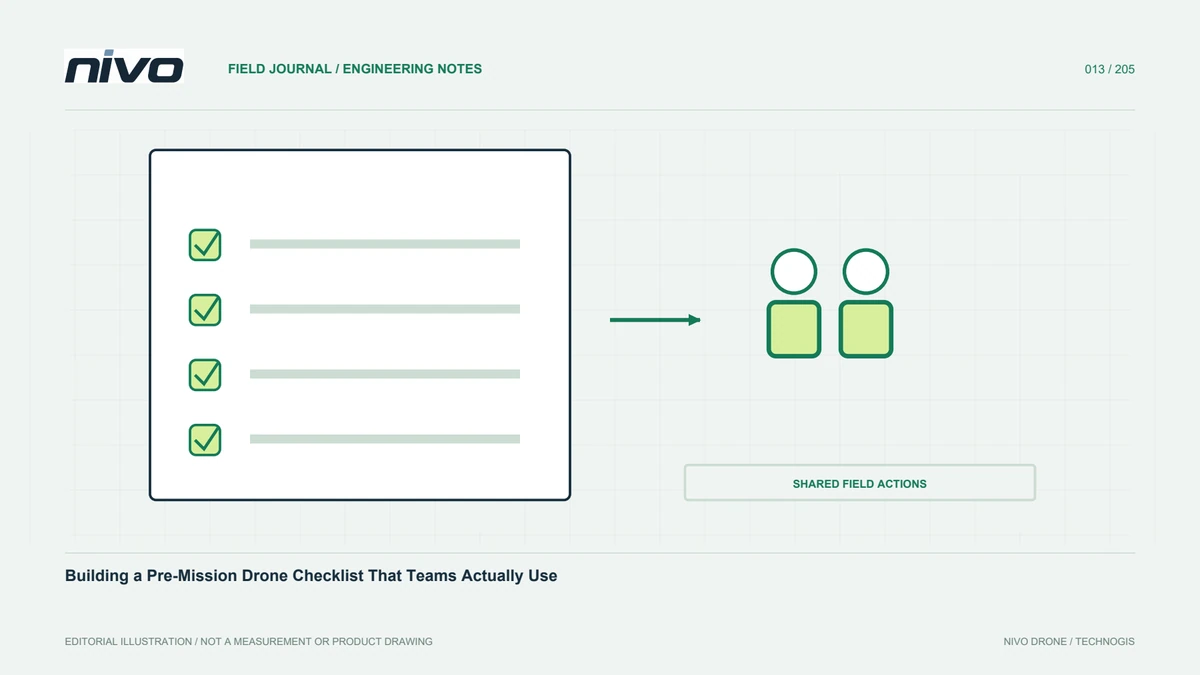
Specify who checks each part using the real team roles. If confirmation needs two people, define how they communicate it. Avoid a complex arrangement unsuited to a small team, but do not rely on assumptions that somebody else has completed the task. Briefings should use shared terms so newcomers understand reports. Clear responsibility helps the team handle findings without losing accountability. It also exposes where a project needs additional support when the available personnel differ from the arrangement used during training.
Define the path for an unsatisfactory check
A checklist without follow-up can become a form that is always marked complete. Identify whom to inform, what to record, and how completion is assessed. Do not invent technical criteria to fill a form. Direct questions requiring a manual or technician to the correct source. Pending status must remain visible before proceeding. Checks then have a meaningful relationship to readiness rather than becoming paperwork filed after all the work. This supports decisions based on actual findings, not pressure to complete a scheduled task.
Test the document with field users
Have staff try the list on the relevant configuration without changing approved procedures. Identify confusing terms, repetition, and inaccessible information. Operators can assess the order; processors can assess recording requirements. Improve clarity instead of simply adding lines. Retain versions and reasons for changes, especially when a check responds to previous experience. This prevents deletion of an apparently unnecessary item without understanding its purpose. A document that fits real work is more likely to remain accurate and consistently used.
Close the loop after the mission
Connect pre-mission records with post-flight checks and evaluation. Match the recorded configuration with logs and sensor files. Investigate whether discrepancies concern the form, execution, or changed circumstances. Feed useful findings into the next revision. A missing storage identity, for example, may justify one concise verification next time. The goal is a sustainable process: short enough to use, clear enough for communication, and traceable enough to support technical assessment and data quality. This makes improvement part of routine work rather than an occasional response to a major problem.
Illustrative case: turning an unresolved check into a clear status
Suppose a hypothetical team reviews its pre-mission checklist before leaving for a survey. The form contains an item stating that data recording is ready, but nobody can identify which person verifies the positioning files needed by the processor. Rather than adding a general instruction to be more careful, the team traces that requirement back to the actual processing method. It separates project preparation from the short field verification and assigns responsibility for confirming the relevant recording configuration. The operator checks the accepted equipment state, while the data lead reviews a representative file package. If the evidence is incomplete, the checklist records a pending status and names the technical follow-up instead of allowing an unexplained tick. During a rehearsal under the approved procedure, staff identify which reference is needed and where it can be found without connectivity. The revised form retains a version and the reason for the change. This hypothetical example does not introduce a new flight sequence. It makes a specific information dependency visible, gives it an accountable owner, and connects completion with evidence. A future reviewer can therefore determine whether the requirement was actually verified rather than merely seeing that the form was signed.
One response would be to make the field checklist longer; a more useful response may be moving the unresolved technical preparation to the stage where it can genuinely be completed. The concise field item then verifies a specific accepted state rather than repeating the entire engineering task. The handoff preserves both references and identifies the evidence that connects them. A supervisor can check the rehearsal package and confirm that the assigned person knows how to recognise missing information. The document is accepted for practical use because its checks have meaningful owners and completion criteria, not simply because it appears comprehensive.