Reading Drone Vibration Spectra Before Changing Filters
Use comparable raw recordings, frequency context, mechanical inspection, and documented verification to investigate vibration before changing flight-controller filters.
Define the symptom before opening a spectrum
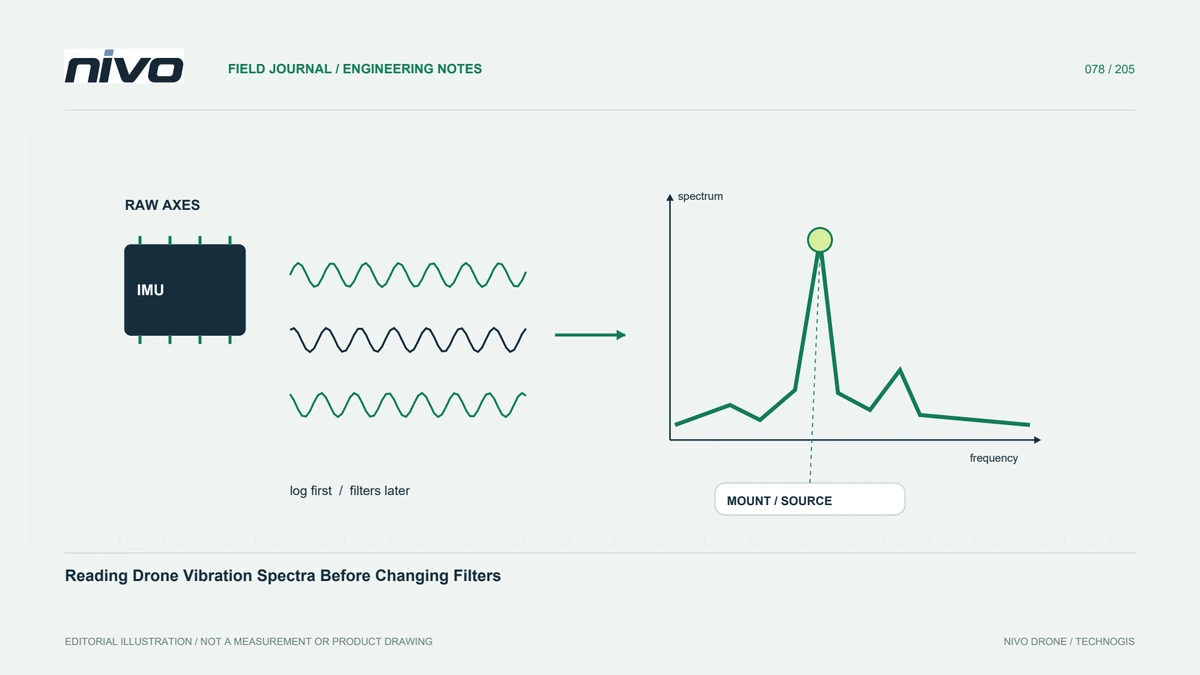
A spectral peak identifies concentrated vibration at a frequency; it does not identify a defective component by itself. Start with the reported symptom, affected flight phase, aircraft configuration, and recording interval. Separate blurred photographs from estimator warnings because they may require different investigations. Record whether the pattern appeared after transport, maintenance, or a payload change. This question determines which evidence the technical reviewer actually needs.
Establish that the recording is usable
Confirm firmware, sensor identity, sampling arrangement, and the analysis tool's requirements. Raw IMU recording can create substantial files, and missing samples can undermine interpretation. Preserve the original log and identify the selected interval rather than sharing an unexplained screenshot. Compare equivalent operating conditions. A quiet stationary recording and a loaded flight segment answer different questions, even when their graphs use identical axis labels.
Connect frequency with operating context
Compare the spectrum with available rotational-speed observations, throttle, flight direction, and changes in airspeed. A peak moving with propulsion demand suggests a different investigation from one staying fixed across conditions. Examine several axes and intervals instead of choosing the most dramatic image. Sampling limitations and processing choices also influence the display. Treat suspected sources as hypotheses until another observation or inspection distinguishes between them.
Inspect the mechanical path first
Review the approved mounting arrangement, cables touching the controller, loose covers, and propulsion findings already recorded by maintenance. A cable can create an unintended vibration path even when the isolation mount appears intact. Follow the aircraft's inspection procedure; filter adjustments do not repair damaged hardware. Photograph relevant installation details and retain component identities so the evidence remains understandable after the aircraft returns to service.
Evaluate proposed changes under technical control
A qualified reviewer should connect any filter proposal with the installed controller, software version, computational capacity, and aircraft validation process. Do not copy settings merely because another aircraft shows a similar peak. Preserve the baseline and alter only the justified configuration elements. The follow-up must consider both noise reduction and the system's response, rather than accepting a smoother graph as the sole success criterion.
Close with a reproducible comparison
Retain matched before-and-after intervals, analysis settings, mechanical findings, and the reason for each decision. State which conditions were evaluated and which remain untested. A maintenance colleague should be able to locate the same evidence without asking the original analyst to recreate it. This turns spectral analysis into an investigation record that supports future NiVO configuration discussions, rather than a collection of attractive graphs detached from aircraft condition.