Propeller and Motor Inspection for Mapping Drone Readiness
Plan propeller and motor inspection around component identity, approved checks, mounts, service history, spare-part status, and documented technical follow-up.
Begin with component identity
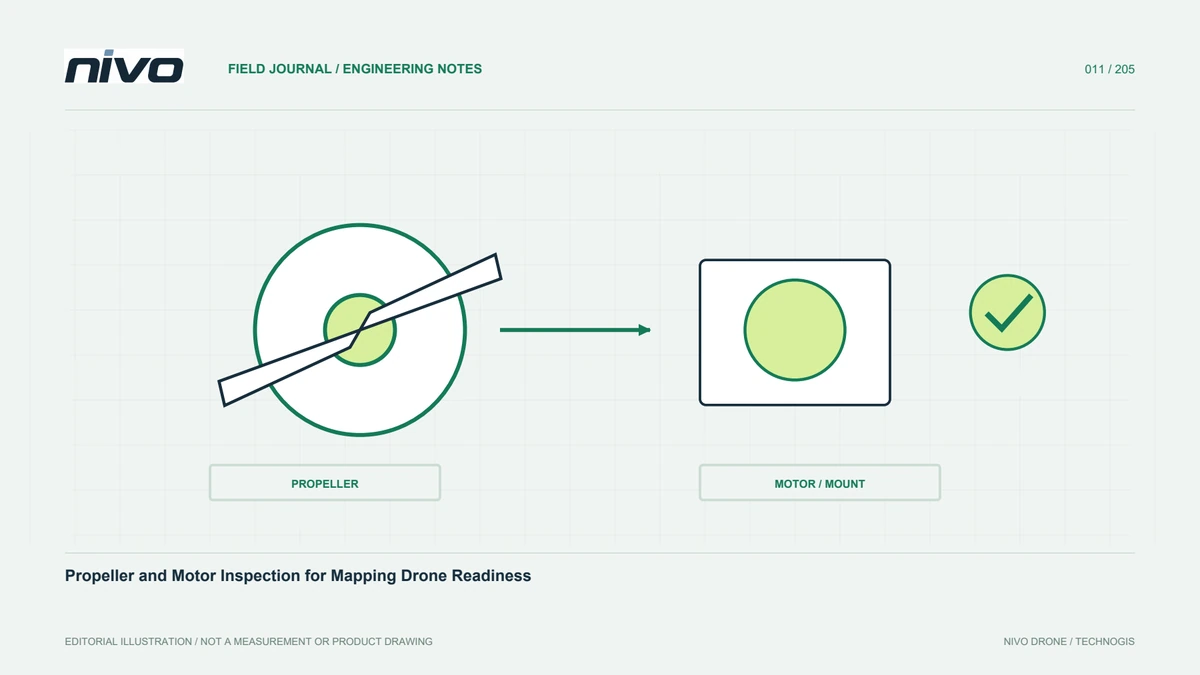
A propulsion system may contain parts of different sizes, directions, and purposes. In a hybrid VTOL, vertical and cruise equipment must be identified according to the actual design. The inspection list needs the correct configuration. Record propeller, motor, mount, and supporting equipment identity. Physical fit does not demonstrate interchangeability. Use relevant documentation or technical approval. This avoids errors when spare components look similar but serve different roles, and ensures that later reports identify the part rather than relying on an informal name.
Use the required inspection state
Propulsion inspection and setup must follow manufacturer safety procedures and be performed by competent personnel. This article supplies no energising sequence or motor-test instructions. Its purpose is organising observations and records. Keep physical inspection separate from unplanned control experiments. Define responsibility and the required equipment state for each task. Resolve procedural uncertainty first. Clear coordination reduces the risk of someone changing the system state while another person is still handling or examining mechanical parts under a different assumption.
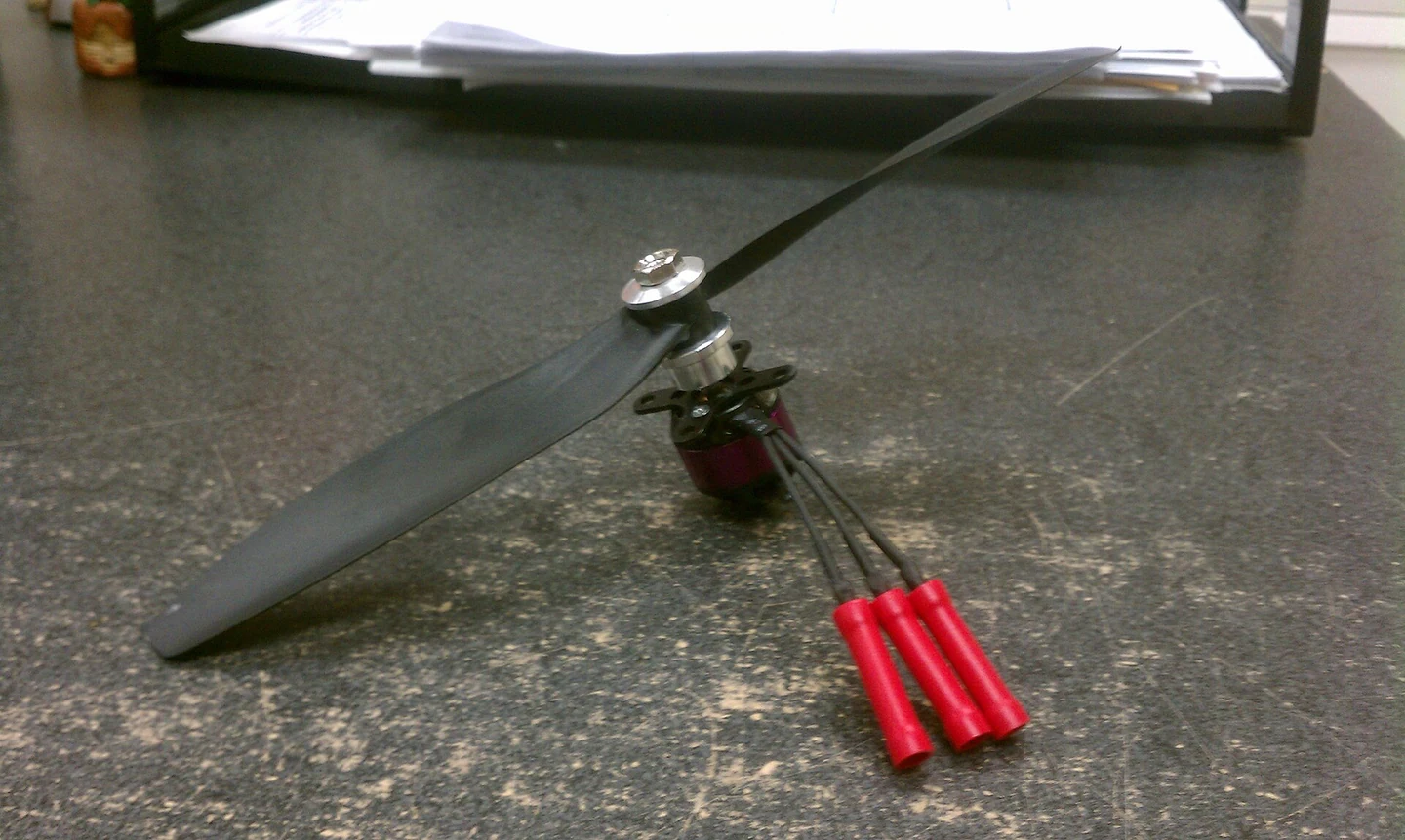
Inspect blade shape and surfaces
Follow the recommended method for visible shape changes, damage, and mounting-area condition. Record location and relevant events such as contact or unusual transport. Suitability criteria come from the manufacturer; small visual size is not a reason to ignore a finding. Do not patch, sand, or modify a propeller as an improvised response. Rotating equipment belongs within a propulsion configuration, not merely an object to restore cosmetically. Evidence helps the technical assessor choose a follow-up appropriate to the actual observation and component history.
Verify mounting orientation and joints
Orientation and installation method must match system function. Use approved marks and documents rather than memory. Review locking, mounts, and joints as specified. Repeated removal for transport makes installation verification especially important. Do not replace a locking method merely for convenience. Small changes may affect component relationships. Record installation and replacement on the correct aircraft. These records ensure a later inspection can distinguish an accepted arrangement from a temporary field change that has not been assessed or communicated to other team members.
Connect motor reports with aircraft context
Reports of changed sound or vibration need a motor identity and event time. Saying that the aircraft felt different is not enough to determine a cause. Competent personnel may need to review mounts, cables, connectors, and records. Do not replace the motor before considering connected components, or dismiss a concern because it does not recur during a brief check. Combine flight evidence, physical findings, and change history. This supports investigation of the source rather than repeated replacement without an explanation.
Clean without introducing new problems
Dust can obstruct inspection and increase maintenance work. Cleaning motors, joints, and propellers must follow applicable instructions. Avoid unapproved liquids or tools simply because they are available on site. The process should not move parts, damage finishes, or leave foreign material. Document required rechecks afterward. Record unusual exposure and its source. That information can improve future placement of the aircraft and support equipment, reducing repeat contamination instead of treating each inspection as an isolated cleaning task.
Manage the history of spares
Identify parts ready for use, awaiting inspection, and excluded by a technical decision. Do not mix them without clear status. Record transfers between aircraft, including origin and destination. History should follow the component rather than remain only with its previous airframe. A reliable spare list is more useful than a large box of uncertain items. This supports maintenance decisions and prevents equipment with unresolved findings returning to service because another person assumed that its presence in the spares container meant it was ready.
Preserve context in inspection records
Record date, aircraft, configuration, finding, action, and responsibility. Photographs should show location and surrounding relationships. Link event-driven inspection to the flight identity. Technicians can then review the sequence rather than isolated comments. A tick box alone is inadequate for a condition requiring monitoring. Make the information available to the team preparing the next mission, not only to the inspector. Continuity matters when different personnel maintain and operate the same unit over several projects or working days.
Define follow-up before the next assignment
Explain who assesses findings, when more inspection is required, and what confirms acceptance. A busy project schedule does not change component condition. Correct spares and realistic inspection time can reduce disruption. Use approved examples for training without inventing suitability criteria. This connects propulsion checks with operational quality and fleet traceability rather than treating inspection as a brief standalone ritual. The objective is a clear path from observation through technical decision to a readiness status the next operator can actually understand and verify.
Illustrative case: identifying a spare propulsion component
Consider a hypothetical field preparation where a spare propulsion component resembles the part listed for the aircraft. A staff member proposes using it because its mounting shape looks compatible. The operator pauses that assumption and checks the actual configuration identity. The equipment record shows that physical similarity is not the acceptance criterion: model, function, and approved installation must correspond. The team separates the uncertain item from ready spares and asks the responsible technical person for assessment. Inspection and any functional testing follow the manufacturer procedure rather than an improvised demonstration. The records include the aircraft identity, component history, relevant observation, and the resulting decision. If another part is supplied, its status and relationship to the unit are documented before the next preparation step. This is a hypothetical example, not a report of a component failure. Its practical value is the clear chain from identification to technical follow-up. It prevents a container labelled spares from becoming an undocumented source of interchangeable equipment. It also gives future inspectors the context to distinguish an approved replacement from a similar-looking item that was never assessed for that role in the actual aircraft configuration.
Using an already accepted spare may support the schedule, while waiting for a verified replacement may be necessary when identity cannot be established. Both choices are more defensible than inferring compatibility from fit. The handoff records which item was installed, what happened to the uncertain item, and which checks established the new readiness status. A later storekeeper can then preserve the distinction instead of returning everything to one undifferentiated container. The example makes spare management part of technical evidence, showing why clear status prevents repeated uncertainty as equipment passes among different staff and projects.