Ground Heat Exposure Before Launch: Reviewing the Whole Drone Kit
Record waiting conditions, enclosure exposure, sensor temperatures, support electronics, and device-specific requirements before treating a hot-site kit as ready.
Include preparation time in the exposure history
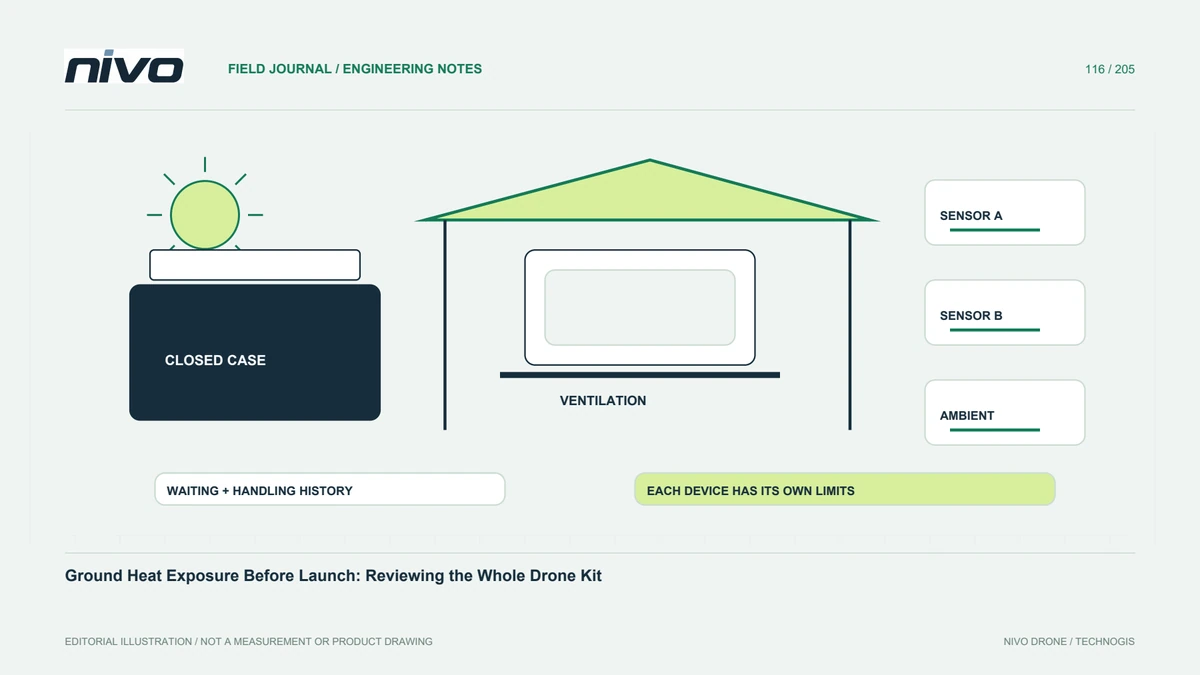
Environmental exposure begins before the aircraft leaves the ground. Equipment may wait in a vehicle, a closed case, or direct sunlight while the team prepares the site. Record those conditions and waiting periods, not only the weather during flight. Different parts of the kit can start from different thermal states. A useful preparation record explains what the equipment experienced before the first readiness message appeared on the ground station.
Review the actual limits for each device
Aircraft, batteries, cameras, controllers, modems, and laptops can have different documented environmental and operating requirements. Identify the supplied models and relevant instructions. A general statement that the drone suits outdoor work does not approve every ground-storage arrangement. Do not borrow one component's temperature range for the whole kit. The readiness review should connect each important device with the conditions and checks that its documentation actually requires.
Examine enclosure and ventilation context
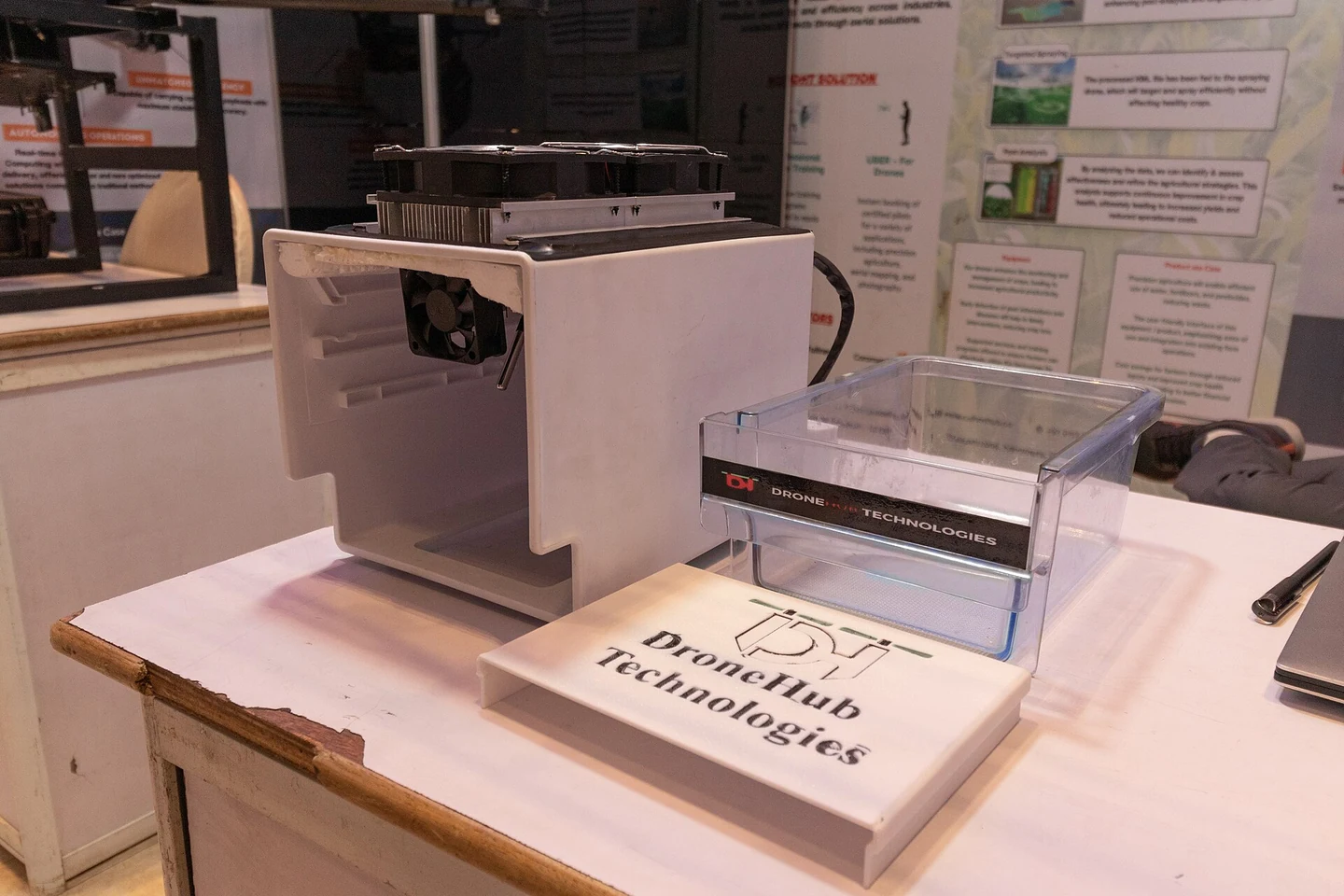
Covers, protective inserts, surrounding equipment, and blocked openings can change how heat develops. Compare the actual arrangement with the approved installation and equipment guidance. Shade arrangements should not obstruct ventilation or create a new handling problem. Do not modify enclosures or remove protection as an improvised cooling solution. Record physical changes because a later temperature observation may reflect the installation, waiting conditions, or device demand rather than the ambient air alone.
Interpret recorded temperatures by source
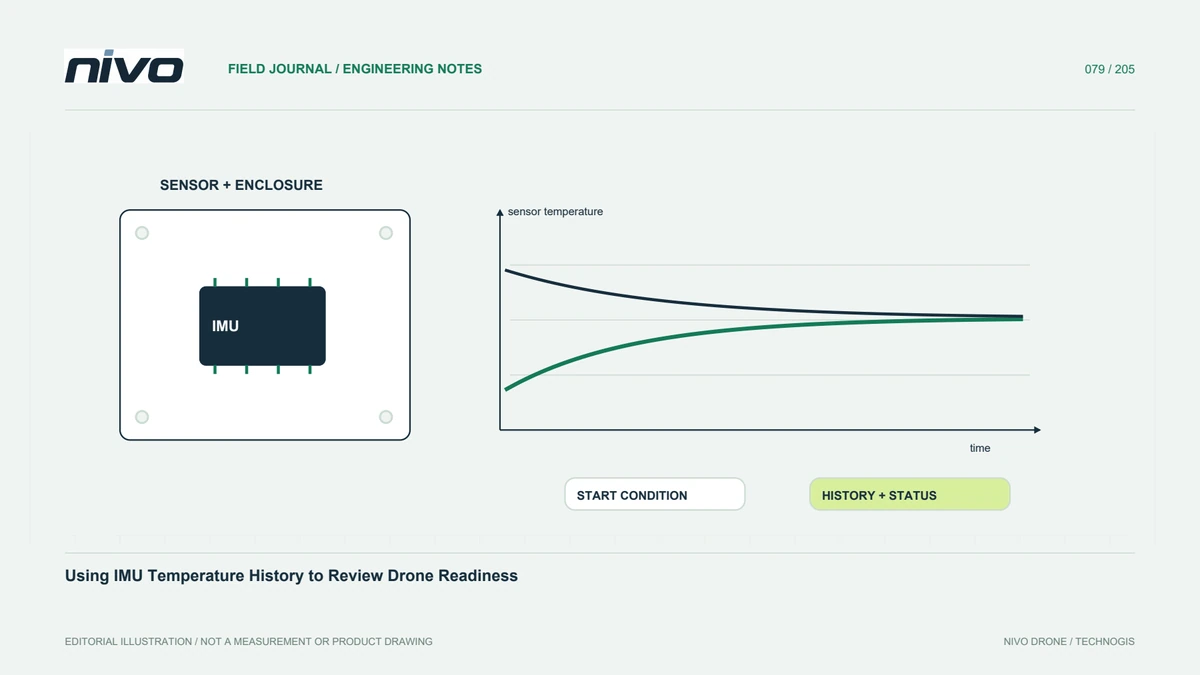
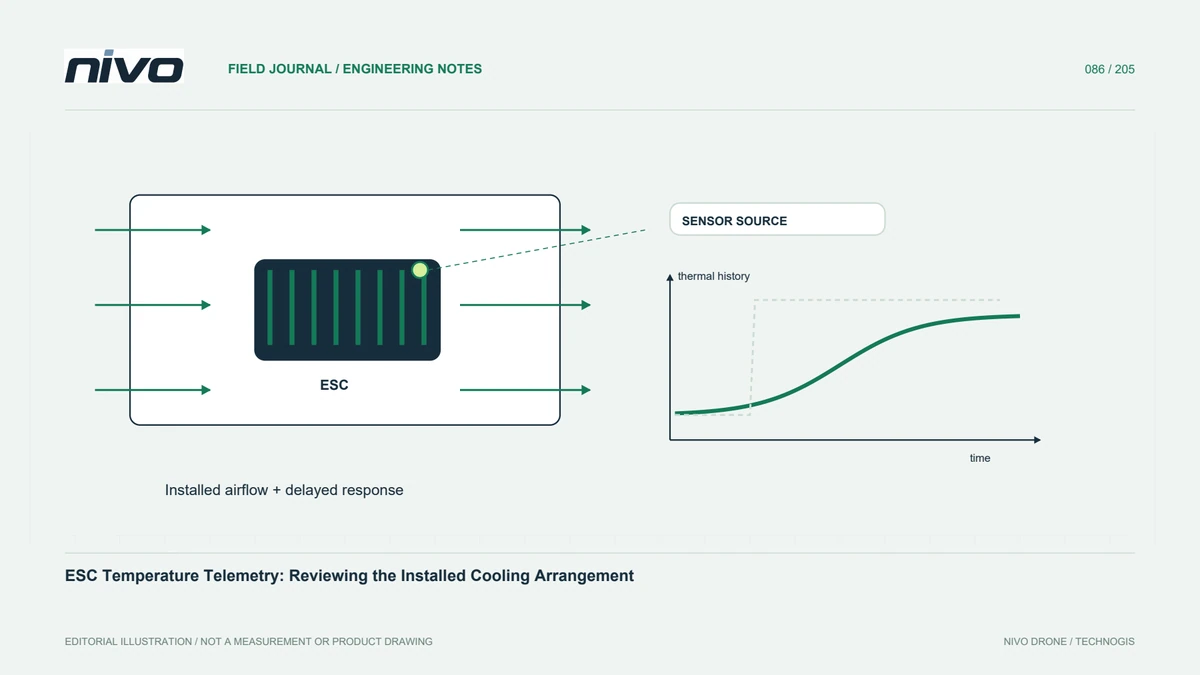
A sensor reading describes its measurement location and implementation, not every part of the equipment. Identify available channels and their timing. A cool displayed value does not prove an unmonitored component is unaffected, while a warm enclosure alone does not diagnose failure. Review relevant messages and behavior with technical personnel. Temperature-calibration features address defined sensor behavior; they do not automatically compensate for every heat-related problem in a complete survey system.
Plan practical responses before the schedule tightens
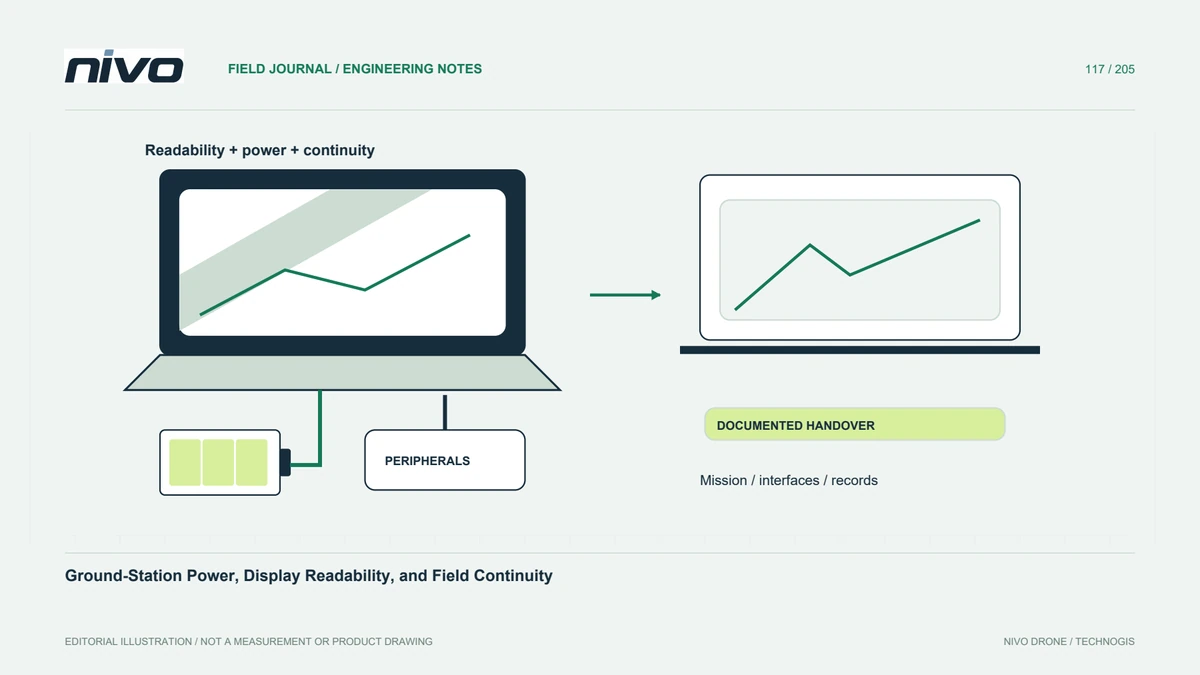
Use the approved operating and maintenance process to determine when preparation should pause, equipment needs assessment, or another ready unit is required. Avoid inventing a universal cooling interval or energizing sequence. Include the ground station and data equipment in the decision because a usable aircraft still depends on support. Clear responsibilities reduce the temptation to treat a disappearing warning as complete evidence that every affected component has returned to its accepted condition.
Preserve the evaluated preparation arrangement
Keep exposure notes, device identities, installation photographs, relevant readings, and the resulting readiness decision together. Review recurring problems against actual waiting and handling practices. This helps NiVO teams improve hot-site preparation without promising a universal environmental capability. The record should show which conditions were evaluated, which instructions governed the response, and what remains uncertain, allowing another crew to reproduce a practical preparation process rather than guess from yesterday's experience.