Protecting Highlight Detail in Mixed Roof-and-Field Aerial Photography
Review bright roofs and darker ground together using representative exposures, histogram context, original-file checks, and explicit limits on recoverable detail.

Identify the difficult surfaces
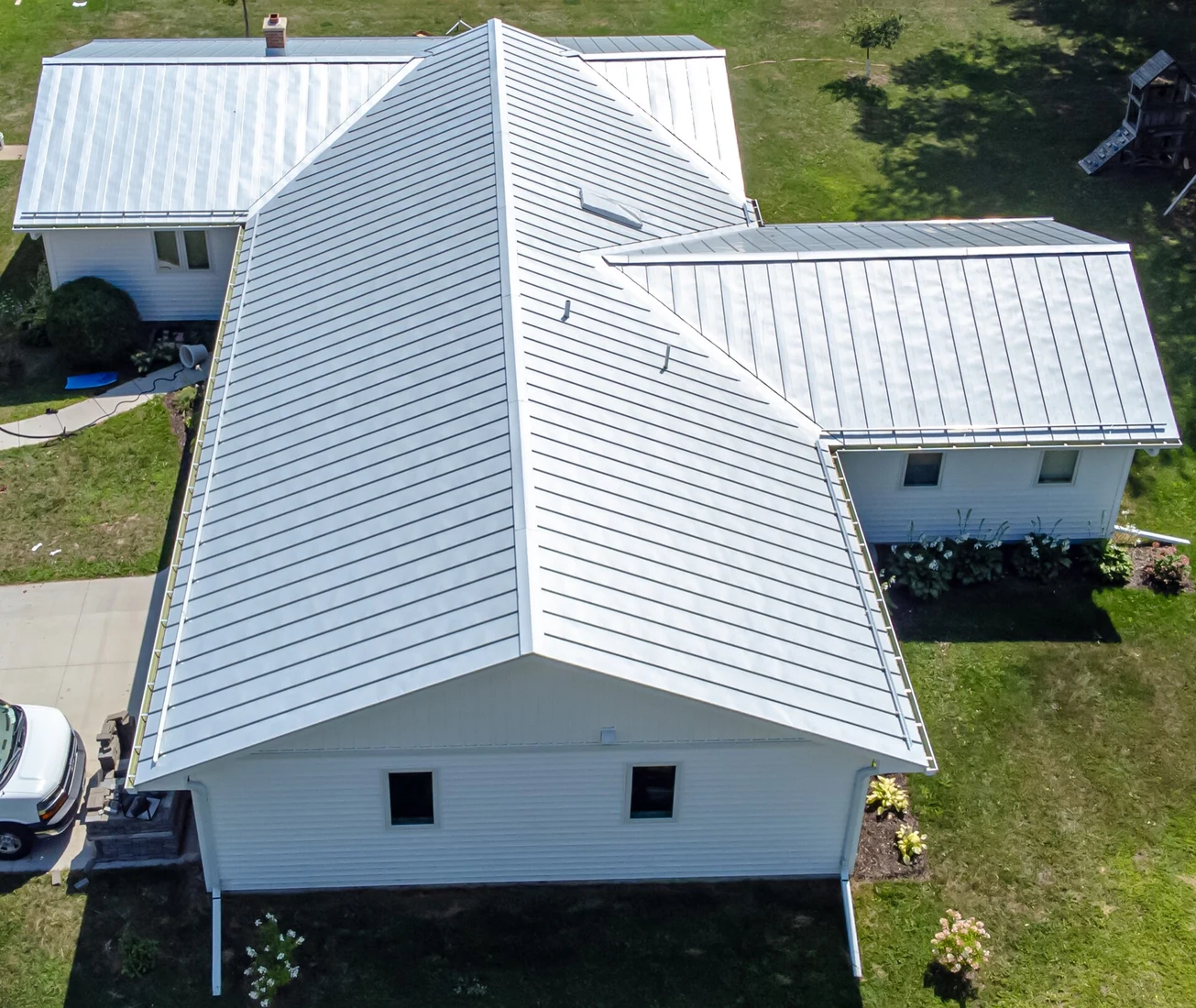
A mapping block containing bright roofs, pale soil, and dark vegetation can challenge one exposure strategy. Establish which surfaces carry decision-critical detail before adjusting the camera. A white roof that is only background has a different significance from a roof under inspection. Mark representative bright and dark targets for the trial. The objective is enough usable information for the task, not an attractive average appearance that hides lost detail on important objects.
Use the histogram as supporting evidence
Sony describes the histogram as a distribution of image brightness and notes that the displayed preview does not necessarily represent every aspect of the final photograph. Use it alongside original-file inspection, not as a complete acceptance test. Examine whether bright target textures remain distinguishable. Record the camera settings and illumination at capture. A small bright patch can matter operationally even when the overall histogram looks reasonable because most pixels belong to darker ground.
Test an appropriate exposure choice
Capture representative samples within the intended operational setup and review them with the processor. Consider highlight retention together with motion, focus, and acceptable shadow detail. Do not recommend an arbitrary compensation value for every landscape. The appropriate choice depends on the actual camera and task. If no single setting supports the required information, discuss a different timing or acquisition design through the responsible operating process instead of assuming software will repair every exposure.
Understand the limits of recovery
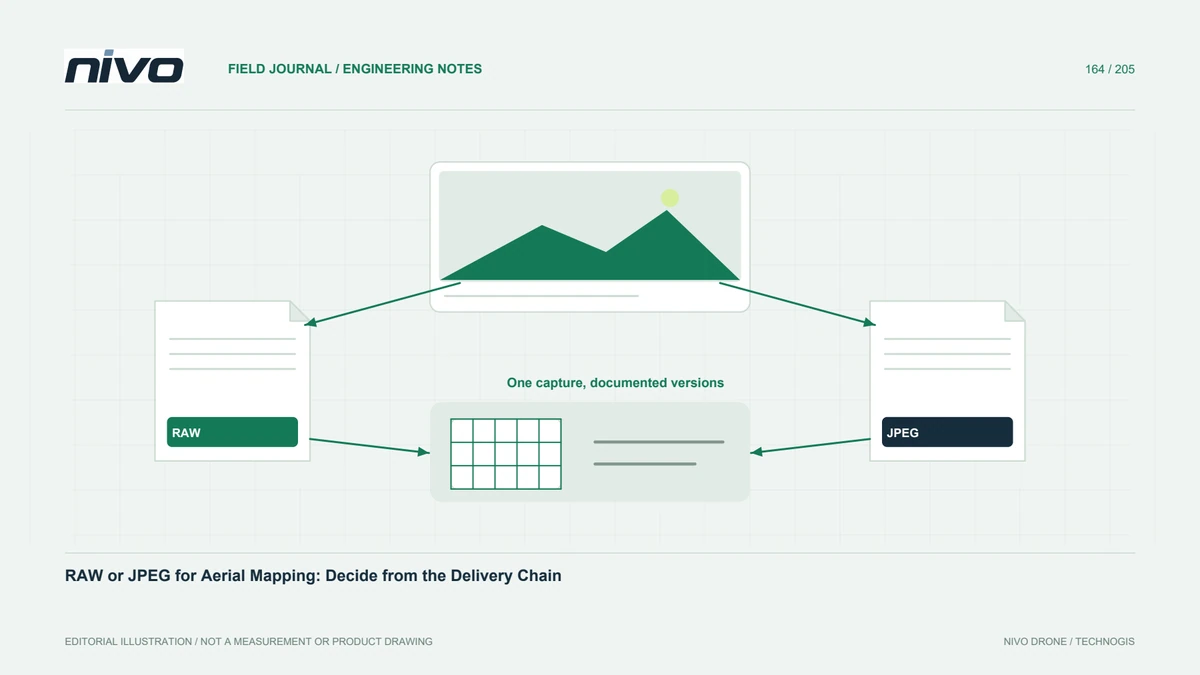
A RAW workflow can offer development choices, but it does not justify promising recovery of information that was not recorded. Brightening a dark region can also reveal noise rather than useful texture. Compare developed results against the original analytical need. Retain the conversion recipe and avoid selective edits that create inconsistent neighboring images. A convincing preview is insufficient if the details needed for reconstruction or inspection still cannot be read in the source evidence.
Check transitions within the block
Light and surface mix can change along a route. Review samples from different portions, particularly where bright industrial areas meet dark fields. Track any approved setting changes so processing groups remain understandable. Do not assess an entire block from its first photograph alone. If acquisition conditions change materially, the operator and quality reviewer should use the agreed reassessment process. The project record should explain differences rather than leaving later analysts to infer them from appearance.
Deliver exposure limits honestly
Keep examples of accepted detail and areas where the evidence remains insufficient. For inspection, state when clipping prevents evaluating a surface instead of reporting it as normal. For mapping, assess the affected region in the reconstruction and define any necessary repetition. Bring difficult target examples to NiVO camera consultation. The useful decision is a tested exposure workflow with clear limits, not a claim that resolution, RAW recording, or a histogram alone guarantees every surface will remain measurable.