Verifying Manual Focus Before an Aerial Mapping Block
Create a repeatable manual-focus check using representative distant detail, original-file review, documented settings, and specific reasons for rechecking.
Define what must remain readable
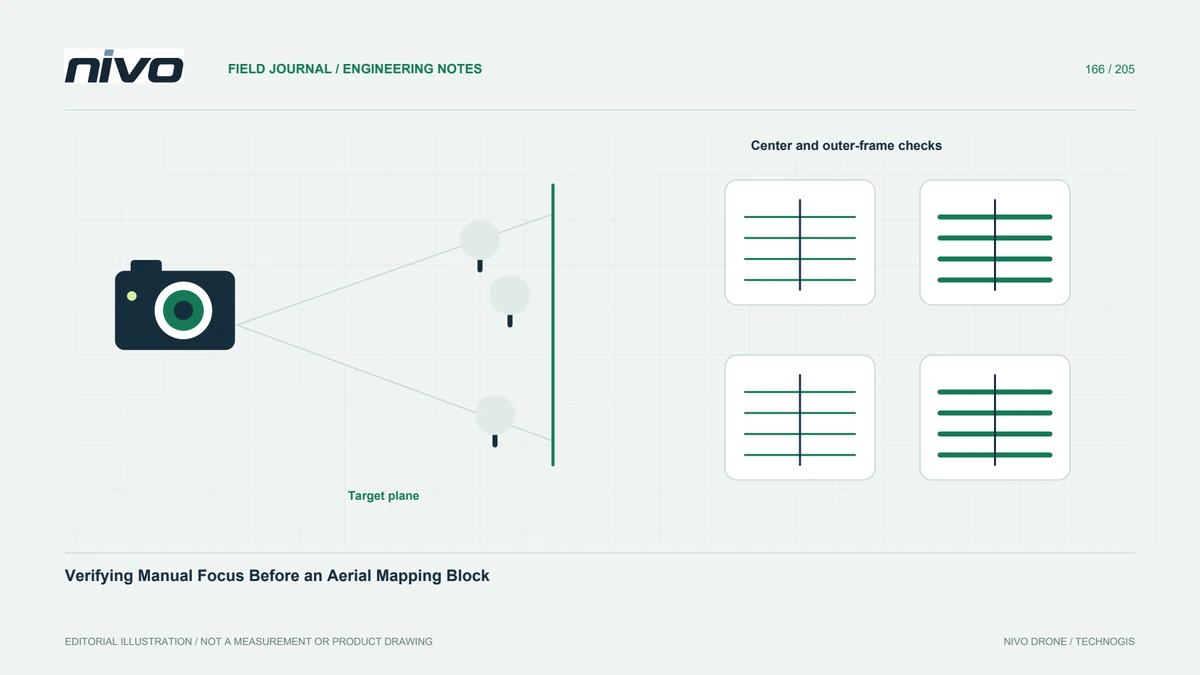
Manual focus is a workflow choice requiring evidence, not a guarantee created by selecting a camera menu option. Identify the smallest relevant ground features and the image regions where they must remain readable. A road marking, roof edge, and vegetation texture can test different aspects of the photograph. Select representative detail appropriate to the assignment rather than accepting the apparent sharpness of a small live-view preview alone.
Use the actual installed configuration
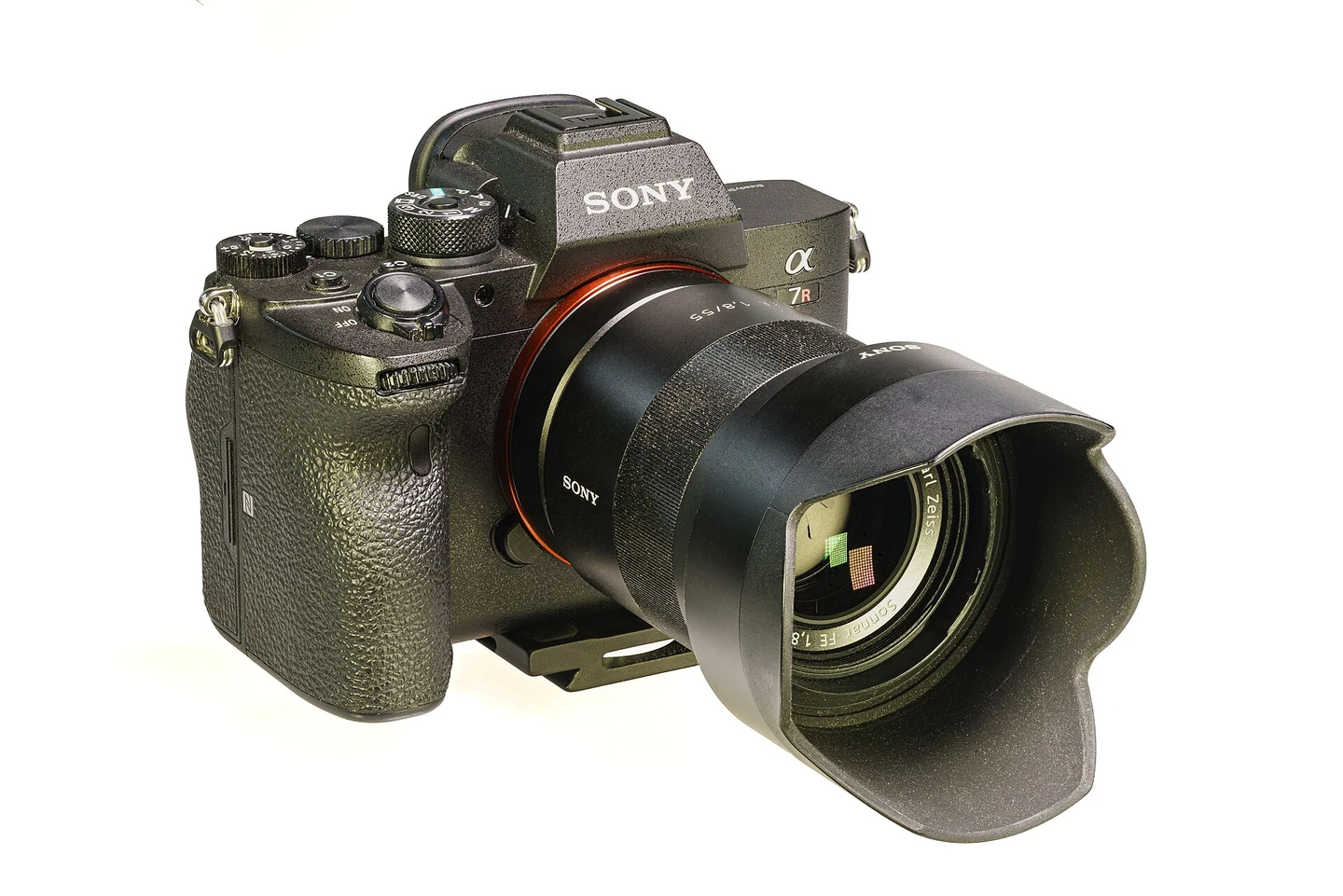
Prepare the camera with the intended lens, aperture, mounting arrangement, and image format. Consult the model's focus controls and magnification guidance before the test. A focus position established with another lens or a different setup should not be transferred without review. Record any setting that can change the behavior of autofocus, manual focus, or shutter release, so later operators can reproduce what was actually tested rather than a remembered description.
Examine more than the center
Review original sample files at a consistent viewing scale. Compare central detail with several outer-frame areas, distinguishing softness from movement blur or atmospheric effects. One sharp center does not prove all useful image regions meet the mapping need. Where defects appear only at one side, investigate the optical or mounting condition through the technical process. Do not assume additional sharpening can recover detail absent from the recorded exposure.
Check repeatability after ordinary handling
Repeat a sample capture after the normal setup and handling steps expected before launch. The purpose is to discover whether the chosen focus procedure survives a realistic workflow, not to subject equipment to invented stress tests. Record which controls or physical actions can alter focus. If the setting cannot be confirmed consistently, revise the procedure with the technical team before relying on it for an entire block of otherwise irreplaceable photographs.
Define recheck triggers
Specify events requiring a new focus review, such as lens changes, configuration changes, or an observation that recorded detail has deteriorated. Use manufacturer guidance for equipment-specific handling. Avoid an arbitrary schedule that ignores changes affecting the camera. Preserve accepted sample images with their configuration so future checks have a meaningful reference. A documented recheck rule lets a second operator identify when the original acceptance evidence no longer describes the current arrangement.
Connect focus acceptance to project use
Ask the processor to confirm that trial photographs provide usable detail for the intended reconstruction and interpretation. Focus verification complements exposure, motion, overlap, and geometric checks; it does not replace them. In NiVO consultation, show accepted and rejected examples with the actual camera configuration. Approve a reproducible procedure and evidence standard rather than promising that manual focus alone establishes survey accuracy, a particular mapping resolution, or compatibility with every aircraft installation.