Memory-Card Write Latency and Missing Survey Images
Investigate incomplete image sequences through camera settings, card identity, writing status, capture intervals, file verification, and traceable testing.
Define the missing-image pattern
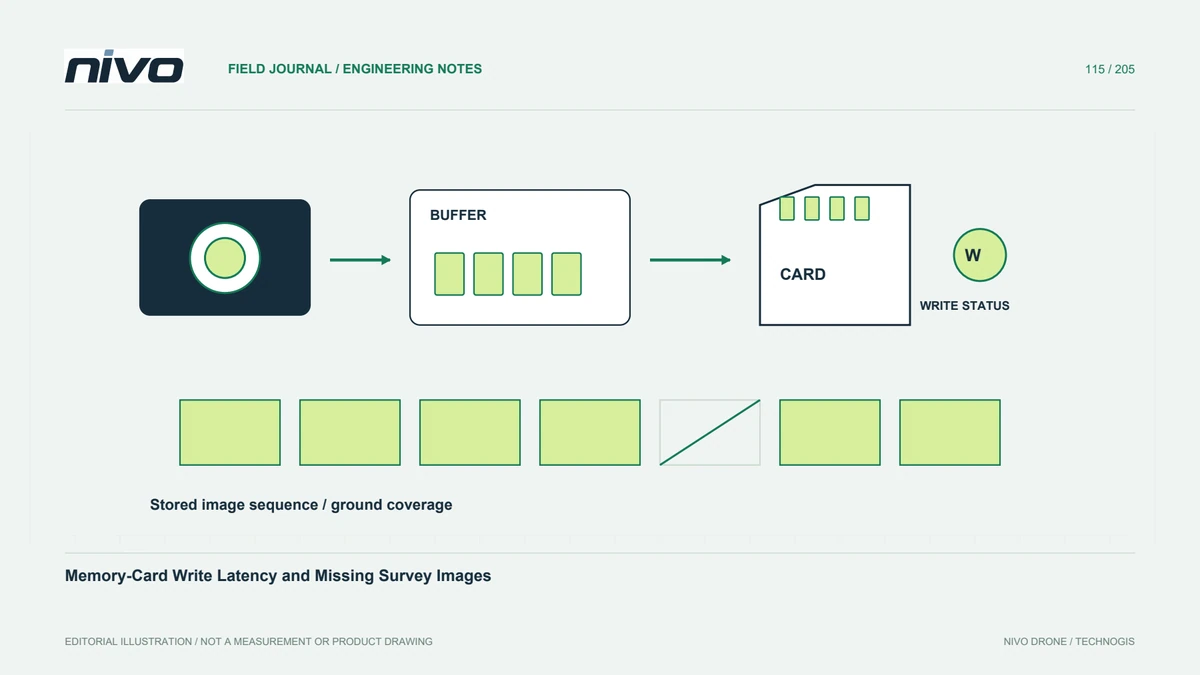
A camera command does not prove a photograph was stored successfully. Record planned commands, available exposure events, image timestamps, and actual files before assigning the problem to the card. Identify whether gaps repeat, grow during a sequence, or follow a particular setting change. Preserve originals and relevant camera messages. A large total photograph count can conceal localized omissions that materially weaken overlap and the final survey's usable coverage.
Identify the exact recording combination
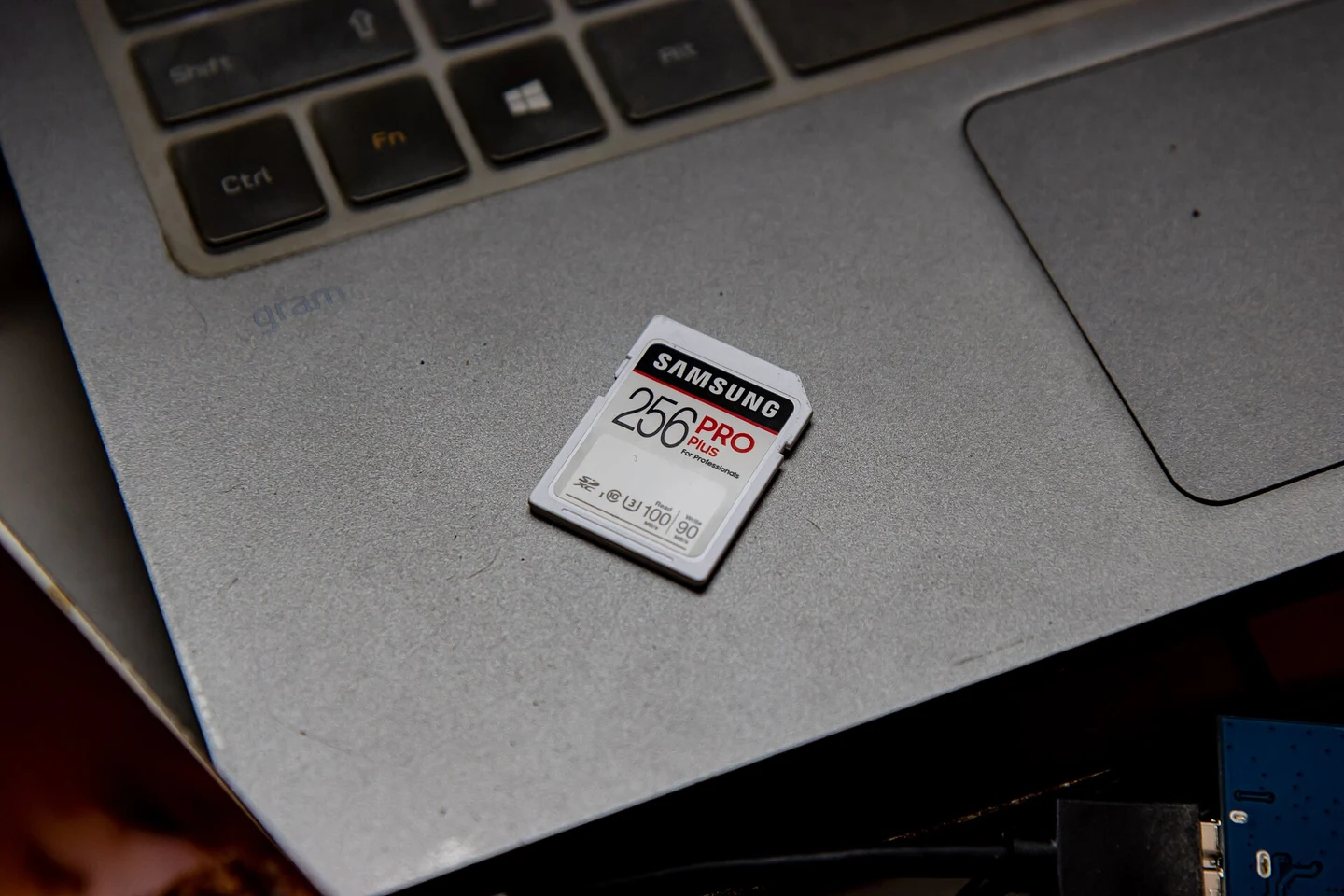
Camera model, firmware, file format, image settings, storage card, and supported interface determine the recording arrangement. Read the camera's requirements rather than selecting a card from its largest advertised number alone. Record card identity and relevant specifications. A combination proven in a different camera or video mode is not automatically demonstrated for this mapping sequence. Keep the accepted arrangement identifiable so later substitutions receive an appropriate review.
Distinguish buffering from completed storage
Cameras can indicate writing activity and pending data according to their implementation. Understand those indicators in the actual manual. A displayed image or apparent trigger response does not always establish that all intended files have reached storage. Follow documented handling instructions while writing is active. Do not remove media or interrupt power as an improvised test. The investigation should preserve both the camera's state and the integrity of already recorded evidence.
Test sequences rather than isolated photographs
Use the approved integration process to examine sustained capture with the intended format, interval, power arrangement, and media. Include representative writing demand and verify the resulting files. A single successful image does not show that a long sequence maintains its intended spacing. Record start conditions and any warnings. Compare planned events with stored observations so the test answers a coverage question rather than only confirming that the shutter can operate.
Separate storage issues from other causes
Trigger integration, camera availability, power interruptions, settings, and file handling can also produce missing observations. Avoid replacing media repeatedly without checking the complete path. Keep each controlled change and result traceable. A corrected sequence should be examined for readable files and actual timing, not merely an absence of warning messages. Where a card is suspected, follow manufacturer-supported diagnostics and preserve the affected material for examination before erasing potentially useful evidence.
Use findings to control field substitutions
Keep approved camera and media combinations, test references, file-verification steps, and recapture criteria with the payload record. Operators should recognize when a replacement card or changed file format needs renewed assessment. This supports reliable NiVO image acquisition without promising that one speed label guarantees every workload. The accepted workflow connects recording behavior with the information required for processing and ensures missing observations are discovered while a practical follow-up remains possible.