Managing Drone Equipment Status After Moisture Exposure
Document rain, condensation, storage conditions, and affected assemblies while keeping drying appearance separate from technical return-to-use evidence.
Describe the exposure before choosing a response
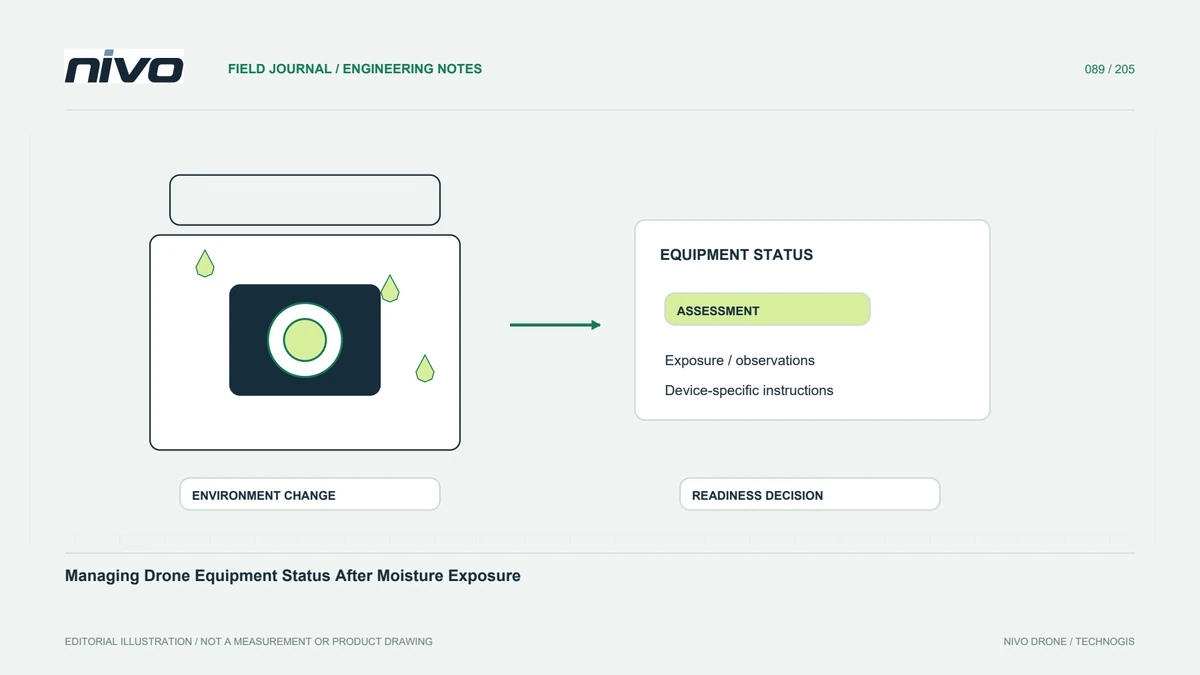
Rain, condensation, a wet transport case, and liquid contact during handling are different situations. Record what was observed, which assemblies were affected, and whether the equipment was powered. Include time, location, and relevant environmental changes. Avoid assuming that one visible droplet describes the whole exposure. Accurate context helps the responsible service team choose the applicable instructions instead of applying a familiar drying habit to every device.
Keep equipment status explicit
Use the aircraft and component guidance to determine isolation, handling, and technical follow-up. Mark affected equipment so it is not confused with units already cleared for use. A general article should not prescribe energizing wet electronics or a universal waiting period. Identify who owns the readiness decision. The record should show unresolved exposure questions even when the operational schedule strongly favors returning the equipment to the next assignment.
Separate exterior dryness from internal condition
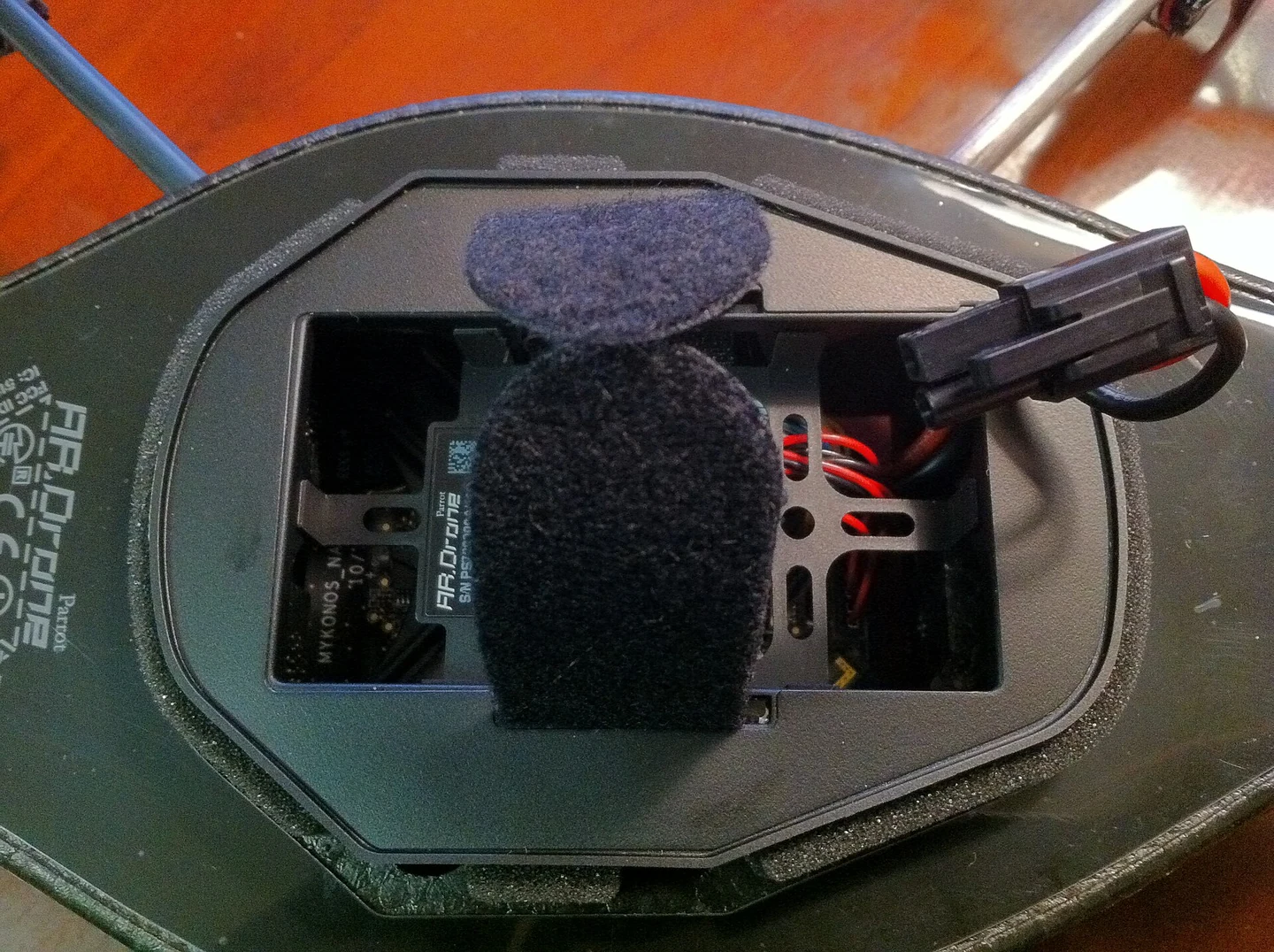
A dry outer surface does not demonstrate that connectors, cavities, protective materials, or optical assemblies are unaffected. Conversely, lens fogging needs interpretation in its actual temperature and storage context. Preserve photographs and symptoms before any authorized intervention. Do not transfer a treatment published for another manufacturer's payload to the installed device. Component-specific instructions determine permitted work, while observations help establish which instructions and support contacts are relevant.
Review the storage and transition history
Equipment moved between different temperature and humidity conditions can develop condensation. Record the transition and how the case was used rather than reporting only that the aircraft was indoors. Wet contents and protective inserts may need their own assessment. The storage review should consider the complete kit, including sensors and support electronics. It should not invent a universal humidity target or assume a sealed case resolves an already documented moisture problem.
Require evidence for return to use
The responsible process should identify required inspections, any service work, and the configuration assessed afterward. A successful boot or disappearing fog is only one observation, not complete clearance. Keep warnings, unusual behavior, and unresolved findings linked to the exposure event. Where readiness cannot be established, compare rescheduling or using another appropriately prepared unit. Schedule pressure does not replace the evidence required by the actual equipment documentation.
Improve the field handling plan
Use the completed investigation to revise case handling, environmental records, equipment identification, and escalation responsibilities. Explain which findings were confirmed rather than converting every moisture event into the same diagnosis. Brief the team using the actual assemblies and instructions. A clear exposure history helps NiVO support investigate recurring problems and lets subsequent operators understand why a unit has its recorded status instead of inferring readiness from its clean appearance.