Transport Shock Records and Drone Case Layout Reviews
Connect packing geometry, handling incidents, component identities, and arrival inspections so transport problems are investigated with useful evidence.
Document how the equipment is supported
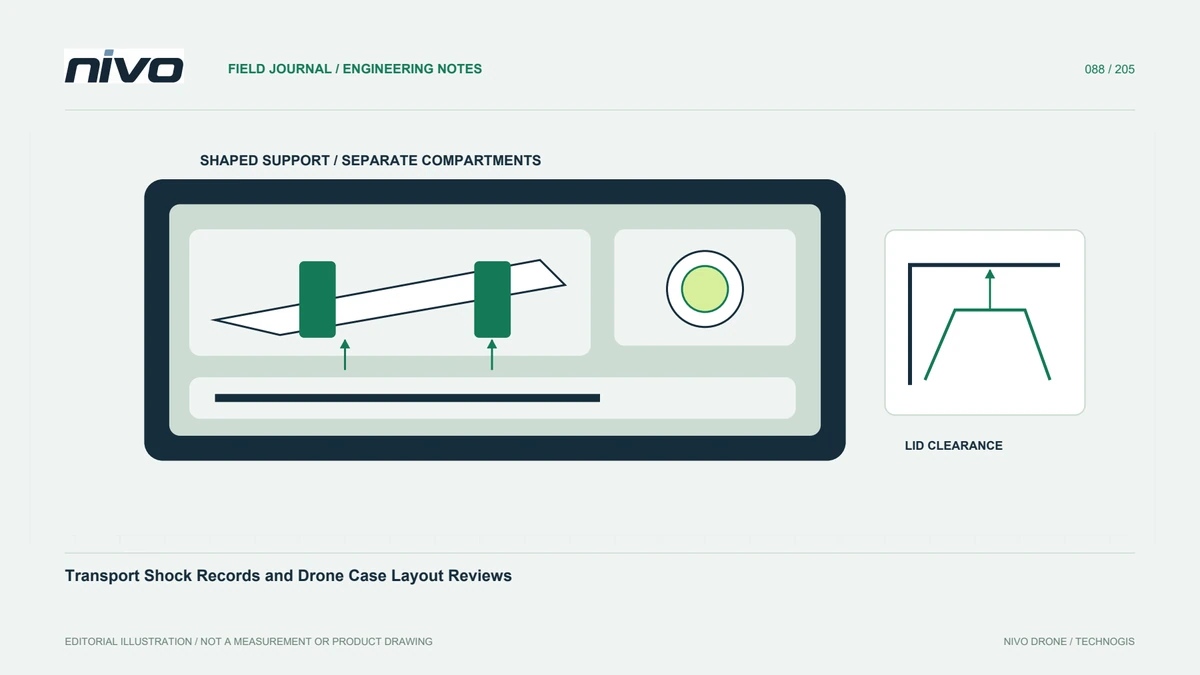
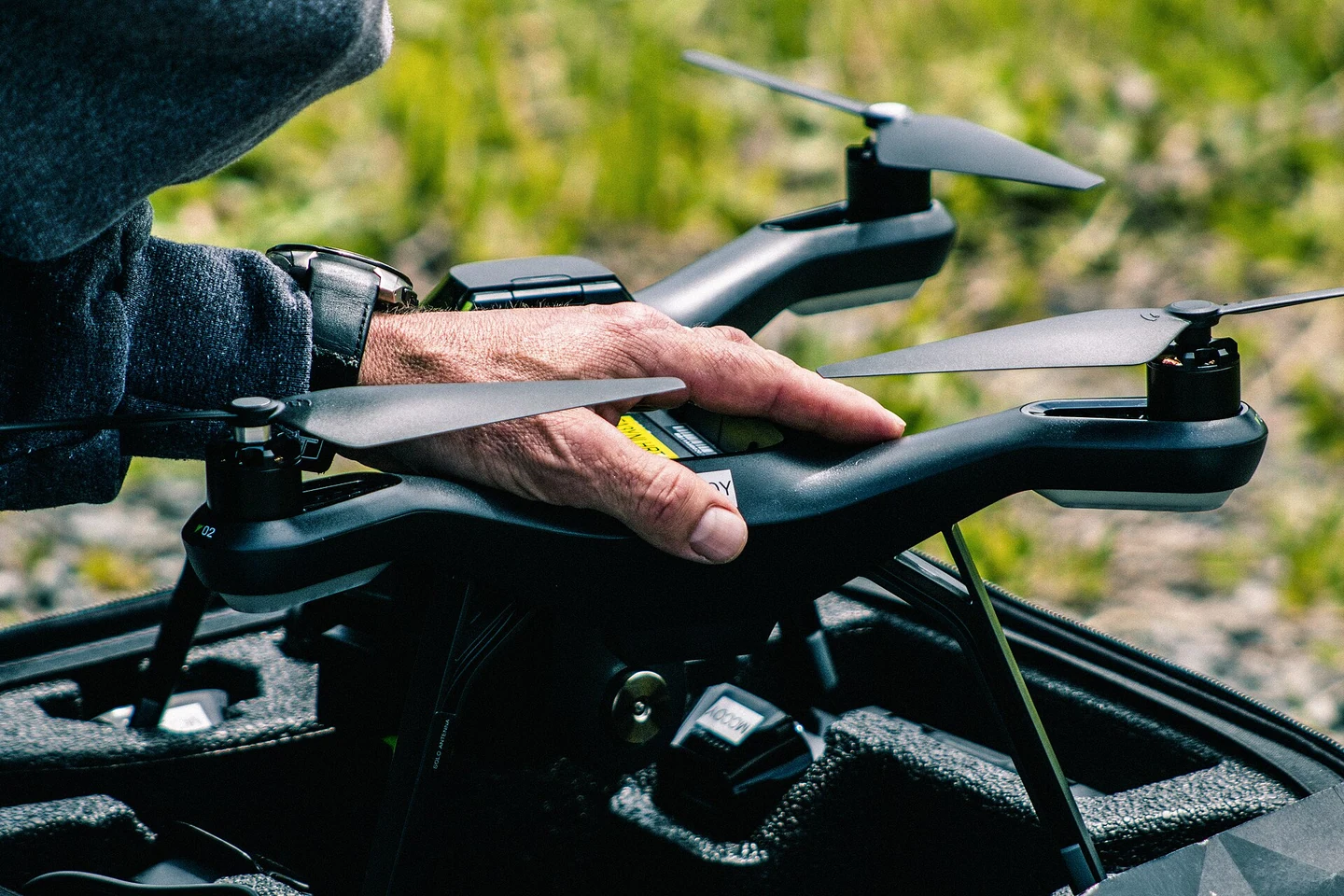
A protective case is part of a packing system, not a guarantee against every handling event. Record where the aircraft sections, sensors, and accessories are supported and restrained. Identify delicate protrusions and parts that can contact neighboring equipment. Use the case and aircraft manufacturer's instructions for the actual arrangement. A photograph of the closed lid provides less useful evidence than a clear view showing how the contents fit before departure.
Separate intended contact from accidental loading
Foam, dividers, straps, and case walls can transmit force differently. Review whether closing the lid presses on a probe, lens, control surface, or connector. Do not assume that an accessory fits safely because the case can latch. Compare the packed arrangement after any equipment addition. A changed lens or cable can alter support geometry even when the external case and the aircraft model remain exactly the same.
Preserve handling events without guessing their effect
Record reported drops, unusual vibration, water exposure, or damaged latches with time and case identity. Distinguish observed events from assumptions about hidden damage. An impact indicator, if used, has its own interpretation limits and cannot independently approve or condemn the aircraft. Keep the evidence for the responsible inspection process. The goal is a precise arrival question, not an unsupported claim that a particular journey must have caused a later fault.
Compare arrival condition with a baseline
Use the documented packing photographs and component list to identify displaced supports, loose items, or changed relationships. Follow the aircraft's arrival and maintenance checks before operation. A clean outer case does not prove its contents remained unchanged. Equally, a surface scuff does not by itself establish component failure. Location-specific observations help technicians decide which additional examination is needed and avoid replacing unrelated parts simply because transport was recent.
Review the packing design after a finding
If inspection identifies an issue, connect it with the support arrangement before changing several things at once. A revised divider or restraint should be assessed for pressure, access, material compatibility, and repeatable packing. Keep the earlier configuration and the reason for revision. Do not improvise a drop test using operational equipment. Appropriate validation follows the responsible technical process and the protective-system manufacturer's applicable guidance.
Make packing a repeatable handover task
Provide an illustrated packing reference, inventory, case identity, and a simple route for reporting changes or incidents. Assign who checks the arrangement before departure and who reviews arrival condition. A replacement team should reproduce the intended layout without relying on one experienced packer. This connects logistics with aircraft condition and supports NiVO field readiness while keeping transport observations distinct from the complete technical decision to release equipment for use.