Pitot Tube Condition and Trustworthy Airspeed Evidence
Investigate airspeed discrepancies through probe condition, tubing identity, installation geometry, calibration records, and comparisons with flight context.
Distinguish the measured quantity
Airspeed and ground speed describe different relationships, so disagreement between them is not automatically a failed sensor. Begin with the flight phase, wind context, installed sensor type, and the information actually recorded. Identify whether the displayed value comes from a physical sensor or an estimate. A useful maintenance report describes the observation and its timing before attaching a fault label that might direct technicians toward the wrong component.
Trace the complete pressure path
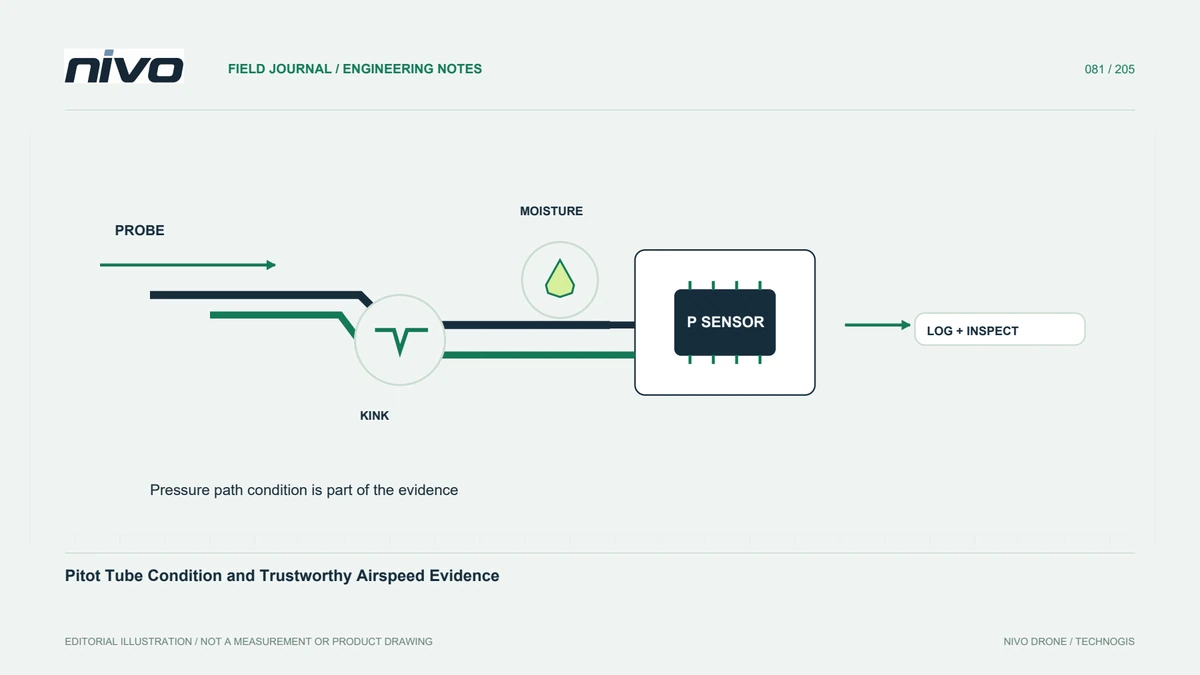
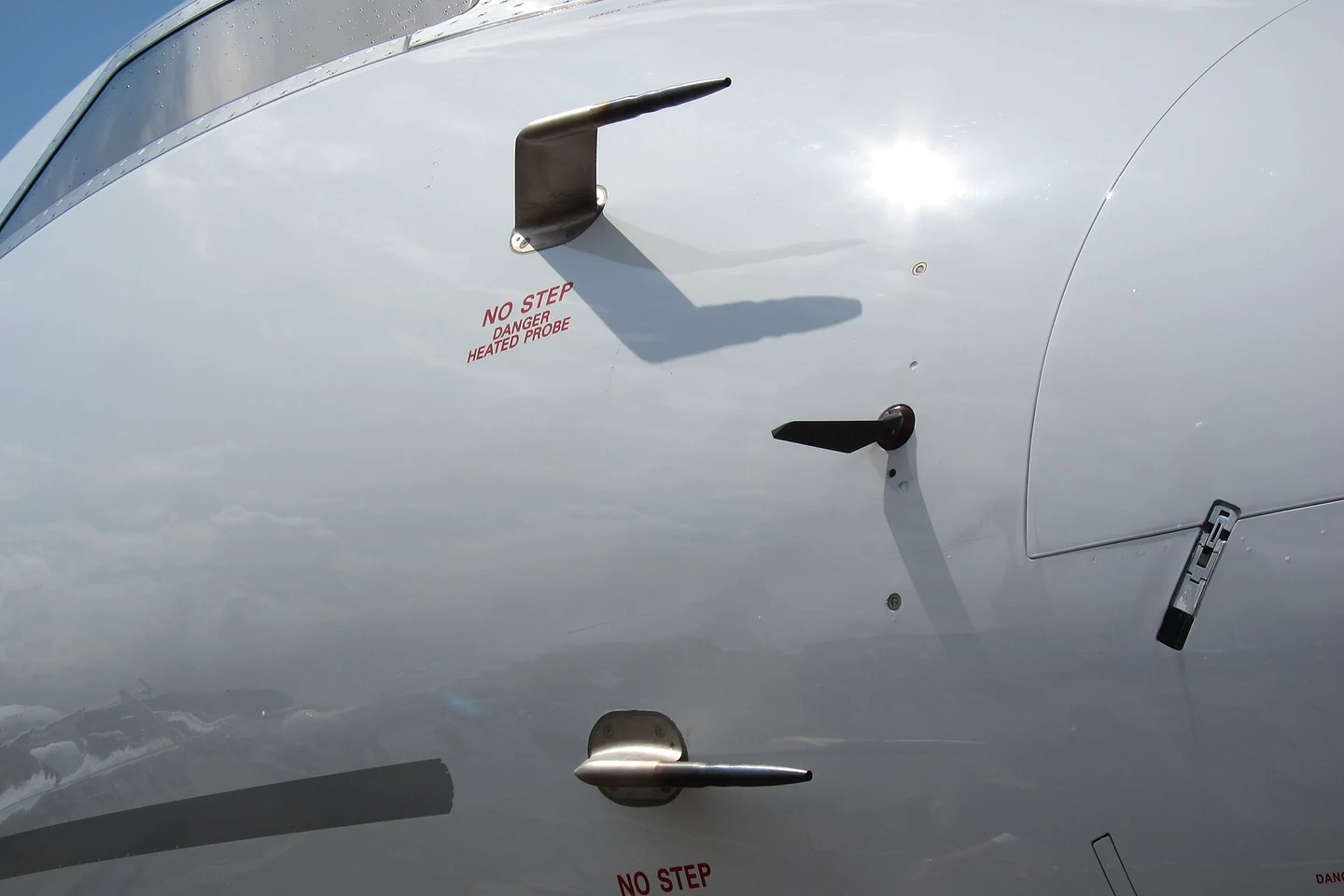
The probe, pressure openings, tubing, connections, and sensor form one measurement arrangement. Record their identities and inspect accessible condition using the approved procedure. Kinks, trapped moisture, contamination, or disturbed connections deserve documentation rather than improvised cleaning. Photographs should show routing and orientation, not only the probe tip. An apparently intact external tube cannot establish that the entire pressure path remains suitable after transport or maintenance.
Review the installed airflow environment
A probe measures within its local airflow environment. Placement relative to the fuselage, propulsive flow, and added equipment therefore matters. Compare the installed arrangement with its accepted reference, especially after a payload bracket or protective cover changes. Do not borrow mounting dimensions from another aircraft. A technical reviewer should determine whether changed geometry needs additional validation before the sensor's data can support the intended control or monitoring function.
Separate zero checks from complete validation
Follow documentation for the actual sensor when reviewing initialization and calibration. A plausible value in still conditions answers only part of the question. It does not demonstrate response across the intended flight envelope or correct integration with control logic. Preserve initialization conditions and recorded messages. Avoid pressure tests, blowing, or adjustments improvised from a general article; approved equipment guidance determines acceptable methods and who may perform them.
Compare evidence within relevant intervals
Use synchronized plots of available airspeed, ground speed, attitude, power, and flight phase to describe the discrepancy. Distinguish missing records from repeated values and note environmental changes. The comparison should test a stated explanation, such as an installation disturbance, without treating ground speed as a universal replacement reference. Keep rejected explanations alongside the supporting observations so another reviewer can understand why the investigation changed direction.
Document the return to an accepted arrangement
The closure record should include inspection findings, any replaced parts, calibration references, and the configuration actually evaluated. State which operational evidence supports acceptance and which conditions remain outside the assessment. Include probe protection and removal responsibilities in handling instructions where applicable. This makes future NiVO support conversations specific to the installed system and prevents a simple successful display check from becoming an unsupported claim of complete airspeed-system readiness.