Understanding VTOL to Fixed-Wing Transition in Mapping Missions
Understand the transition phase of a VTOL aircraft, the difference between airspeed and groundspeed, and the planning context needed for repeatable mapping.
Two ways to support the aircraft
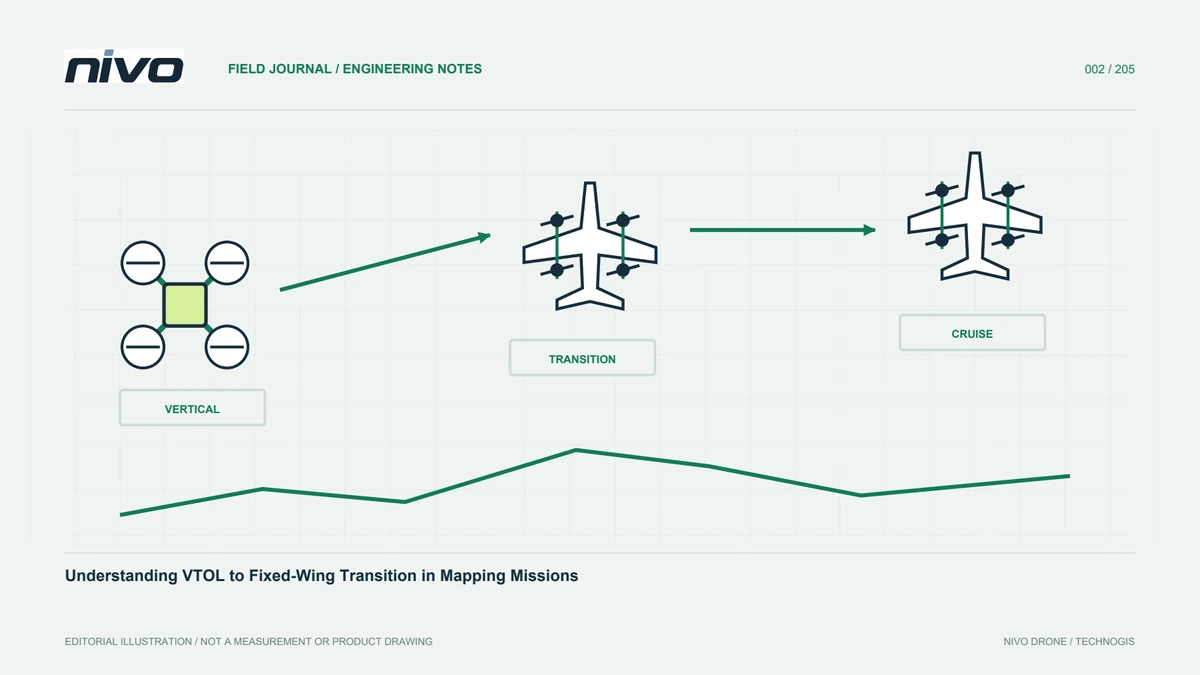
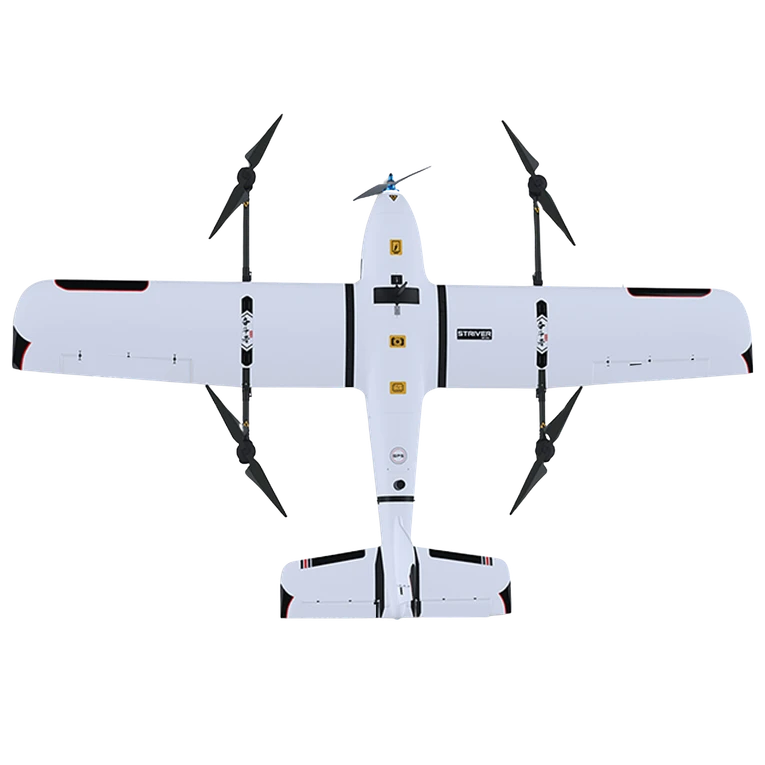
A hybrid VTOL combines vertical flight with fixed-wing flight. During the vertical phase, propulsion supports and controls the aircraft according to its architecture. During cruise, airflow around the wing creates aerodynamic lift. Transition is the change between those conditions. It is more than switching one motor off and another on: control must be maintained as system contributions change. The exact arrangement, sequence, and procedures depend on the aircraft design and manual. This explanation provides context rather than an operating instruction for any particular model.
Airspeed differs from groundspeed
Groundspeed describes movement relative to the surface, while airspeed concerns movement relative to surrounding air. This matters because the aerodynamic state depends on airflow. Wind can change map movement without an equivalent change in airspeed. Operators should not judge transition readiness from one map number. Use the indicators and procedures specified for the aircraft, together with sensor status and system messages. Thresholds copied from a different model do not establish suitability for another design, even if both vehicles share a general architecture.
Plan adequate flight space
Vertical departure does not remove the need to plan the following phase. Turning, accelerating, and entering the survey block need space appropriate to the aircraft. A route appearing clear in imagery may contain wires, new vegetation, or vehicles. Inspect the site and follow aircraft limits. Do not place the first survey line close merely to shorten travel. Treat transition and entry into acquisition as distinct elements understood by everyone monitoring the environment. This makes site selection part of the mission profile rather than an isolated point.
A mode label is not the whole situation
The autopilot may manage transition according to its configuration and conditions. A mode label identifies control logic, but it does not summarise surrounding risks. The team needs to know who issues commands, which indicators are observed, and how changes are communicated. Training should connect recorded commands with attitude, position, and power. This teaches event sequences rather than button positions. A shared understanding also helps staff describe what happened without treating every unexpected display as proof of an aircraft control problem.
Payload changes affect the configuration
A new camera or mount can change mass, distribution, drag, and power demand. These affect aircraft behaviour as well as imagery. A new payload needs the appropriate integration and acceptance process. Transition without a camera does not prove suitability for every sensor. Record equipment, mount position, battery arrangement, and configuration version. Evidence must represent the arrangement intended for work, not an earlier state. This allows technical staff to distinguish a change in the aircraft setup from a change in operating conditions when reviewing subsequent results.
Review the return transition
Planning often emphasises departure and acquisition, leaving the return with remaining space. Instead, review the change towards vertical flight according to the manufacturer procedure. Position, wind, energy, and landing-area availability are connected considerations. The ground team must monitor whether people or vehicles have entered. Conditions may change during a long mission. A sound return plan links the profile with supervision, roles, and previously agreed operating decisions. Do not assume the site remains suitable simply because it was clear when the aircraft departed.
Learn from event records
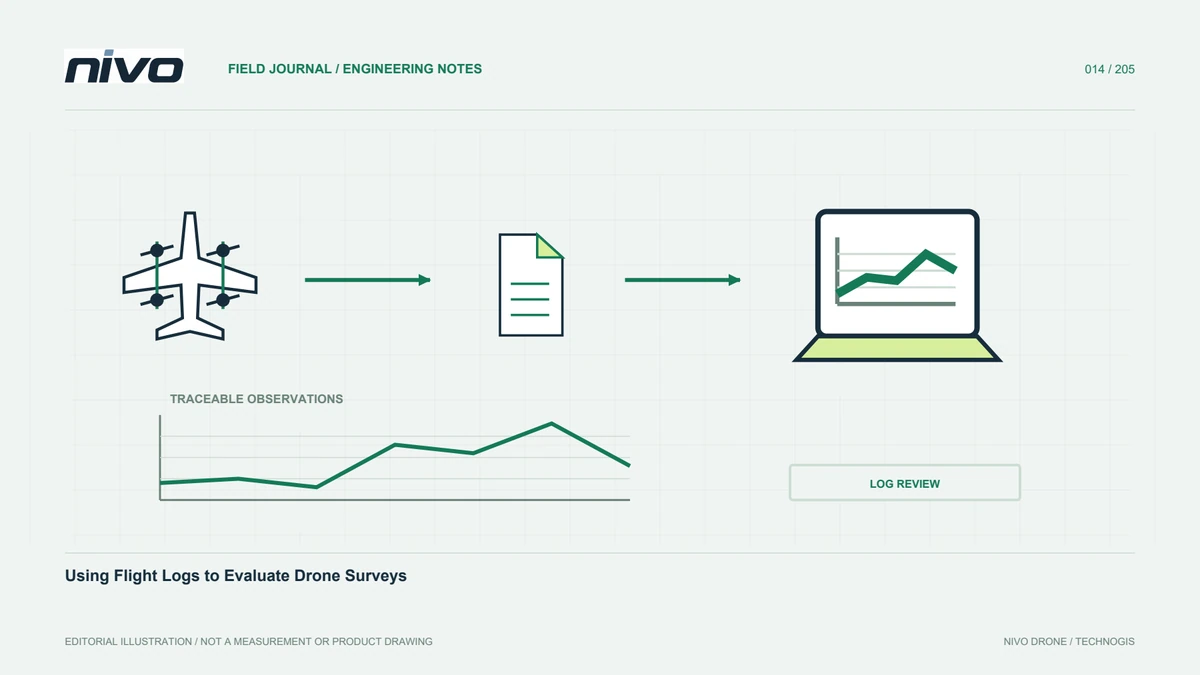
Logs help explain the relationship between commands and response. Begin with timing, then review relevant mode, attitude, speed, power, and messages. One graph without configuration and environmental context is rarely enough. Observer notes may explain events absent from a particular source. Assessment requires people who understand the system and documentation. Findings may call for better records or mission review instead of immediate parameter changes. Separate observed evidence from possible explanations, and identify which further check would help distinguish between the remaining possibilities.
Use staged testing
Understanding transition requires training, documentation, and approved tests. Set a measurable objective, such as checking status consistency in an accepted configuration. Define responsibilities, evidence, and criteria for proceeding. Separate changes so their effects remain traceable. This article gives no control sequence or parameter values: the manual and competent operator govern execution. For mapping teams, the benefit is connecting aircraft behaviour with payload operation and survey assessment. Test conclusions should name the configuration used and should not be extended to untested arrangements.
Connect briefing and mission review
Show the operating area, survey entry, acquisition lines, and return on one diagram. Ask the operator to explain the aircraft state in each part. Observers report changed obstacles and activity; processors identify sequences that may be difficult to use. The aim is shared understanding rather than improvised control changes. Resolve inconsistent explanations before proceeding. Save the briefing with the mission version so later evaluation can revisit the assumptions. This gives flight review and data review a common context after the field team returns.
Illustrative case: reviewing entry into the survey block
Consider a hypothetical planning review in which an acquisition block begins near the chosen operating site. The map appears efficient because the aircraft has little travel before reaching the first survey line. During review, however, the operator explains that the accepted aircraft procedure also requires space for the transition and line-entry phases. The team therefore treats those phases separately from useful image collection. An observer checks whether the proposed space corresponds with current obstacles and site activity. The processor reviews whether the initial images would belong to a stable acquisition sequence or merely document the aircraft arranging its flight path. No participant changes control parameters to force the original geometry to work. Instead, the team revises the mission within the approved process and records why the entry section changed. During the agreed test, the reviewer examines event timing, configuration identity, and representative photographs together. A mode label alone is not used as acceptance evidence. The resulting record explains which portion is intended for transition and which portion supports mapping. This makes a later discussion about missing early coverage much clearer, because the original planning assumption and the actual acquisition boundary remain available to everyone involved.
A revised entry route may be acceptable if it fits the assessed site and aircraft procedure; a different operating location may instead be the better planning option. The choice is reviewed before execution rather than improvised by shortening a required phase. The acceptance package overlays the intended acquisition boundary with the actual usable image footprint and preserves the mission identity. If early photographs are intentionally outside the mapping sequence, that distinction is explained in the delivery notes. A user can then distinguish planned non-acquisition travel from genuinely missing coverage without reconstructing the flight from an unexplained gap.