Building an Energy Budget for a VTOL Mapping Mission
Assess VTOL mission energy through flight phases, payload configuration, travel to the survey block, turns, return requirements, and evidence from flight records.
Endurance is not an energy plan
Catalogue endurance is initial information whose test conditions matter. Field planning needs the actual aircraft, payload, battery, weather, and mission profile. Do not fill the entire advertised duration with acquisition lines. Separate estimates from measurements. If testing does not describe configuration or conditions, raise those questions during technical review. Energy planning supports an operator-approved mission rather than inventing one universal reserve figure. Its assumptions should remain visible so later results can improve the plan instead of being compared with a number whose origin nobody can explain.
Divide the mission into phases
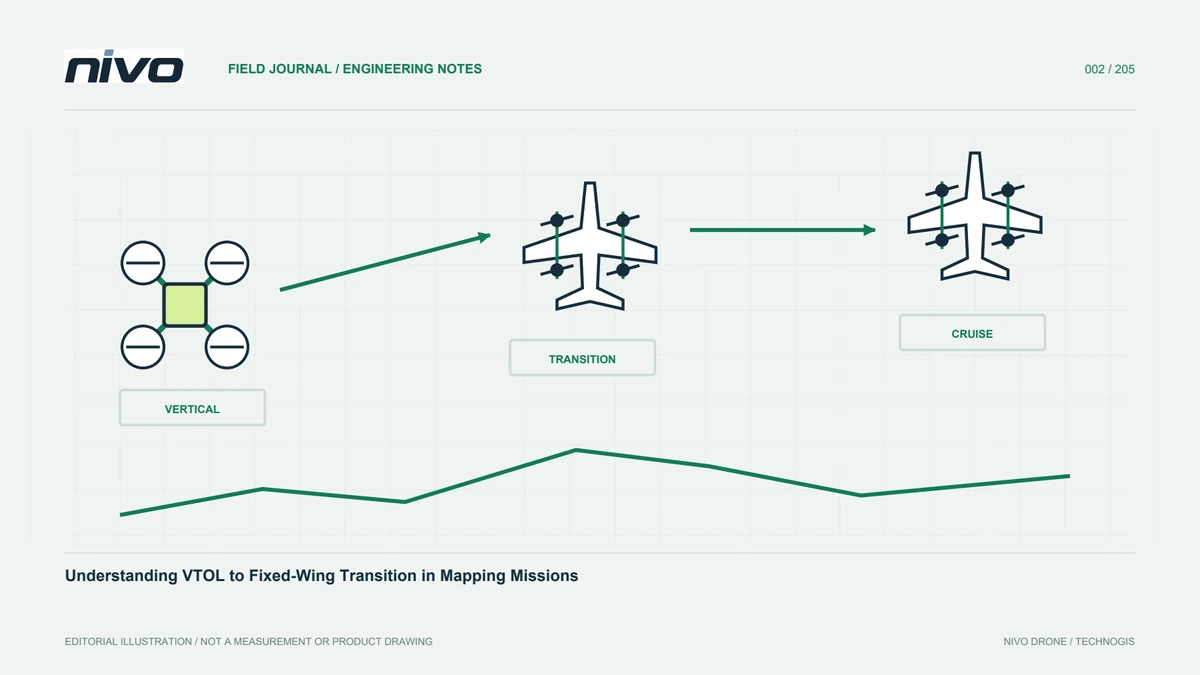
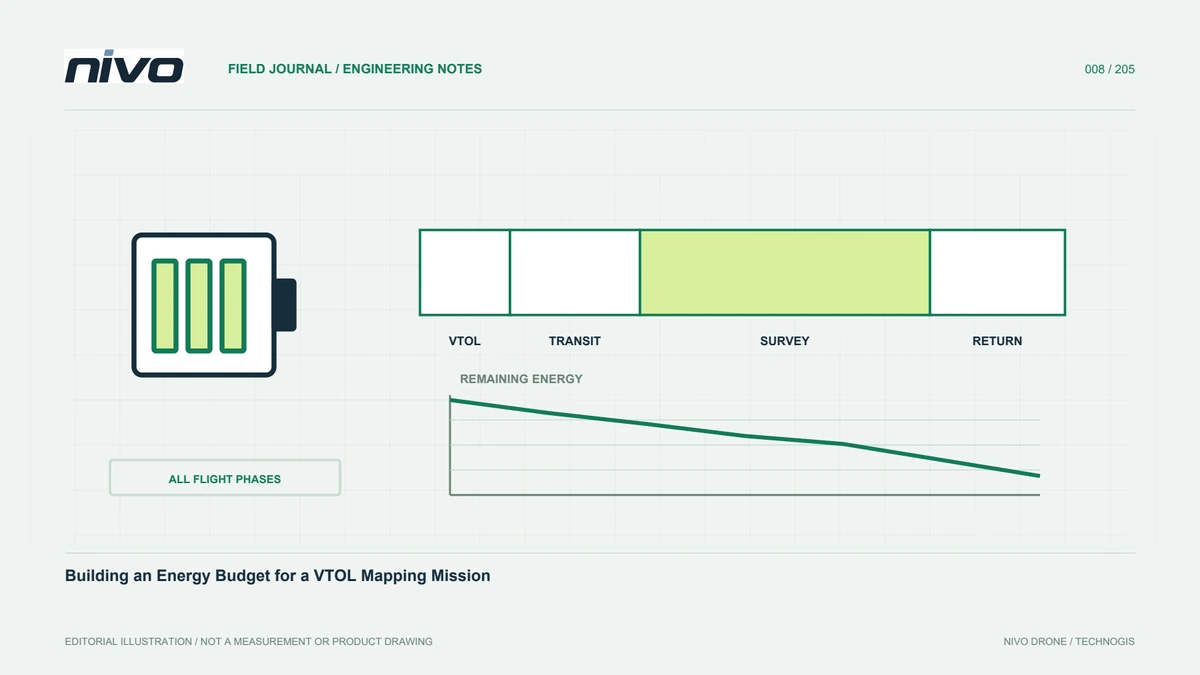
A VTOL mission may include vertical flight, transition, travel, acquisition, return, and landing-related phases. Each has power characteristics dependent on aircraft design. This division exposes work that consumes energy without collecting survey data. A distant block may involve substantial travel, while short blocks may require repeated repositioning. Use the same mission version when comparing estimates and logs. Otherwise, apparent performance differences may simply reflect a changed route. The phase structure also helps processors understand why acquisition should not be assumed continuous from departure to recovery.
Use the real mass arrangement
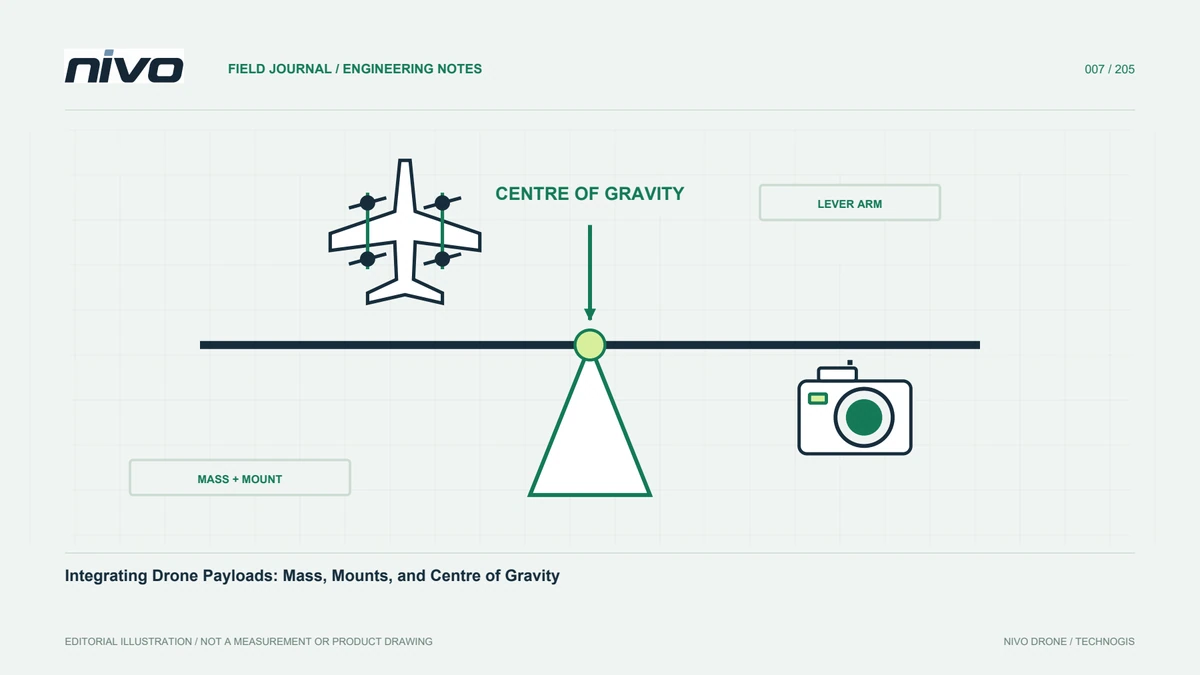
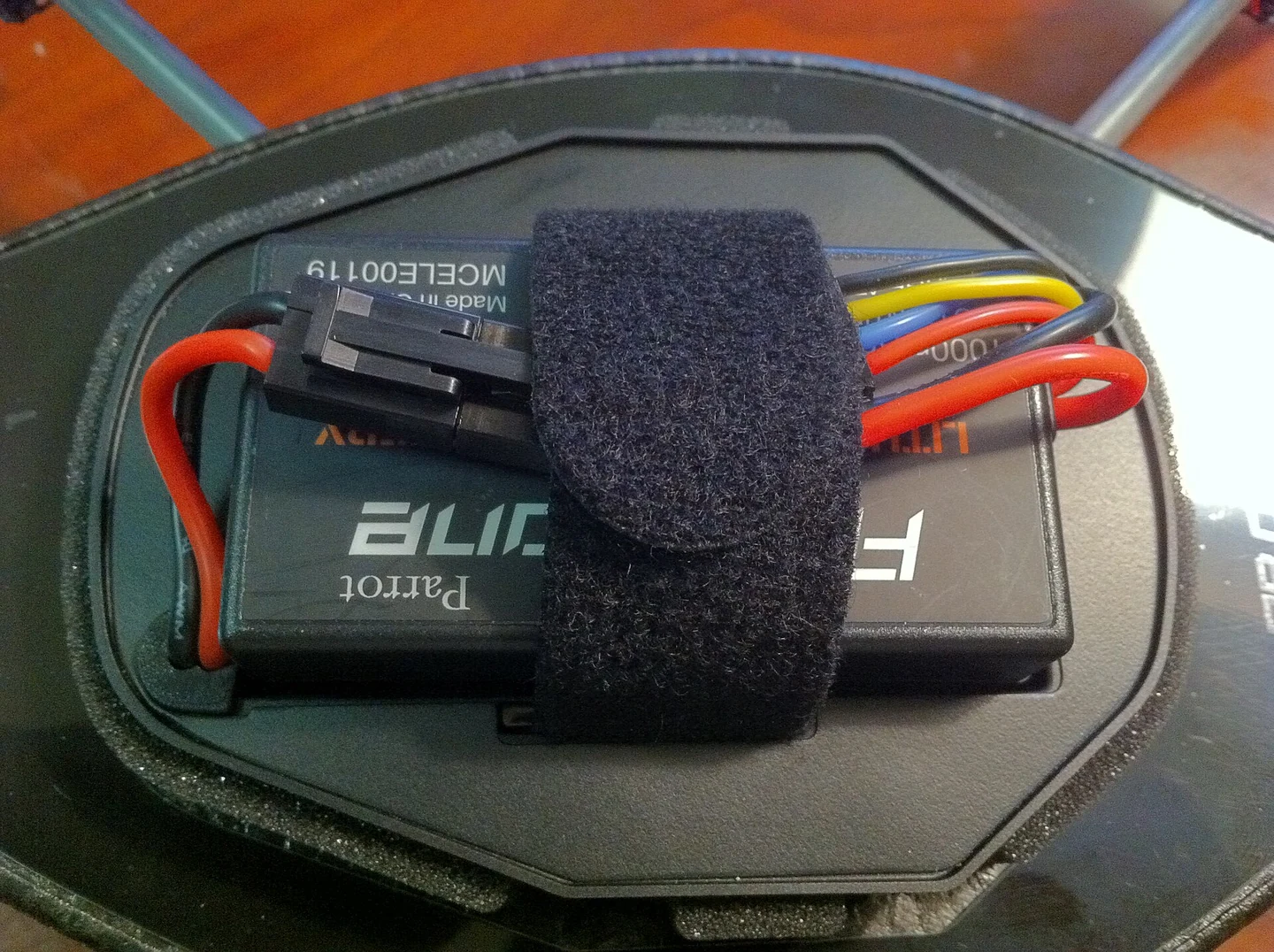
Energy estimates need the installed equipment, including payload support components. Verify mass as required rather than considering the camera alone. Another battery changes more than nominal electrical capacity: mass and distribution may also change. A sensor may alter power demand or drag. Record the configuration used for reference flights. If the project differs, identify assumptions needing verification. Experience with one light camera is not equal evidence for another instrument. This is why integration records and mission planning should be connected rather than maintained as unrelated documents.
Assess wind and travel direction
Wind affects the relationship between movement through air and progress over the ground. Assess mission consequences across the profile, not from one speed estimate. An apparently favourable outward direction may have different return implications. Consider conditions across the area and possible changes during work. The operator applies aircraft limits and planning procedures. The survey team contributes field observations and timing. These notes help explain actual energy differences between missions that appear similar on a map but were not conducted under equivalent conditions.
Review turns and block divisions
Boundary shape affects line length, turns, and movement between areas. Too many small blocks can increase work outside acquisition lines, while combining everything without reviewing operating limits is also inappropriate. Compare several reasonable designs for the same requirements. Identify useful data-collection sections and necessary positioning sections. This connects geometry with energy without reducing the mission to area divided by speed. It also makes tradeoffs visible: a plan that looks efficient in one measure may introduce extra tasks elsewhere in the complete operating sequence.
Maintain battery histories
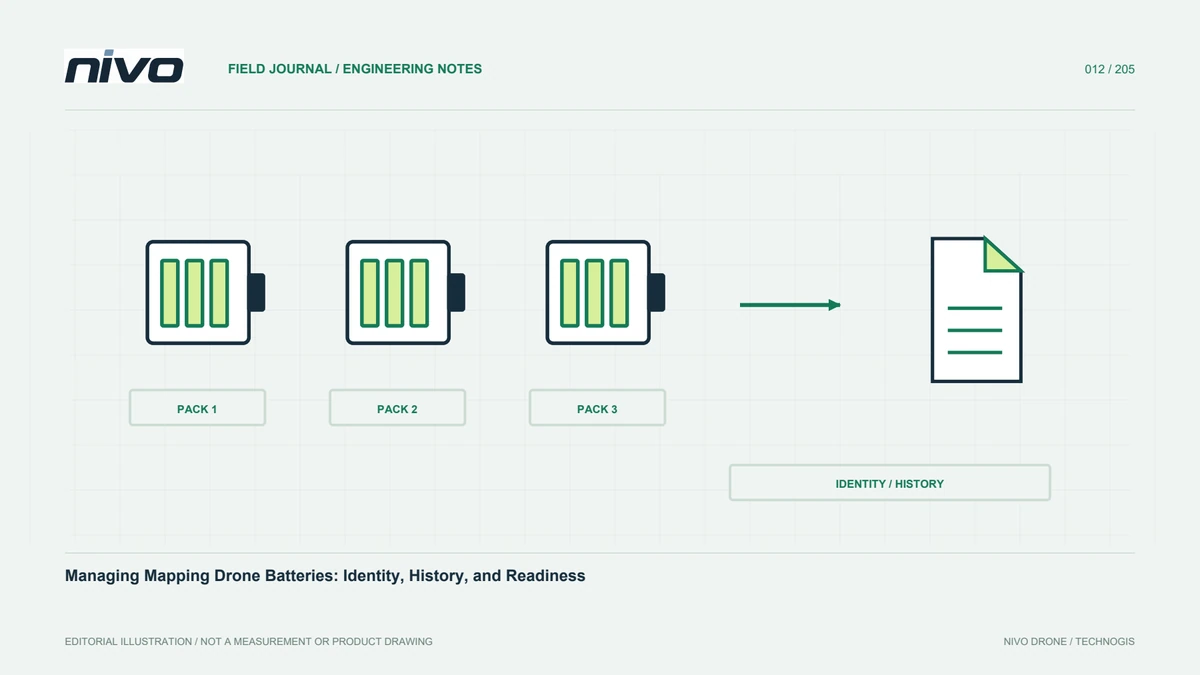
Battery identity and history help explain energy records. Follow manufacturer requirements for use, inspection, charging, storage, and suitability decisions. Identical labels do not mean identical histories. Reference data should identify the battery and relevant conditions. Unexplained behaviour needs the appropriate review, not just a revised time estimate. This planning article does not replace handling procedures or set new battery limits. Clear records allow staff to distinguish a mission-profile difference from a possible equipment concern before using the data to revise production planning.
Understand the power measurements
Displayed voltage, current, and energy depend on measuring hardware and configuration. Technical personnel must confirm that the recorded information fits the installed system. Inconsistent data requires review of the source and changes before conclusions about aircraft performance are drawn. Know each value and its recording interval. A smooth graph is not proof of correct measurement. Keeping calibration or configuration evidence helps distinguish real changes in demand from a different sensor setup. This matters when two records will influence future mission duration and workload estimates.
Compare planned and actual phases
After a mission, relate time and energy records to the planned phases. Look for extra travel, changed lines, or waiting. Do not save only the final number without explaining events. Operator and observer notes may clarify conditions absent from one graph. Use findings to improve the next estimate. Record why assumptions change when tests show a difference. This builds experience relevant to the actual aircraft and environment rather than relying on an unsupported general figure or adjusting expectations from one isolated flight without a comparable configuration.
Include energy in mission review
The operator should understand energy assumptions and the applicable procedure before approval. Include phases, configuration, and responsibilities for changed conditions. Resolve untested assumptions before making the plan routine. Processors also need to know whether an area will be split across flights so file identities and joins can be prepared. A good budget does not chase maximum use in one departure. It supports orderly execution and repeatable collection meeting project needs, with a defensible connection between planning decisions, observed records, and the actual delivered survey dataset.
Illustrative case: explaining a revised mission energy estimate
Consider a hypothetical project in which the survey block is farther from the assessed operating site than the proposal originally assumed. The planner does not preserve the original acquisition area merely because the aircraft's catalogue endurance appears sufficient. Instead, the mission is divided into preparation-relevant phases, including vertical operation, transition, travel, acquisition, and return under the accepted aircraft procedure. The technical reviewer checks that the reference energy record used the same payload and battery arrangement. The operator identifies which planning assumptions require further evidence rather than adopting an unsupported reserve figure from another aircraft. The processor is told if the area needs separate acquisitions, allowing file identities and join checks to be prepared. After an approved representative test, the team compares planned and recorded phases and adds context from field notes. Any difference is assessed against actual route changes and measurement configuration, not attributed immediately to battery quality. This scenario is hypothetical and promises no flight duration. Its useful output is an explainable estimate that names its assumptions, supporting records, and unresolved questions. The manager can then discuss schedule and equipment needs using evidence rather than treating all airborne time as interchangeable survey capacity.
A smaller acquisition block may fit the assessed workflow, while an alternative approved operating location may change the travel requirement. Either option needs its own reviewed plan rather than a casual promise to finish within the original timetable. The chosen approach is handed over with the relevant configuration identity, phase comparison, and explicit processing boundaries. If separate acquisitions are used, their overlap and file relationships are included in the data review. Acceptance concerns the defensible completion of the required observations, not achieving the longest possible flight or preserving an optimistic schedule at the expense of traceable assumptions.