Barometer Enclosures and Pressure-Related Altitude Errors
Review unexpected altitude behavior through pressure exposure, enclosure changes, temperature history, reference definitions, and controlled comparison.
Identify which altitude is being discussed
An altitude value can originate from a barometer, GNSS, an estimator, or a displayed reference convention. Before investigating an unexpected change, identify the message, units, source, and reference. A graph labeled altitude does not establish these details. Preserve the corresponding time interval and controller configuration. This prevents a change in display interpretation from being mistaken for a sensor fault, particularly when different ground-station tools are used.
Treat the enclosure as part of the installation
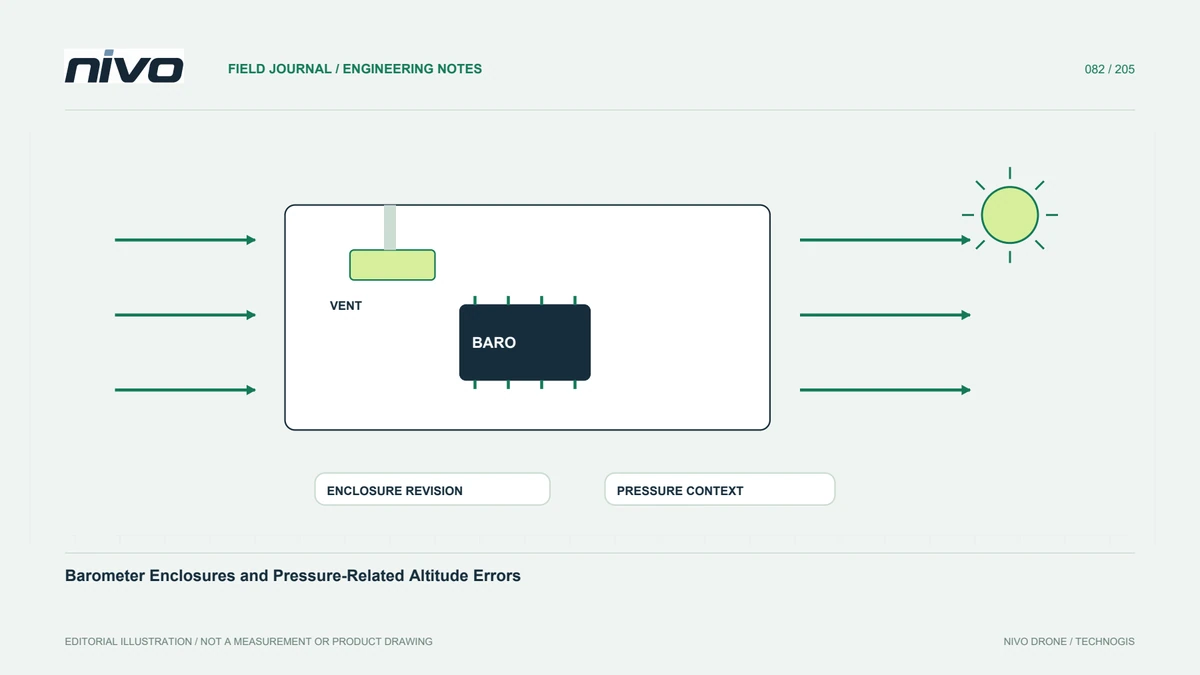
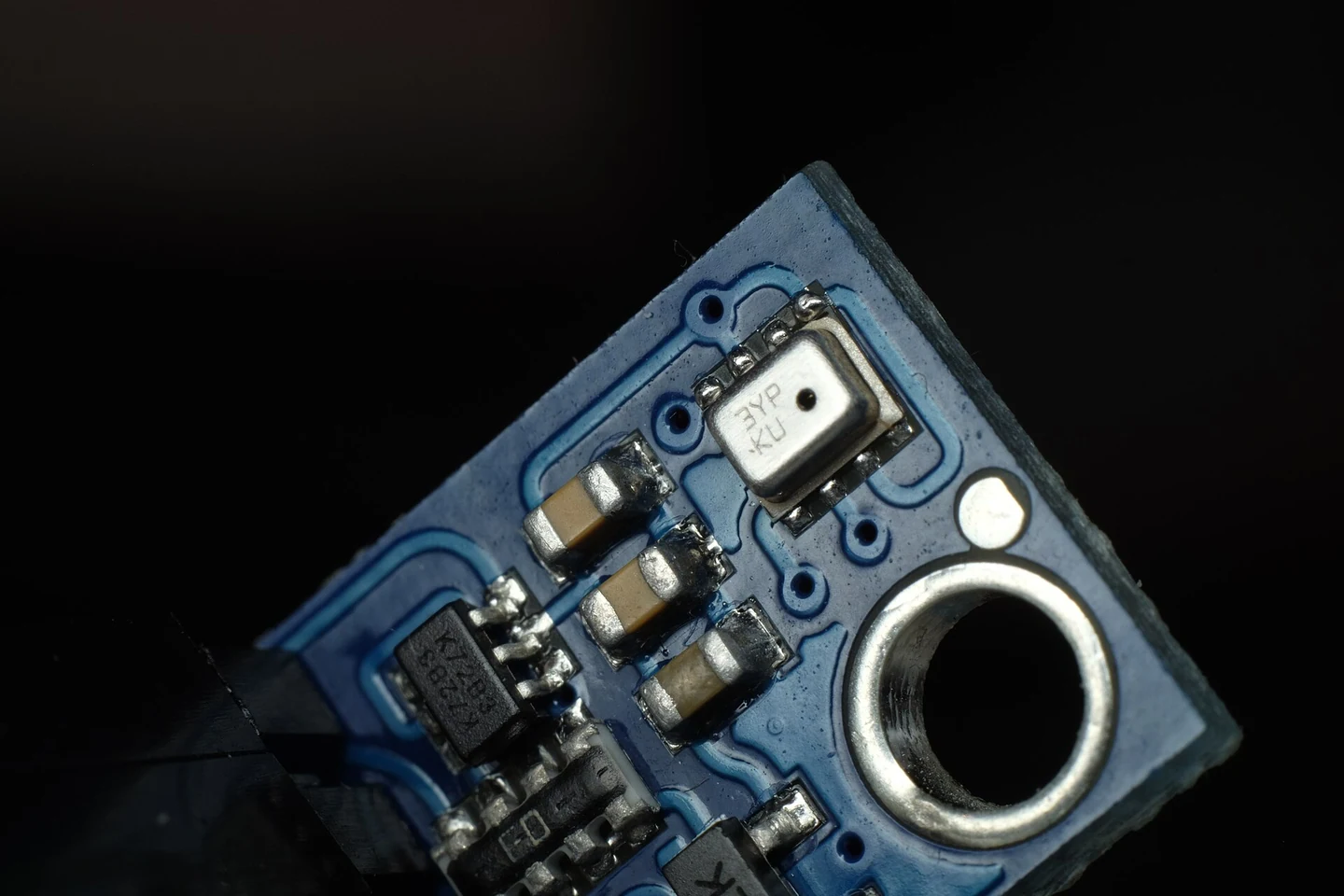
A pressure sensor operates within an installed environment rather than an abstract laboratory. Covers, ventilation paths, protective material, and surrounding airflow can influence that environment. Compare the enclosure with its documented arrangement after repairs or modifications. Record openings that became blocked and materials that were added. Do not drill new vents or remove protection merely to test a theory; installation changes require the responsible technical assessment.
Separate airflow and thermal questions
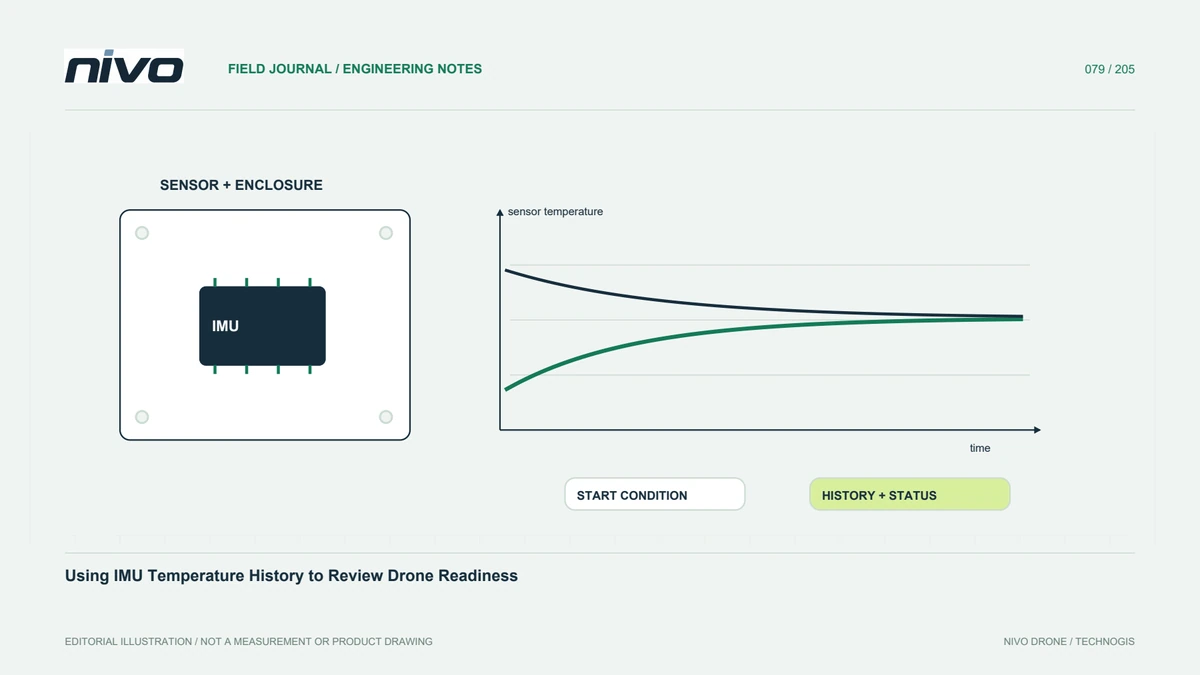
Pressure effects associated with movement and changes associated with temperature can overlap in one recording. Review timing against aircraft speed, propulsion state, ambient conditions, and available sensor temperatures. Direct sunlight before launch may create a different starting condition from shaded preparation. State those differences explicitly. One correlation is not sufficient to diagnose a blocked opening or thermal defect, but it can identify the next useful comparison.
Use other observations carefully
GNSS height and barometric height have different measurement characteristics and reference issues. Their disagreement does not identify which source is wrong without additional context. Compare relevant estimator messages and known stationary intervals where appropriate. Preserve raw observations rather than replacing one trace to make plots align. Any independent reference should have a documented relationship to the quantity being assessed, including its own uncertainty and limitations.
Review modifications as a controlled change
If an enclosure problem is suspected, record the proposed change, technical authorization, and intended verification before work begins. Keep photographs of the original arrangement and identify the materials involved. The assessment should consider protection, mechanical security, and pressure exposure together. A cleaner altitude graph alone does not justify an installation that creates another problem. Use applicable aircraft and controller instructions to determine the permitted work and evaluation.
Retain evidence for future troubleshooting
A completed investigation should distinguish corrected installation issues, reference misunderstandings, and unresolved observations. Link the findings to the exact aircraft and enclosure revision. Include representative records and the conditions under which behavior was evaluated. Future technicians can then recognize whether a repeated symptom follows a known change or needs a new investigation. This record supports practical maintenance decisions without presenting a universal enclosure design or altitude-error threshold.