Rally Points: Evaluating Alternative Recovery Locations
Review alternative recovery points through actual system support, location assessment, altitude references, selection behavior, and clear team responsibilities.
Define the role of the alternative point
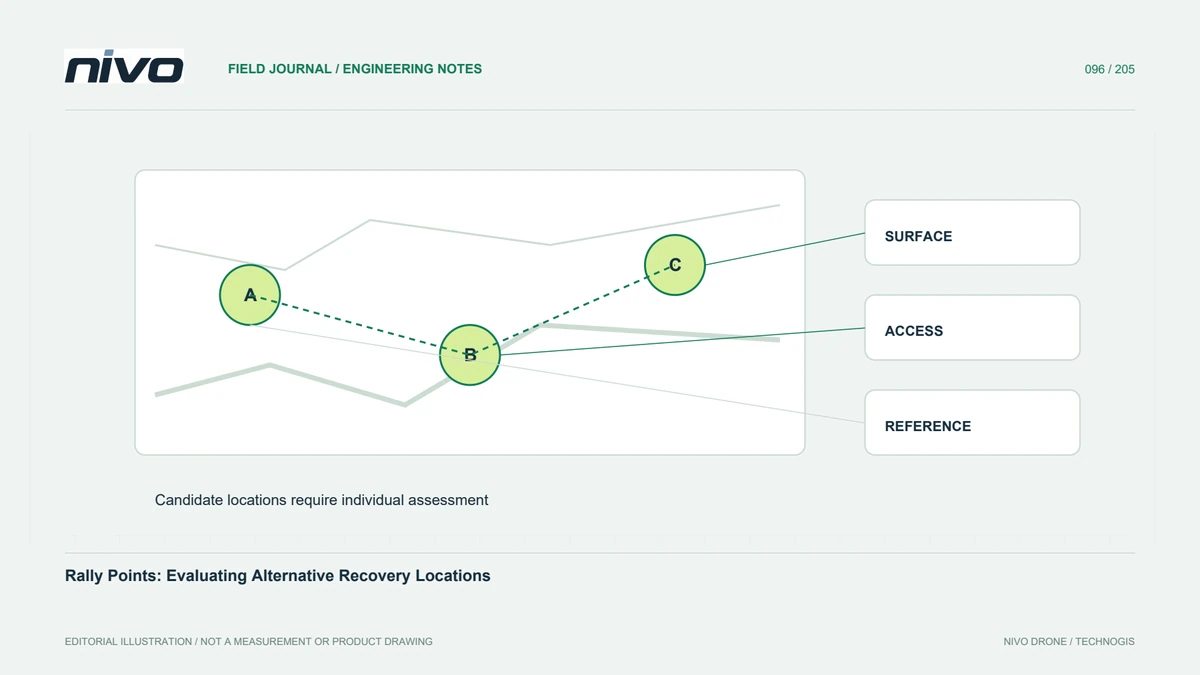
A rally point is a configured reference used by supported vehicle behavior, not simply a convenient location marked on a map. Identify how the installed system selects and uses such points. Distinguish an operationally assessed recovery location from an unverified candidate. This gives the planning team a concrete question: what evidence connects the loaded reference with a location and route suitable for the actual aircraft and mission?
Assess the location beyond its coordinates
Coordinates do not describe access, obstacles, people, surface conditions, communications, or availability throughout the operation. Use the operator's site-assessment process and identify who maintains that information. An open-looking patch in old imagery may have changed. Record the assessment date and important unknowns. Alternative locations need practical ground arrangements, not just a second icon added to reassure the client during an office presentation.

Review altitude and approach meaning
Read the applicable documentation for the reference frame, altitude interpretation, and behavior associated with each point. Evaluate the route and maneuvering space within the approved planning process. A nearby point can still require an unsuitable path, while a farther one may involve different energy and supervision needs. Avoid ranking alternatives by distance alone. Keep the reasons for selection explicit and tied to the configuration being evaluated.
Understand selection interactions
Rally behavior may interact with return, fence response, or other configured functions. Confirm the actual implementation instead of assuming every system chooses the same destination in every circumstance. Review the loaded list and its version alongside mission and contingency settings. Any simulation should record its assumptions and limitations. A successful logic demonstration does not independently establish terrain clearance, landing suitability, or continued availability of the selected ground location.
Manage changes during preparation
When a candidate becomes unavailable or the operating base moves, identify which loaded information and assessments require revision. Confirm updated data through the approved process and communicate the accepted version to the team. Do not leave an obsolete point because it is unlikely to be selected. The review should establish both intended choices and the consequences of stale references, rather than depending on the pilot to remember informal exceptions.
Keep an operational handover record
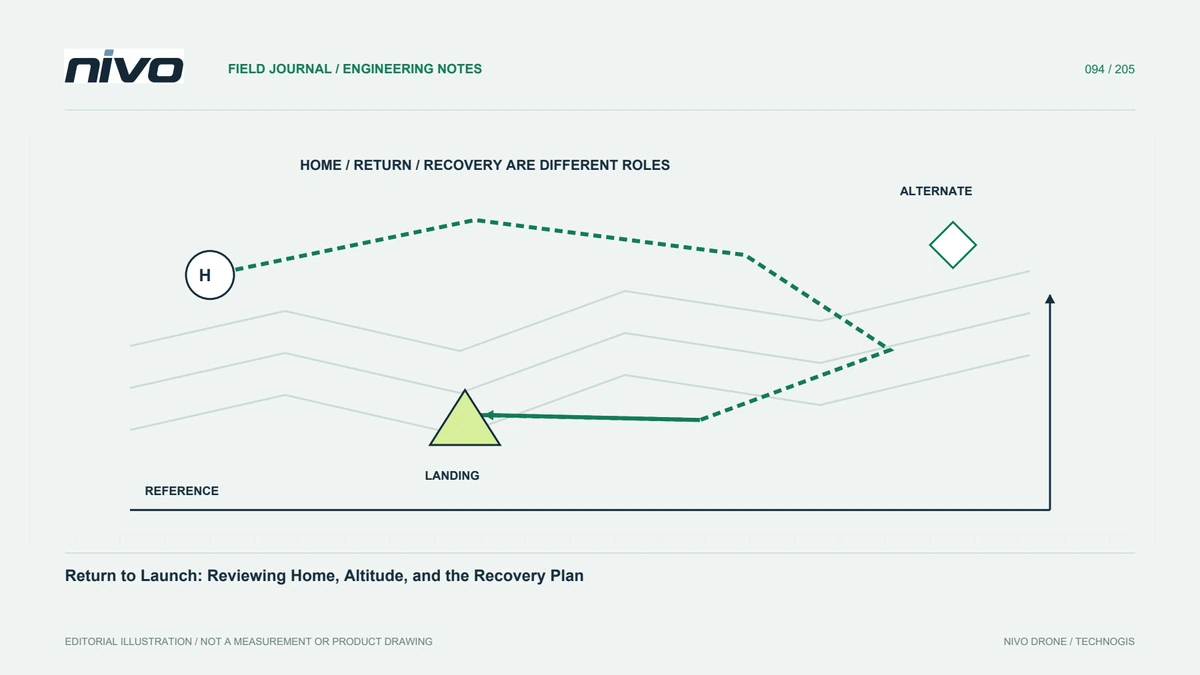
Provide point identities, assessment dates, references, configured selection behavior, responsible contacts, and remaining restrictions. Show how the alternatives relate to home and the intended recovery sequence. Team members should recognize when a location concern must be reported. This makes NiVO contingency planning understandable and reviewable while preserving the difference between a configured waypoint and a complete, currently suitable recovery arrangement supported by the aircraft's operating documentation.