Return to Launch: Reviewing Home, Altitude, and the Recovery Plan
Examine the installed return behavior through home identity, height references, route assumptions, alternative points, and documented contingency review.
Identify the actual return destination
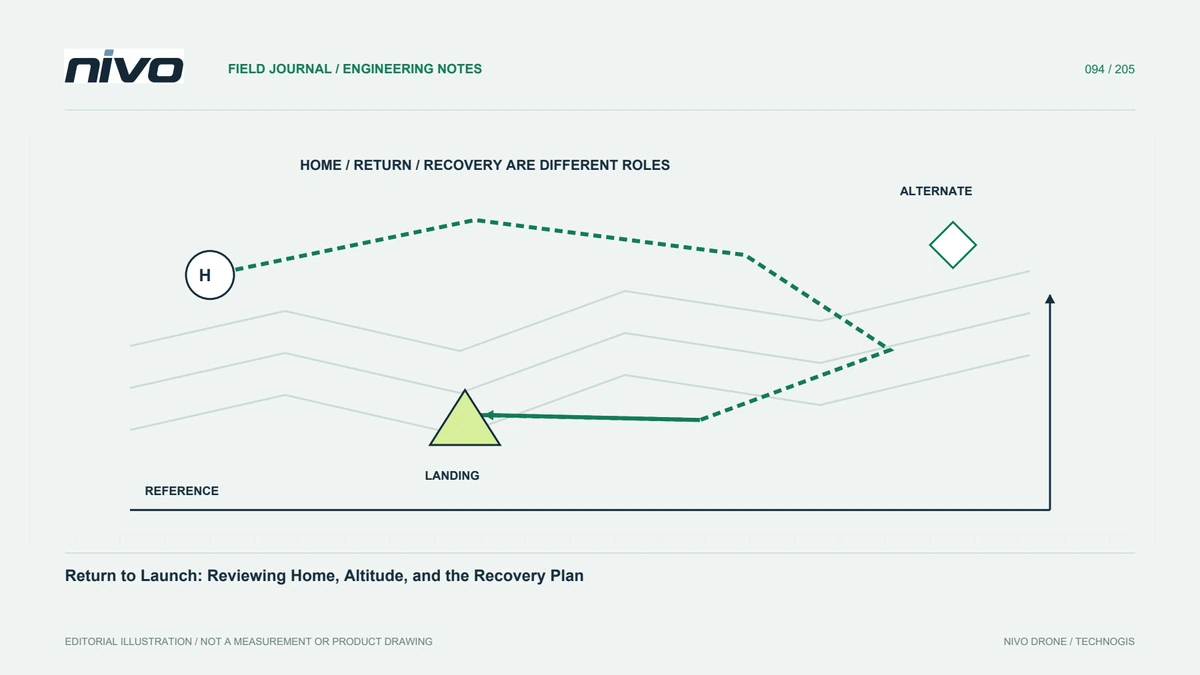
Home is a system-defined reference whose establishment depends on the vehicle and configuration. It should not be assumed identical to a map pin selected during office planning. Confirm the installed documentation and recorded state before discussing return behavior. Distinguish home from a planned landing location or rally point. A clear destination identity is essential when the operating team moves between sites or reuses a previously prepared mission.
Describe the altitude reference explicitly
A return-altitude value needs its units, reference, and applicable behavior. A number copied from another location cannot establish clearance over a different landscape. Review the complete intended return path and terrain context through the operator's process. Keep configuration information with the mission version. This prevents a familiar display field from being interpreted as a universal height above every object between the aircraft and its destination.
Distinguish returning from landing
Return behavior may involve several stages and does not universally mean an immediate landing at the departure point. Consult the actual aircraft setup, including any supported landing sequence or alternative destination logic. Explain which stages have been configured and evaluated. A product category such as VTOL does not establish those details. The operational plan must show how the aircraft's documented response connects with supervision and recovery arrangements on the ground.
Review changing site availability
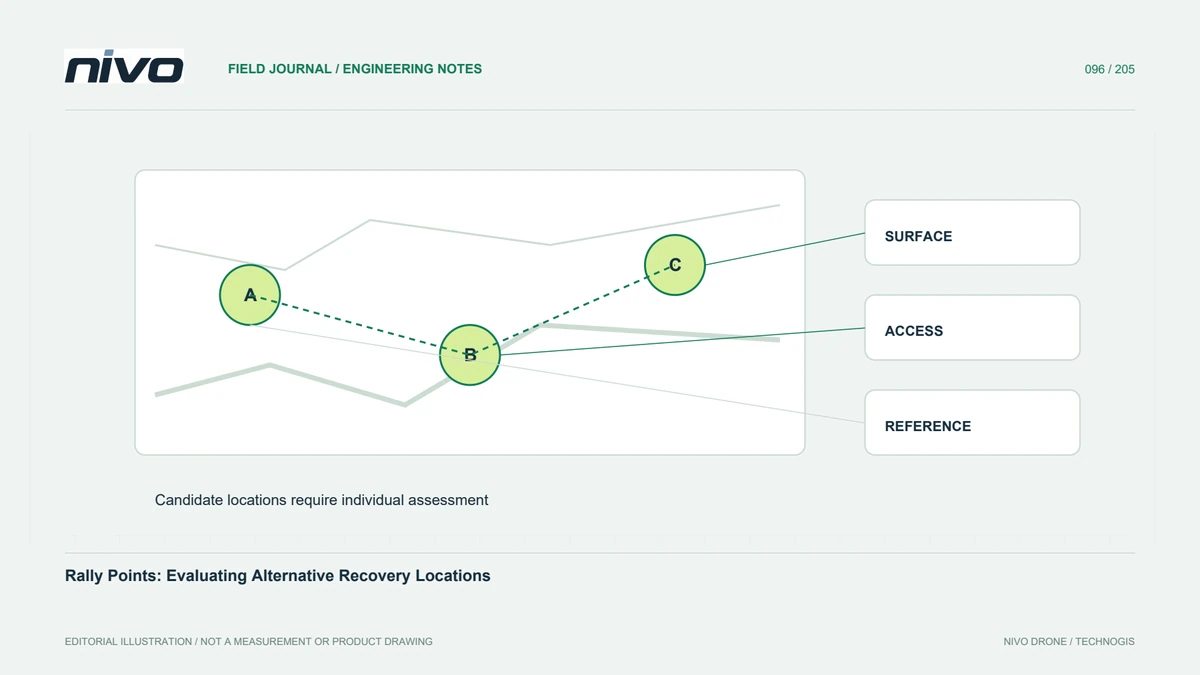
A departure location can become unsuitable while a survey continues because of vehicles, people, equipment, or weather changes. Assign how the team monitors its availability and communicates a concern. Alternative arrangements require their own assessment and documented system support. Do not assume that changing a destination during flight is always possible or appropriate. Planning should identify the responsible decision process before the team needs it under time pressure.
Test the logic within approved validation
Use the relevant technical process to verify destination interpretation, configured altitude behavior, and interactions with other contingency settings. Simulation may help examine supported sequences, while physical and operational questions need separate evidence. Retain configuration references and the conditions evaluated. Do not create an improvised live failure to demonstrate a return feature. The goal is a reviewable explanation of behavior and limits, rather than a dramatic demonstration without a controlled purpose.
Keep the briefing tied to the loaded version
The team should recognize the actual home reference, relevant configuration, alternative points, and approved recovery arrangement for that mission. Explain who can authorize changes and how updated information is confirmed. After review, preserve differences between planned and observed behavior. This supports NiVO training and mission preparation while keeping return-to-launch as one configured function within a broader operating system, not a promise that every unexpected situation resolves automatically.