Checking RINEX Completeness Before PPK Processing
Inspect observation periods, signal types, header identities, antenna information, navigation inputs, and conversion history before relying on a PPK workflow.
Inventory the actual observation files
A file ending in a familiar GNSS extension is not proof that every observation needed for processing exists. Identify receiver, session, start and end times, format version, and the role of each file. Distinguish observation data from navigation information and other supporting inputs. Preserve originals before conversion. This gives the processor a clear inventory and avoids discovering after field demobilization that the available files describe different periods or devices.
Compare overlapping time coverage
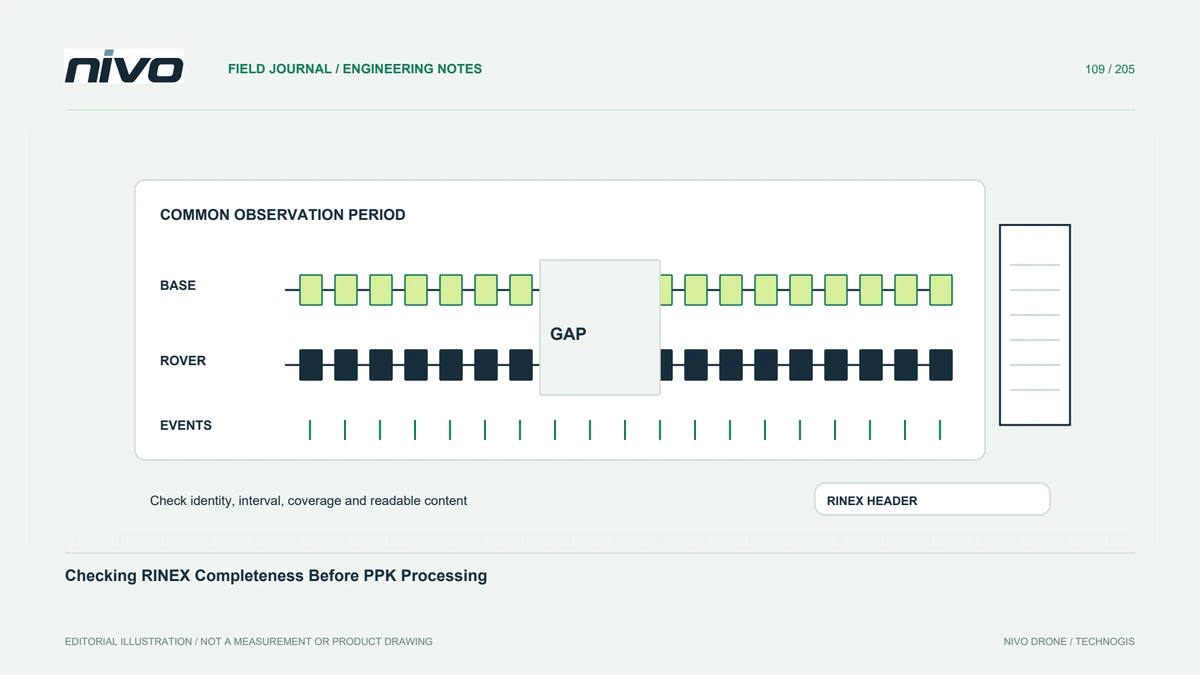
Rover and reference observations must support the period required by the intended method. Review actual epochs and gaps rather than filenames or nominal session duration. Identify clock conventions and interruptions. A file opening successfully does not demonstrate continuous usable coverage. Plot availability against camera events and flight segments so the team can locate the consequences of a missing interval instead of accepting a large aggregate file size as reassurance.
Inspect the observation content
Confirm which constellations, signals, and observation types are present and whether the processing software supports them in the chosen format. More listed satellites do not automatically mean the needed measurements were recorded. Review receiver settings and any conversion choices. Avoid assuming a conversion can create absent observations. Document unsupported or missing content and determine its impact through the actual processing method rather than a generic promise that RINEX guarantees compatibility.
Verify header and antenna information
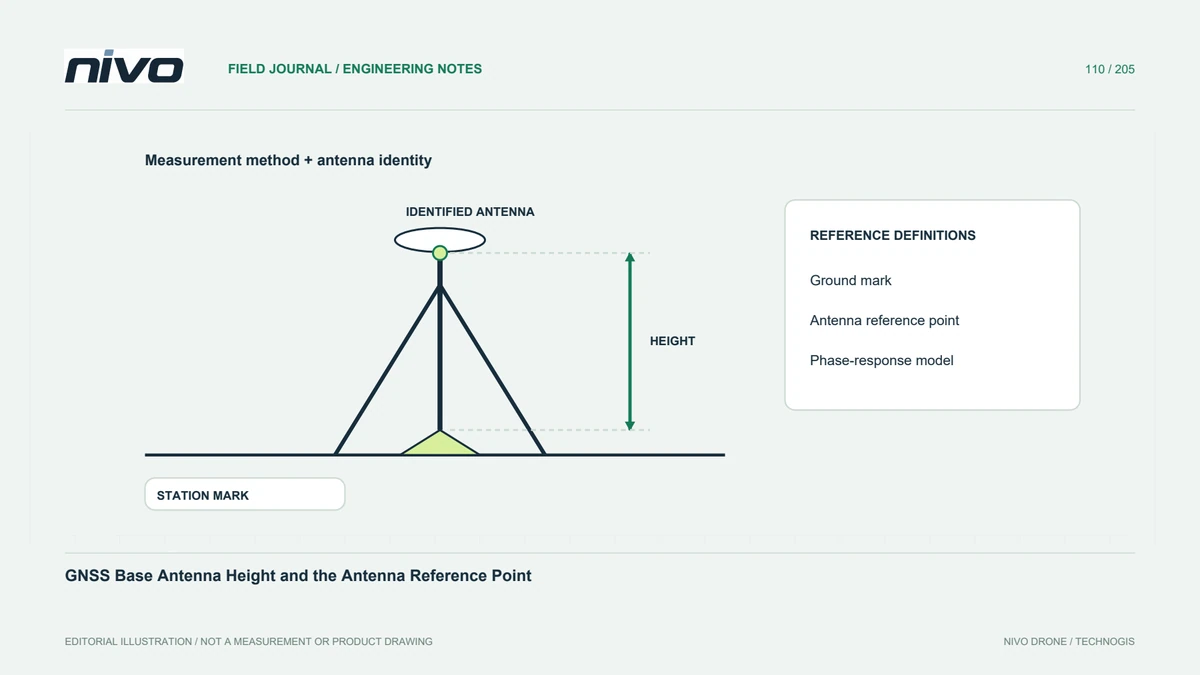
Check station and receiver identities, antenna descriptions, reference coordinates, and height information relevant to the workflow. Resolve placeholders and inconsistent entries using traceable field records. A copied header can make data appear orderly while assigning the wrong physical setup. Keep antenna reference definitions explicit. The processor should know which information was measured, supplied by a service, or corrected later, rather than infer a trustworthy station configuration from populated text fields.
Retain conversion and processing provenance
Record converter version, source files, options, output format, and checks performed after conversion. Keep originals and readable warnings. A smaller output may reflect intentional filtering or unintended omission, so explain the difference. Test representative data through the intended software before committing to the full job. Successful processing should be assessed with its quality evidence, not treated as proof that all source and reference assumptions were correct.
Resolve gaps before access is lost
Give field staff a concise completeness report naming missing periods, uncertain metadata, and required follow-up. Confirm whether additional information can still be obtained from the actual equipment or provider. Preserve unresolved limitations with the accepted outputs. This makes NiVO PPK preparation an evidence-based workflow and keeps raw-data availability distinct from a guarantee of final accuracy, while reducing avoidable dependence on information that becomes difficult to recover later.