Reviewing Thermal Patterns on Storage-Tank Exteriors
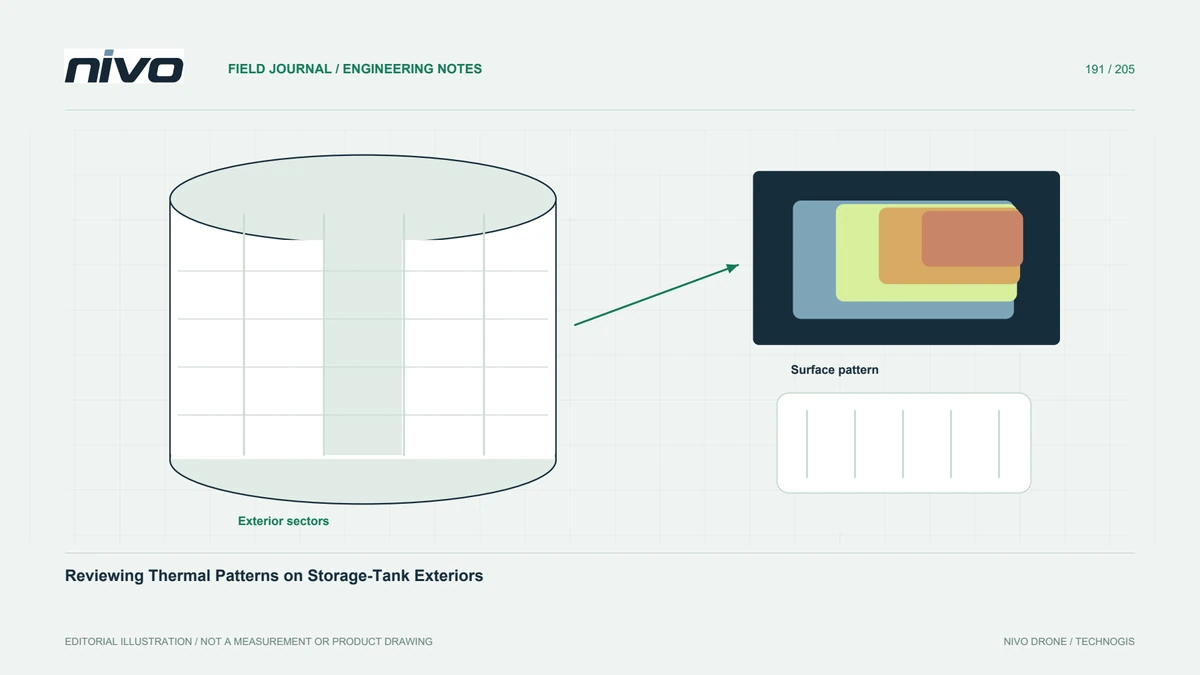
Document tank-surface patterns through stable sector identities, operating context, finish, reflections, and explicit verification needs rather than inferring hidden conditions.
Define an exterior review question
A thermal view of a tank exterior can support a specific investigation, but it does not automatically establish contents, wall condition, or an internal defect. Ask the owner which external observations are useful and what other examination methods remain necessary. Department of Energy examples show drones documenting storage-tank infrastructure. Such examples provide application context, not a guarantee that every tank, thermal camera, or site arrangement supports the same analytical conclusion.
Divide the tank into identifiable sectors
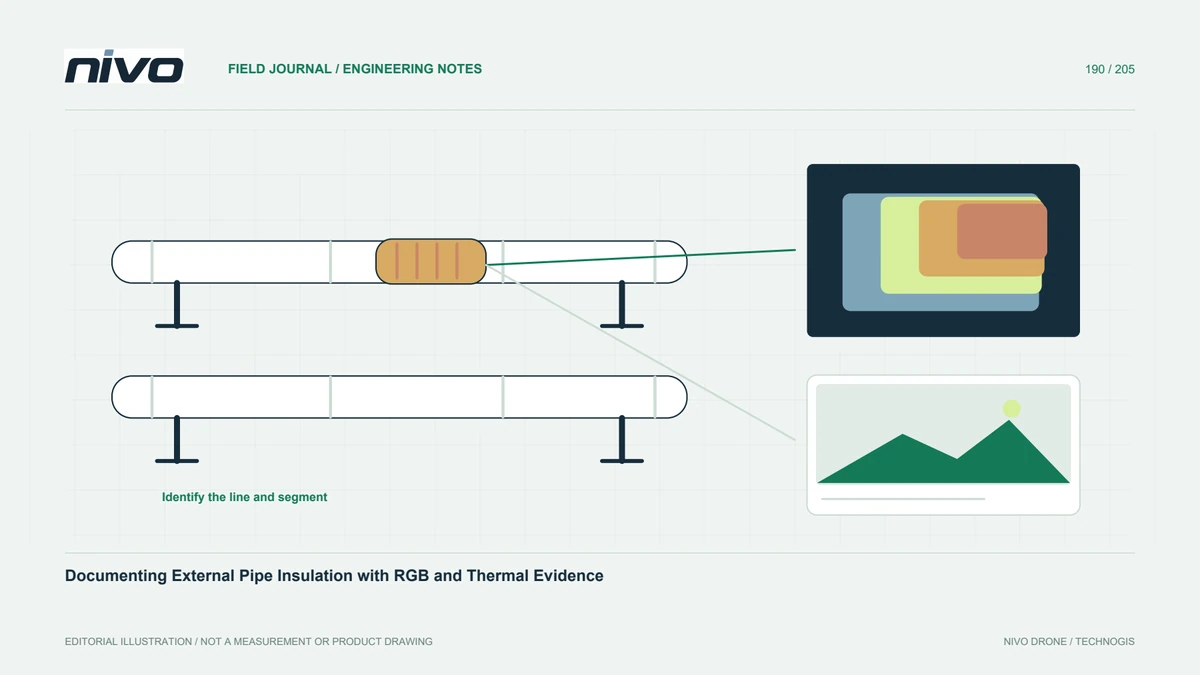
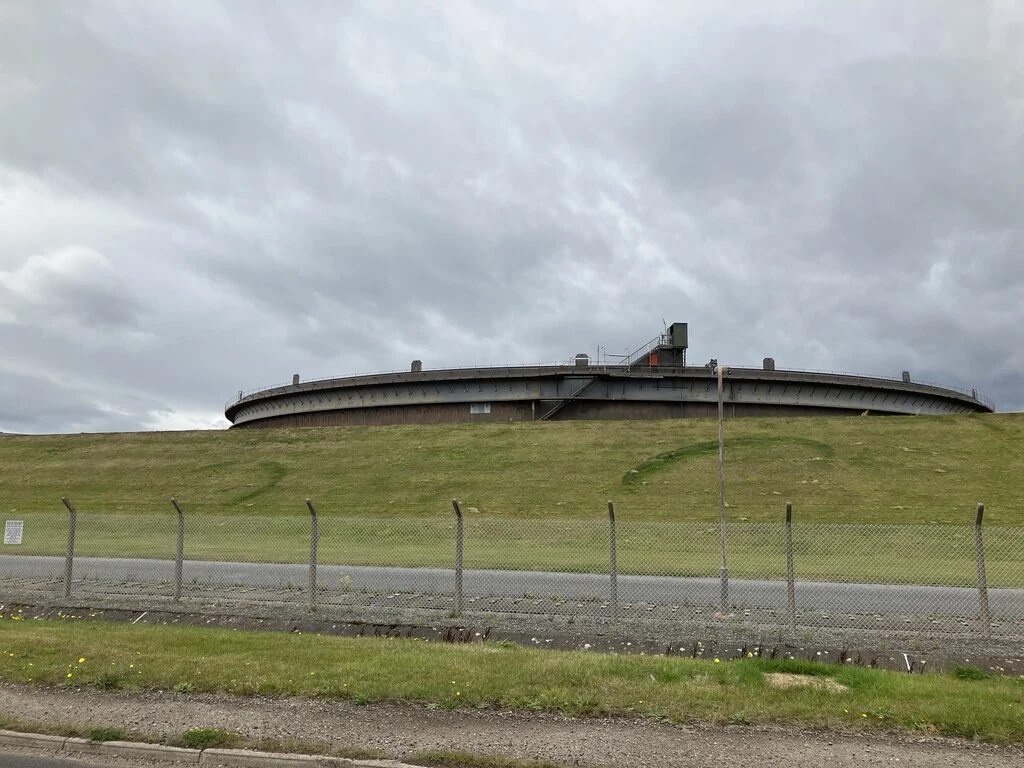
Use the owner's tank number and an agreed sector, elevation, seam, or fitting reference. A curved surface can look similar across many close views. Capture locating context and connect each detail to the sector diagram. Record the viewing direction and source-file identity. Coordinates alone may not locate a small feature on a cylindrical wall reliably. The report should help a technician find the intended area without reconstructing the aircraft's path from memory.
Record finish and environmental context
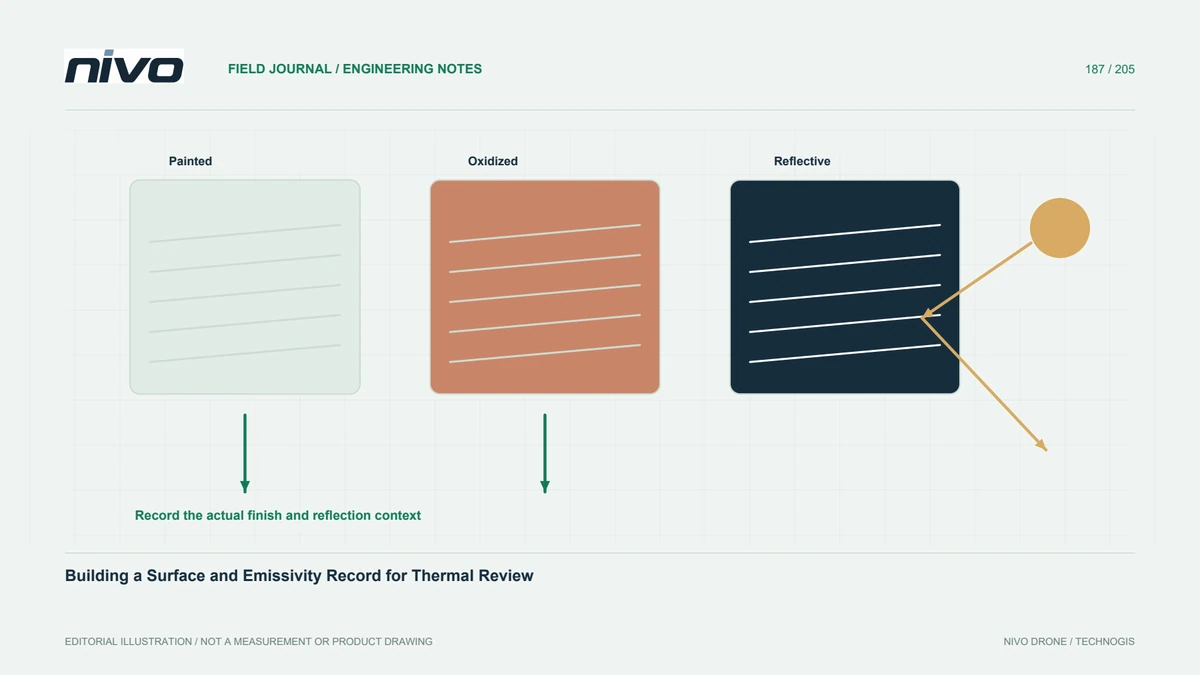
Paint changes, reflective metal, wet surfaces, sunlight, nearby equipment, and shadows can influence thermal appearance. Pair the observation with RGB evidence and relevant operating information supplied by authorized staff. FLIR explains how emissivity and reflected radiation affect interpretation. Do not transfer a parameter from a material table into an unsupported measurement claim. A difference following a surface finish deserves a different investigation from one that remains unexplained after contextual review.
Plan representative views
Trial the intended camera geometry on relevant sectors and inspect stored files. Check readability, reflections, surface curvature, and thermal-to-RGB correspondence. Additional views can help test an explanation when included in the reviewed operating plan. Do not assume that a single elevated orbit provides equivalent evidence on every side. Record sectors affected by obstruction or unsuitable conditions, and keep access and aircraft-position decisions within the responsible facility and operator process.
Keep the finding bounded
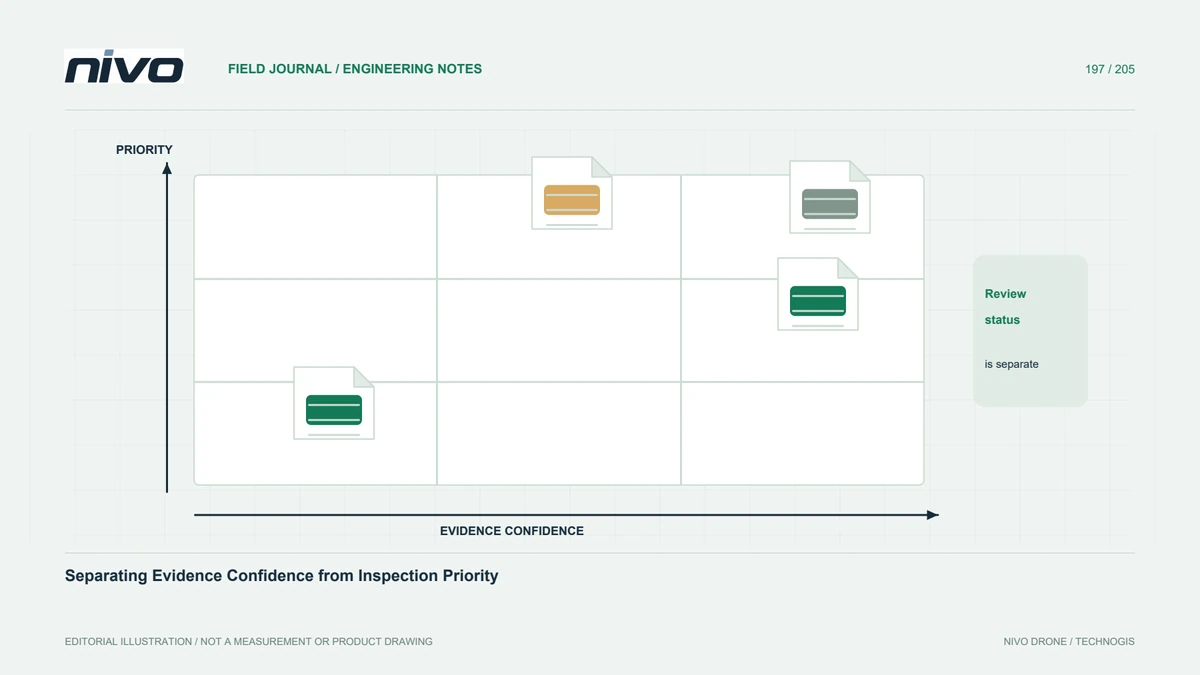
Describe the observed pattern and why it needs review. Avoid calling it a leak, internal level, corrosion depth, or insulation failure unless the appropriate method and verification support that conclusion. The owner or qualified examiner decides the next technical assessment. Retain alternative explanations and any inconsistent views. A useful aerial alert can remain valuable while its cause is unresolved, provided its status and evidential limits are visible rather than hidden behind a confident caption.
Deliver a sector-linked evidence package
Provide the tank diagram, source links, relevant conditions, surface observations, coverage limits, and verification status. Ask another reviewer to locate one finding from the package alone. Discuss these examples with NiVO when evaluating a thermal or RGB gimbal configuration. Acceptance should demonstrate a reproducible exterior documentation workflow for the actual task. It should not imply a certified tank examination, hidden-condition diagnosis, or measured performance beyond what the trial and qualified follow-up actually establish.