Separating Evidence Confidence from Inspection Priority
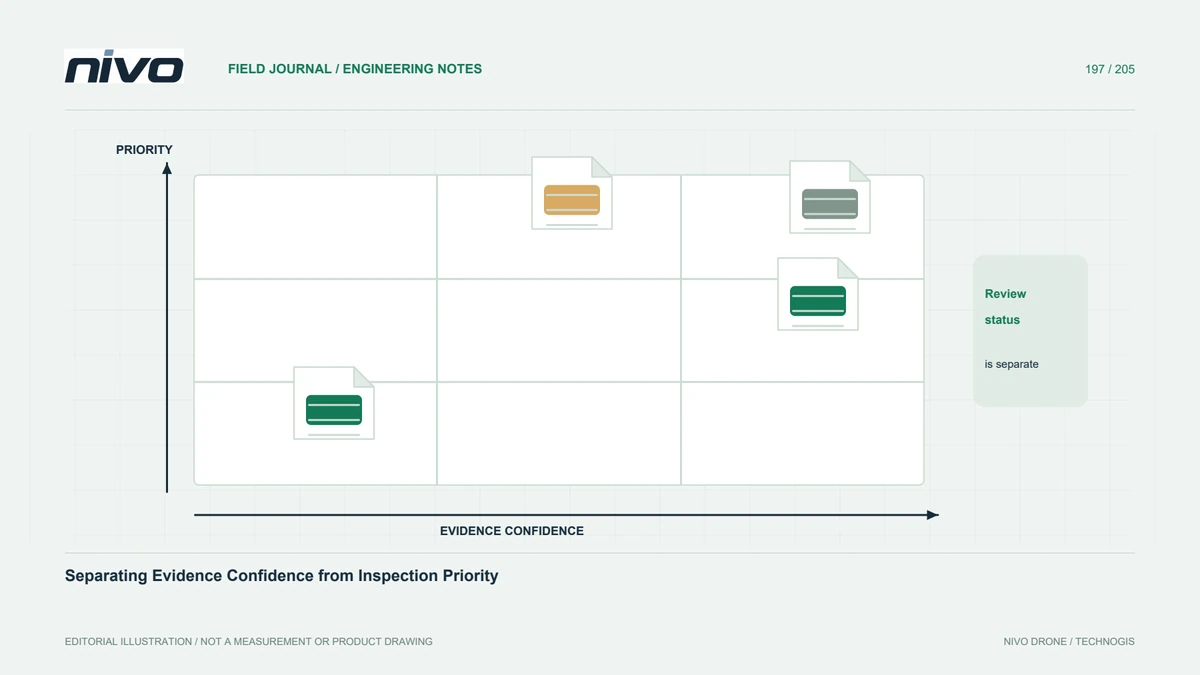
Use separate fields for observation confidence, technical verification, and owner-assigned priority so report colors do not silently combine different decisions.
Define the three decisions
Evidence confidence concerns how well the record supports an observation. Verification status concerns what technical assessment has been completed. Priority concerns when the owner wants a review or action. These are related but different decisions. A clear photograph may show a minor condition, while an unclear image may concern an important asset needing prompt examination. Define each field before creating a report legend so one red symbol does not silently represent all three ideas.
Describe confidence through evidence
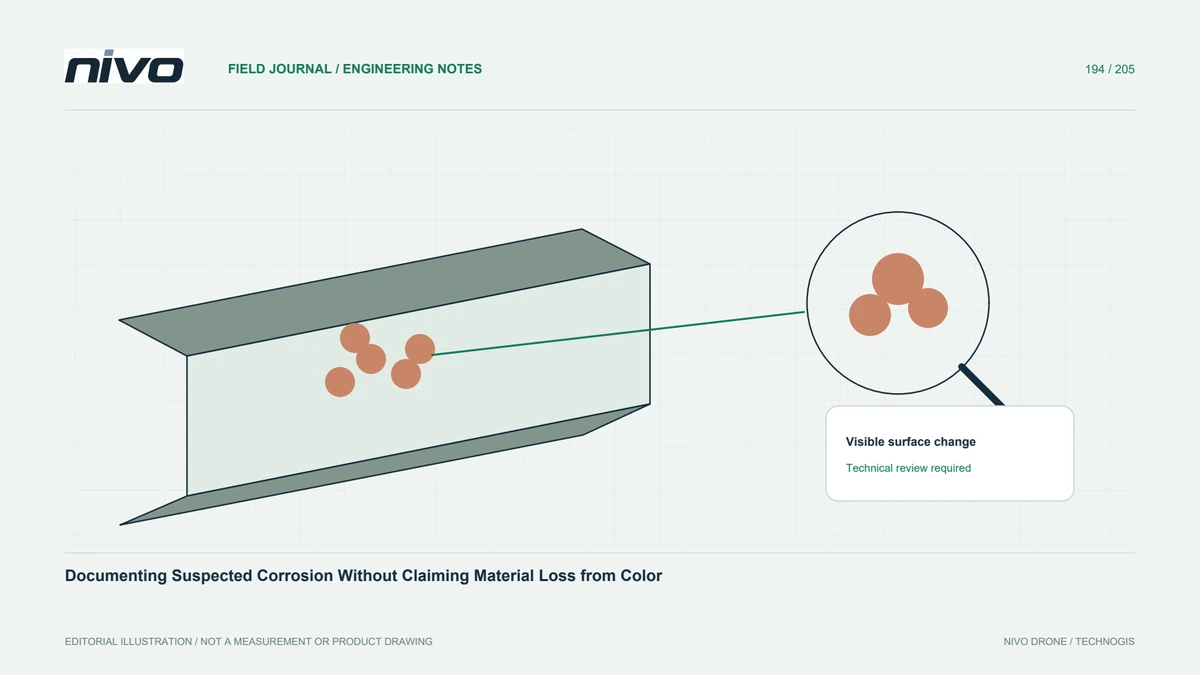
Use criteria tied to the observation, such as target identity, readable detail, relevant context, and unresolved ambiguity. Avoid attaching an unexplained numerical probability to every finding. A qualitative scheme can be useful if its classes have concrete examples and reviewers apply them consistently. Record why confidence is limited. The purpose is to identify what additional evidence may be needed, not to make uncertain observations look mathematically precise or imply that confidence establishes defect severity.

Keep verification history visible
Distinguish an aerial observation awaiting review from a finding investigated through the appropriate technical process. Store the examiner's conclusion, supporting evidence, and date without deleting the initial record. A later explanation may reject the original hypothesis while confirming that the initial observation was real. The status scheme should allow that outcome. Do not label an issue resolved merely because a report was delivered or because a new photograph appears less dramatic under different lighting.
Let the owner establish priority
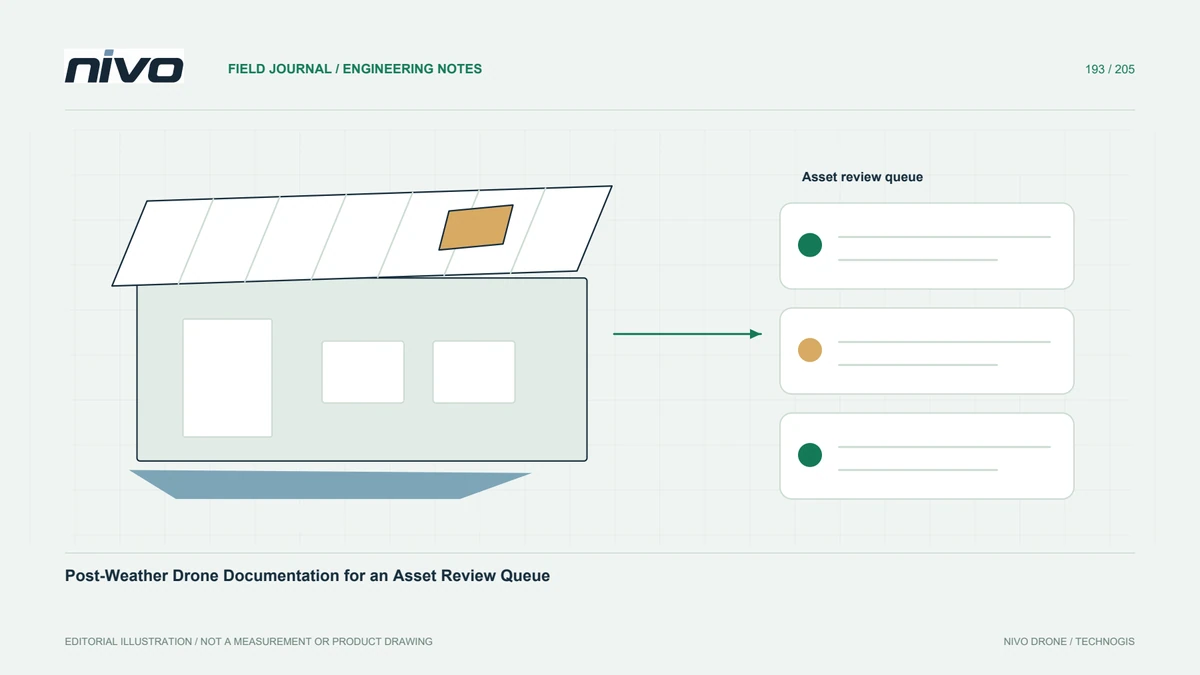
Priority criteria should be agreed with personnel who understand the asset and the relevant maintenance process. The camera operator supplies evidence and context without assuming authority over every engineering or operational decision. Explain the basis for a priority and who assigned it. A preliminary alert can appropriately request prompt review while its cause remains unknown. Keep that distinction visible so the work queue remains useful without converting an urgent question into an unsupported confirmed diagnosis.
Test the scheme on difficult examples
Review cases that separate the dimensions: clear evidence with low urgency, uncertain evidence requiring prompt examination, and a previously investigated finding with a changed interpretation. Ask different reviewers to classify the same examples and discuss disagreement. Revise definitions that depend on unstated assumptions. Do not test only straightforward photographs where everyone already agrees. The acceptance exercise should show that the scheme helps choose a next task and preserves the reason behind it.
Deliver a maintainable register
Provide separate confidence, verification, priority, responsibility, and update fields alongside asset identity and source links. Keep legends concise and preserve changes through the finding's stable identity. FHWA data-management examples emphasize usable information and common standards; a local scheme still needs agreement. Use representative inspection outputs during NiVO payload acceptance to test the evidence chain. Success is a clear review queue with traceable reasoning, not a report made authoritative by color density or invented severity scores.