Documenting External Pipe Insulation with RGB and Thermal Evidence
Organize pipe-insulation observations by line segment, visible surface, operating context, and verification question while keeping hidden-condition claims bounded.
Define the external observation scope
An aerial inspection can document accessible exterior views of a piping route, but it does not automatically establish the condition beneath cladding or insulation. Agree which visible features and thermal patterns are relevant to the owner. Identify questions requiring another method or direct examination. Department of Energy examples show drones used around infrastructure such as piping corridors; they do not establish that every installation or camera can answer every insulation or process-performance question.
Create a segment-based identity
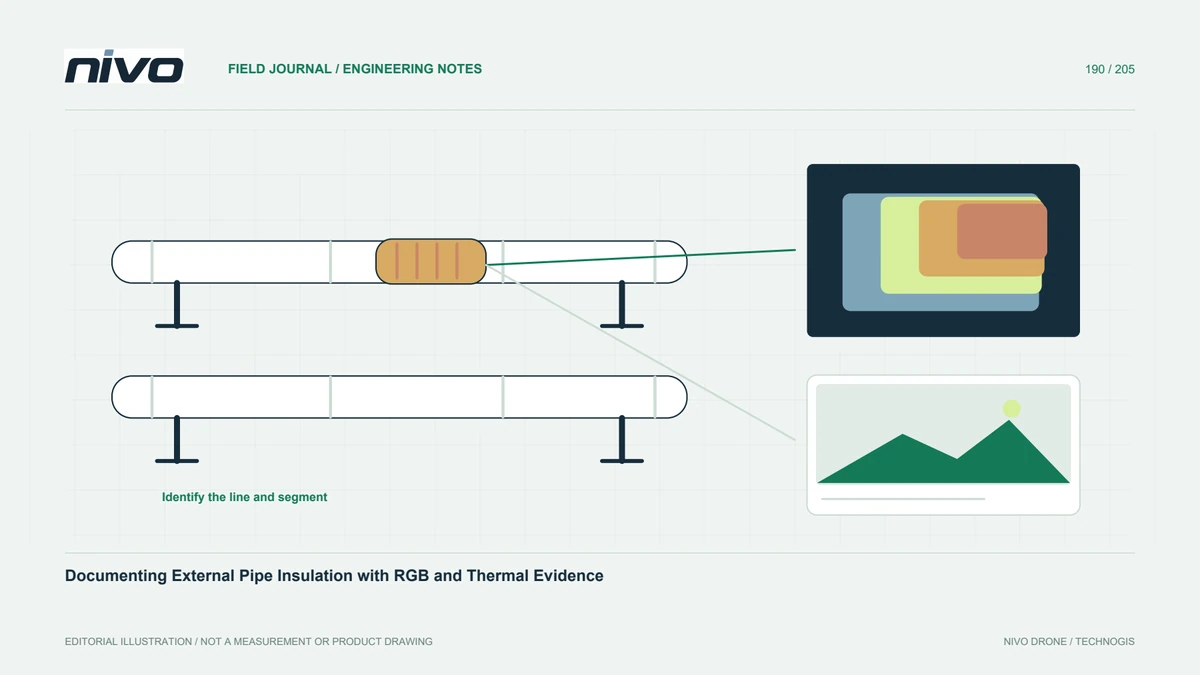
Use the owner's line, support, bend, or segment identifiers and connect them to a route map. Long runs of similar cladding can make a close image difficult to locate. Capture an overview before detail and retain direction of view. Do not rely only on a coordinate if it cannot distinguish adjacent lines or levels. The evidence package should guide the responsible technician to the intended segment without requiring the pilot to reconstruct its location from memory.
Record surface and operating context
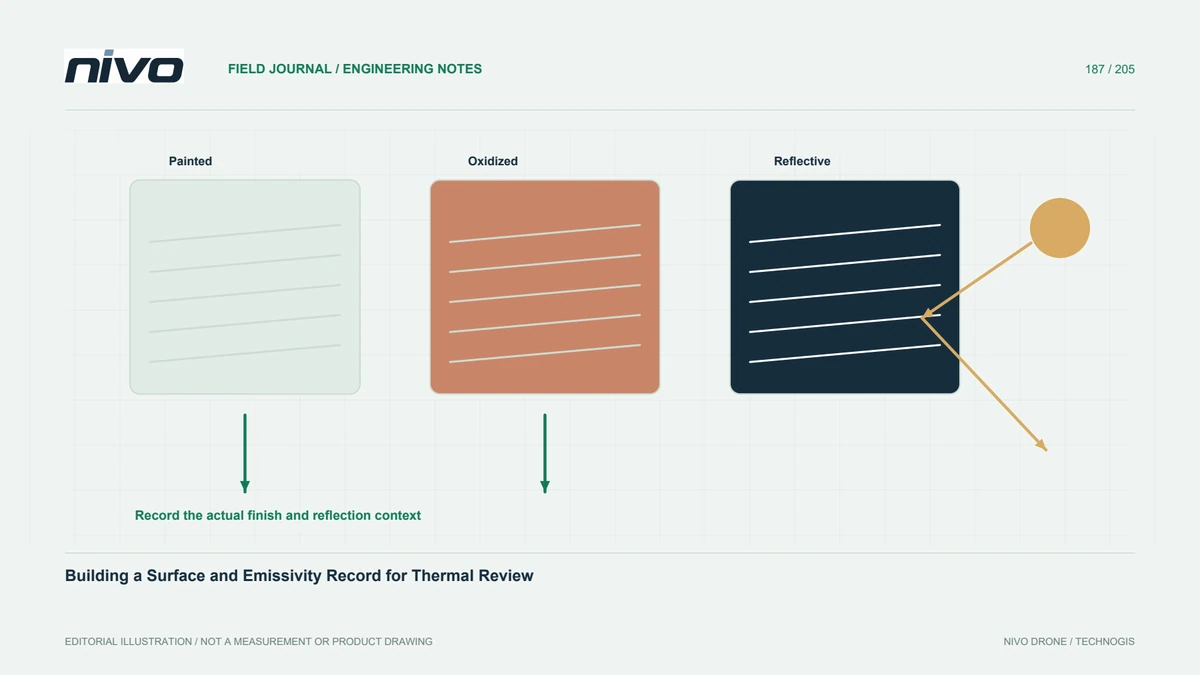
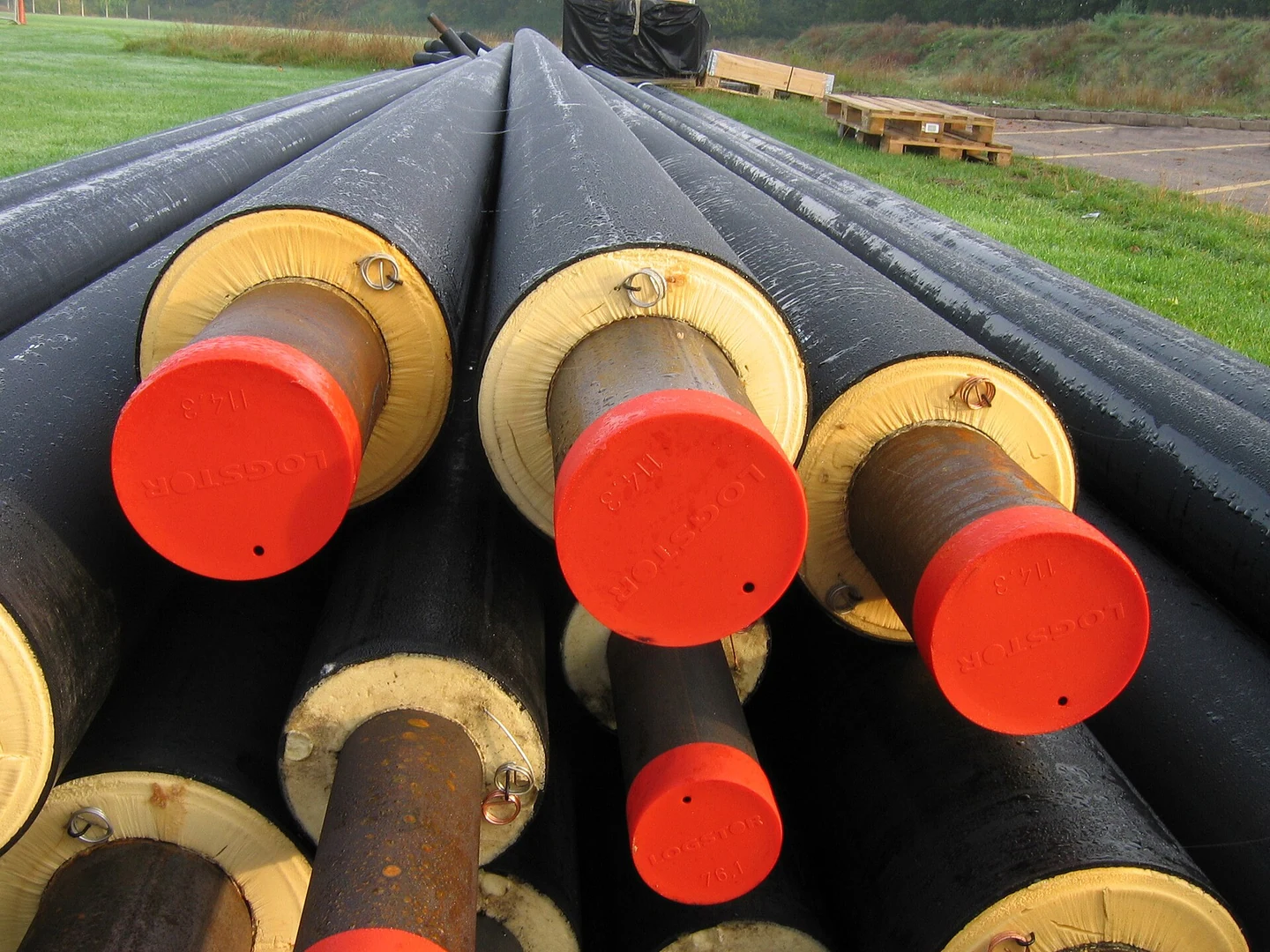
Exterior appearance depends on finish, weather, surrounding radiation, and the operating circumstances of the line. Obtain relevant process context from authorized facility personnel. Painted and reflective cladding may require different interpretation. Keep RGB evidence of the actual surface with any thermal observation. Do not convert a surface pattern into a claim about internal fluid temperature or insulation failure without the appropriate technical basis and whatever additional verification the examiner determines is necessary.
Plan readable views within site procedures
Review obstructions, parallel lines, supports, and areas hidden from the planned perspective. Coordinate observation with the owner and responsible aircraft operator. Image-detail requests do not override the site's assessed operating boundaries. Trial representative segments and inspect stored files for readability, focus, glare, and target correspondence. If part of the line remains inadequately documented, show it in the coverage register rather than treating a completed route as proof of complete inspection.
Describe anomalies without prescribing repair
Record directly visible differences such as damaged-looking cladding, an unusual shape, or a thermal pattern requiring review. Keep suspected causes separate from observations. Similar patterns may have different explanations, and follow-up on operating equipment belongs to authorized personnel using suitable methods. Request a specific verification question instead of proposing an unsupported intervention. Retain contradictory views or contextual evidence, because they can prevent an attractive thermal illustration from becoming a premature maintenance conclusion.
Deliver a route-linked review register
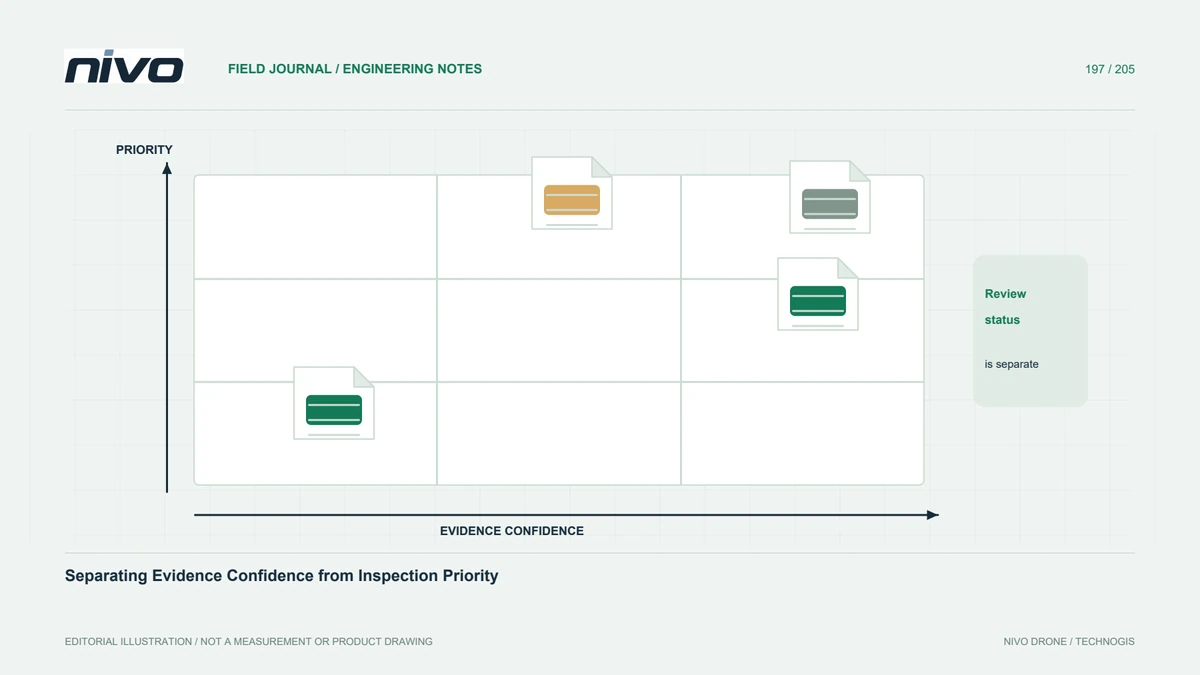
Provide segment identities, source images, acquisition conditions, coverage limits, evidence status, and assigned follow-up. Test whether another examiner can locate a sample observation and understand what remains unknown. Use the trial files when discussing SIYI RGB or thermal arrangements with NiVO. Acceptance concerns a useful external documentation workflow, not a guarantee of hidden-defect detection, process diagnosis, regulatory compliance, or compatibility with an untested industrial operating environment.