Building a Surface and Emissivity Record for Thermal Review
Document material, finish, viewing context, parameter sources, and uncertainty so thermal reviewers can distinguish surface differences from unsupported temperature conclusions.
Identify the surface actually observed
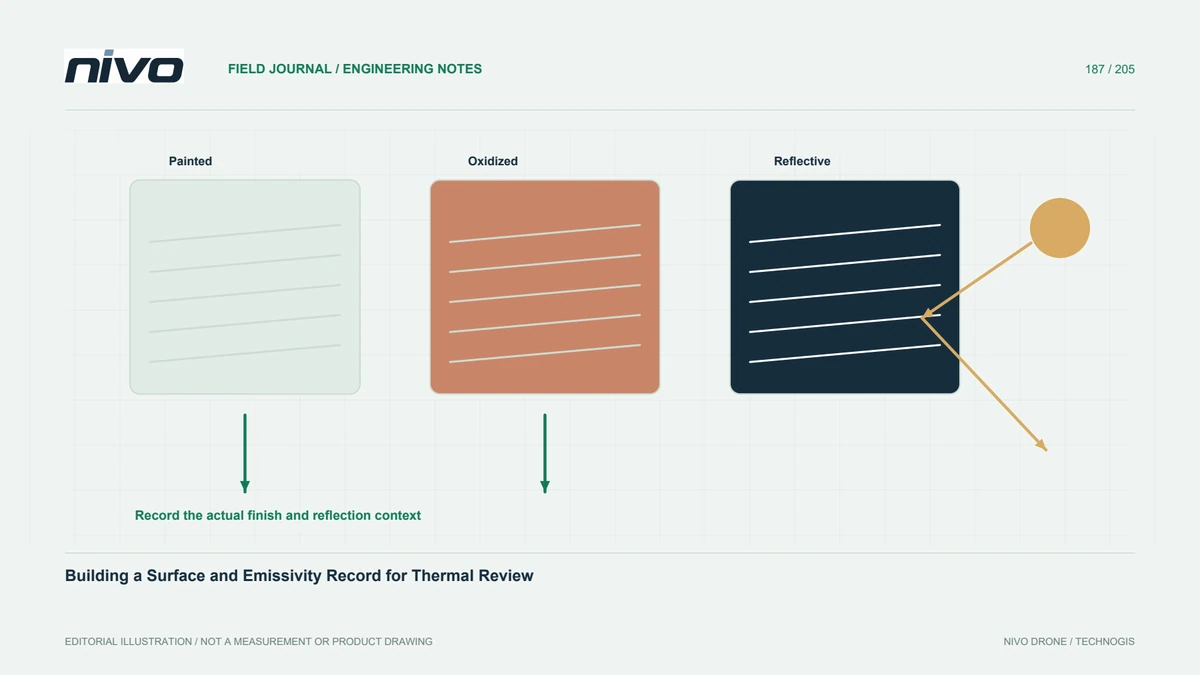
Thermal interpretation concerns the visible surface and the radiation reaching the camera, not simply the material name in an asset register. Painted, oxidized, wet, and polished portions of one component can behave differently. Record the observed finish with RGB context and stable asset identity. FLIR explains why emissivity and reflected radiation matter. Begin with that distinction rather than assigning one remembered parameter to every object called metal, concrete, or roofing.
Record the source of parameter choices
Where a measurement workflow uses emissivity or related parameters, state how the chosen values were established and who reviewed them. A material table may provide context without representing the exact field surface. Do not present an assumed value as a measured property. Keep the equipment-specific procedure and any qualified assessment linked to the record. This article does not prescribe a universal setting because the correct approach depends on the surface, method, and required measurement confidence.
Preserve reflection context
Photograph surrounding objects and record viewing direction where they can affect interpretation. A reflective surface may show radiation from its surroundings, creating a pattern that is not explained by its own temperature alone. An additional appropriate view can help investigate alternatives within the approved observation plan. Do not turn that single comparison into an automatic diagnosis. The record should retain what was observed and why reflection remains a relevant uncertainty for the technical examiner.
Separate different surface regions
One global setting may not describe every material in an image. If the analytical tool permits local parameter assignments, use them only through the documented workflow and record the affected regions. Otherwise, explain the limitation rather than reporting uniform measurement confidence across unlike surfaces. Keep annotations traceable to original pixels or image areas. A neat measurement box spanning paint, bare metal, and background can conceal different physical contributions that need separate consideration.
Connect parameter uncertainty with the claim
Decide whether the evidence supports a qualitative pattern alert or the proposed temperature statement. Where parameter information is insufficient, narrow the claim instead of filling the gap with an unverified number. Preserve the usefulness of the observation by naming the asset, pattern, and follow-up question. A preliminary thermal review can direct technical attention without pretending to supply the same evidence as a fully supported measurement performed under an appropriate specialist procedure.
Create a revisitable surface register
Store asset identity, surface region, finish observations, RGB references, parameter sources, acquisition conditions, and review status. Update the record after repainting or other relevant changes rather than assuming old observations remain applicable forever. Use representative surfaces in NiVO thermal-payload acceptance discussions. The useful outcome is an understandable chain from physical surface to analytical assumption and reported claim, leaving complex thermographic decisions with personnel competent for the method and avoiding unsupported compatibility or accuracy promises.