Checking Whether Thermal Files Support the Promised Analysis
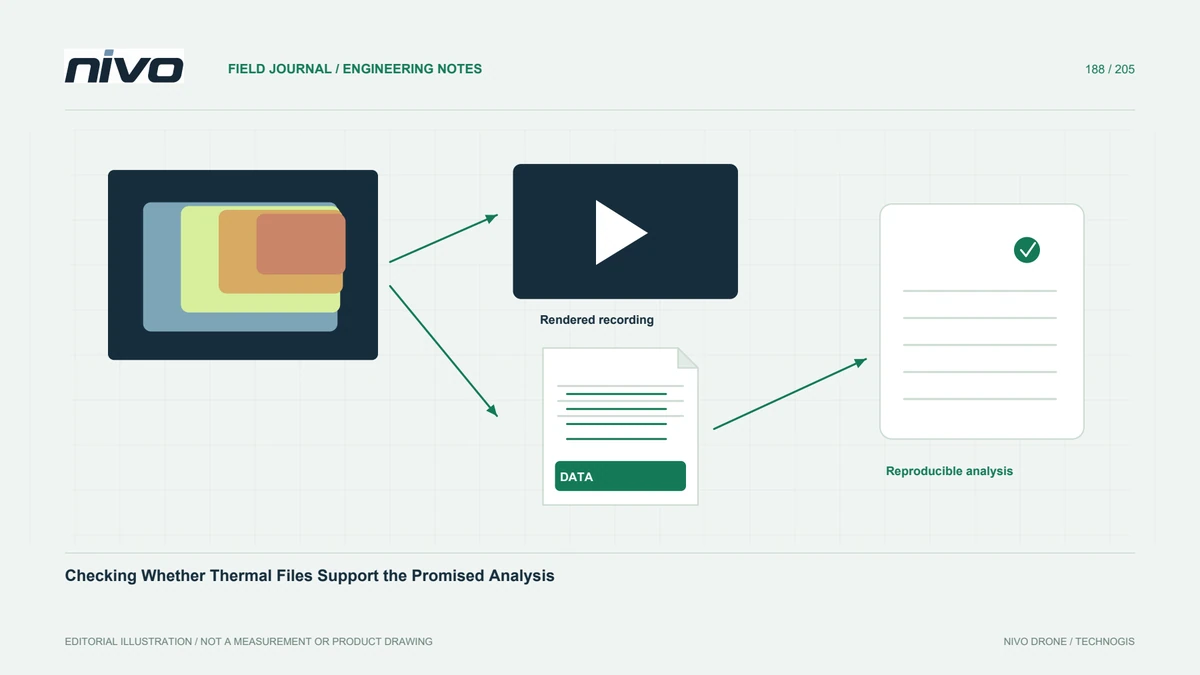
Accept thermal outputs through real sample files, metadata review, software import, parameter traceability, and a demonstrated report rather than a convincing live image.
Translate the requirement into evidence
A request for thermal inspection may mean visual pattern screening, stored video, or a particular temperature-analysis workflow. Write down which one is required and what information must remain available after flight. A display with a color scale does not by itself answer that question. Define the recipient's analytical task first. The acceptance exercise should test the evidence needed for that task, not merely whether the camera powers up and sends an attractive live view.
Obtain files from the actual configuration
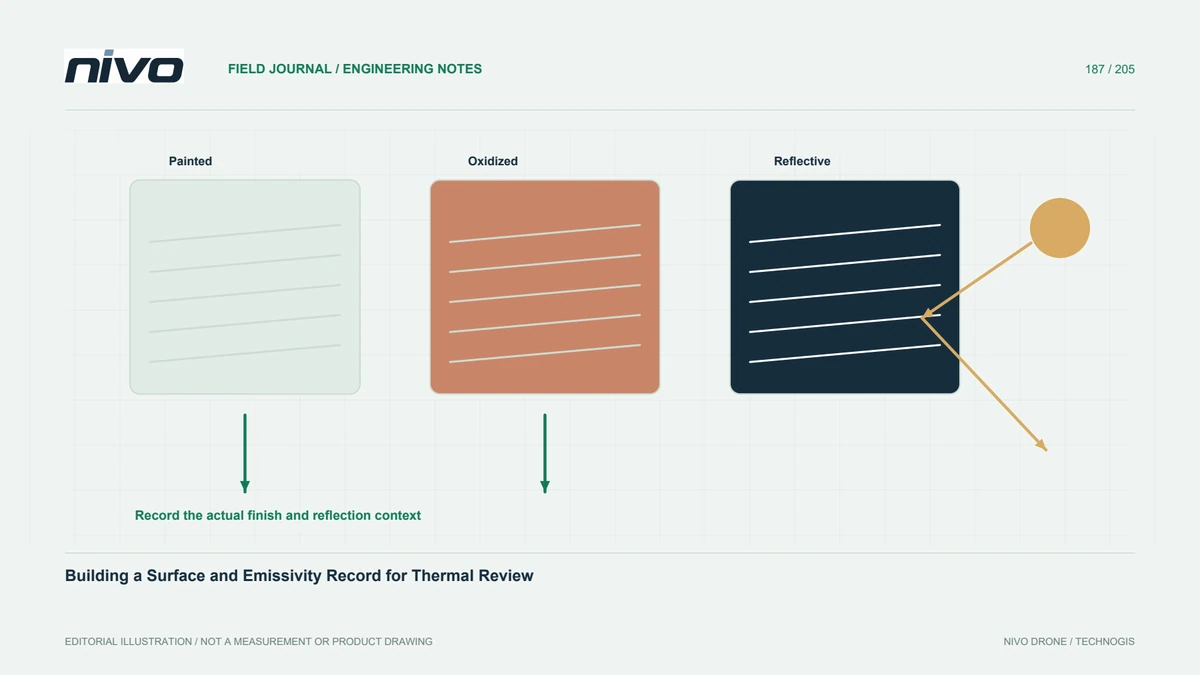
Request representative original outputs from the proposed device, recording mode, firmware, and storage arrangement. Keep their source identity intact. A sample from another thermal camera is useful for explaining a concept but cannot establish what the proposed payload records. Review the appropriate SIYI manual or other manufacturer documentation. Where an output characteristic is unclear, resolve it with technical support rather than inferring a capability from a screenshot, filename extension, or sales illustration.
Import into the intended software
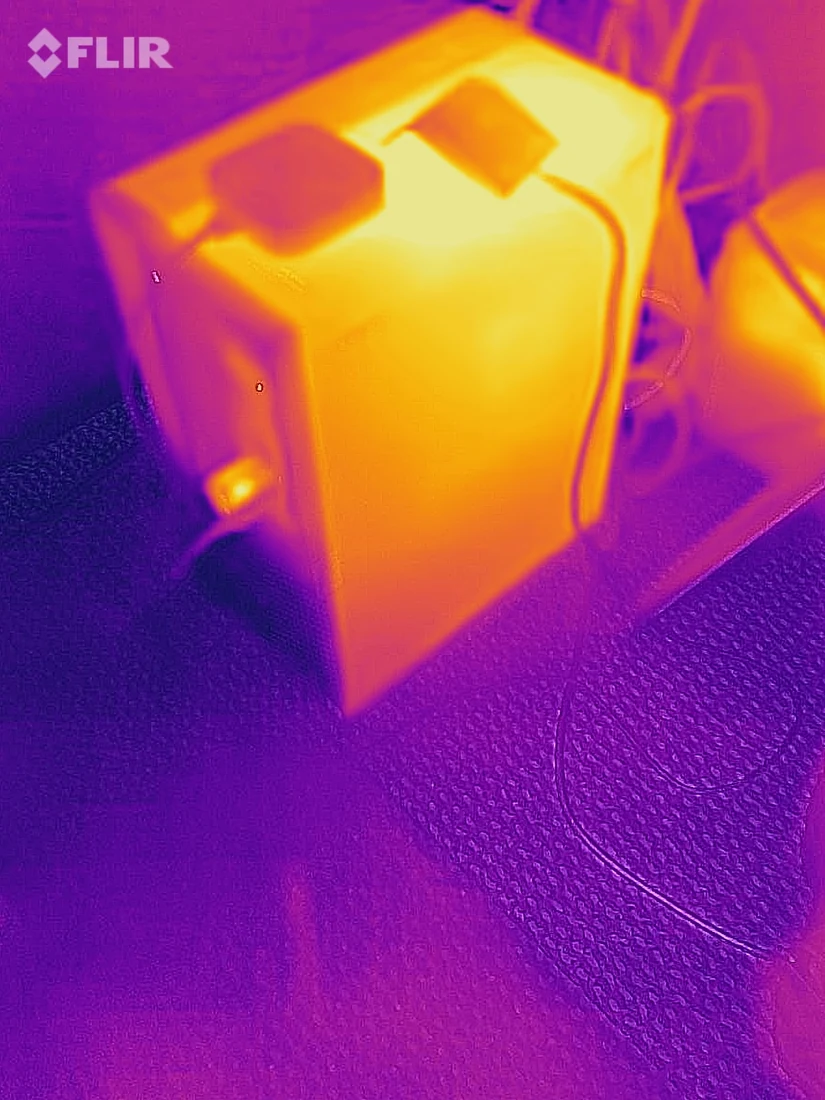
Open the real files in the software the recipient plans to use. Confirm whether it reads the expected values, relevant metadata, and any measurement parameters required by the agreed method. A file that opens as a picture may still lack the analytical information being requested. Record software version and import behavior. Do not transfer FLIR-specific software features to SIYI equipment without demonstrated support; manufacturer workflows illustrate concepts, not universal cross-brand compatibility.
Test traceability of reported values
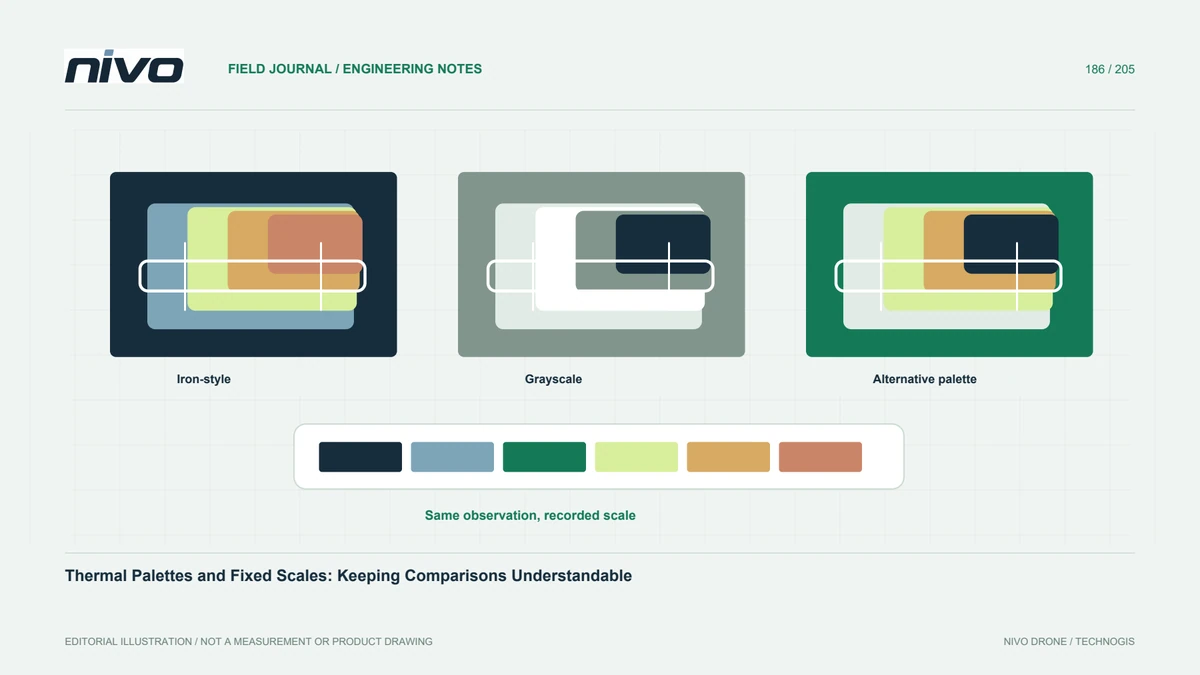
Where numerical analysis is supported, identify how an illustration's reported value relates to the original file, selected region, and parameter settings. Retain an unmodified source and a reproducible analysis record. If only relative patterns can be evaluated, label the output accordingly. Do not reconstruct supposed temperatures from palette colors and present them as sensor measurements. The important distinction is between information the file contains and information a reviewer merely assumes from its appearance.
Produce a small report example
Ask the intended recipient to prepare one finding from the sample data. Include asset identity, RGB context where relevant, conditions, analytical status, and limitations. Check whether another reviewer can retrieve the source and understand the claim. This exposes gaps in file handling, interpretation, or reporting before a complete site has been collected. A successful camera demonstration is only one part of this acceptance chain; useful stored evidence must survive the whole process.
Approve the supported scope
Document accepted formats, modes, software, analytical claims, and unresolved requirements. If a requirement is unsupported, narrow the scope or revise the configuration through technical consultation. Keep trial results specific to the arrangement tested. During NiVO payload selection, use this record to distinguish demonstrated output capability from questions still awaiting confirmation. Acceptance succeeds when the promised analysis can be reproduced from actual files, without implying that every thermal payload records interchangeable radiometric data.