VTOL and Conventional Fixed Wing: Evaluating Survey Access
Compare VTOL and conventional fixed-wing workflows through departure methods, aircraft recovery, transport, sensor requirements, and realistic acceptance tests.
Compare actual configurations
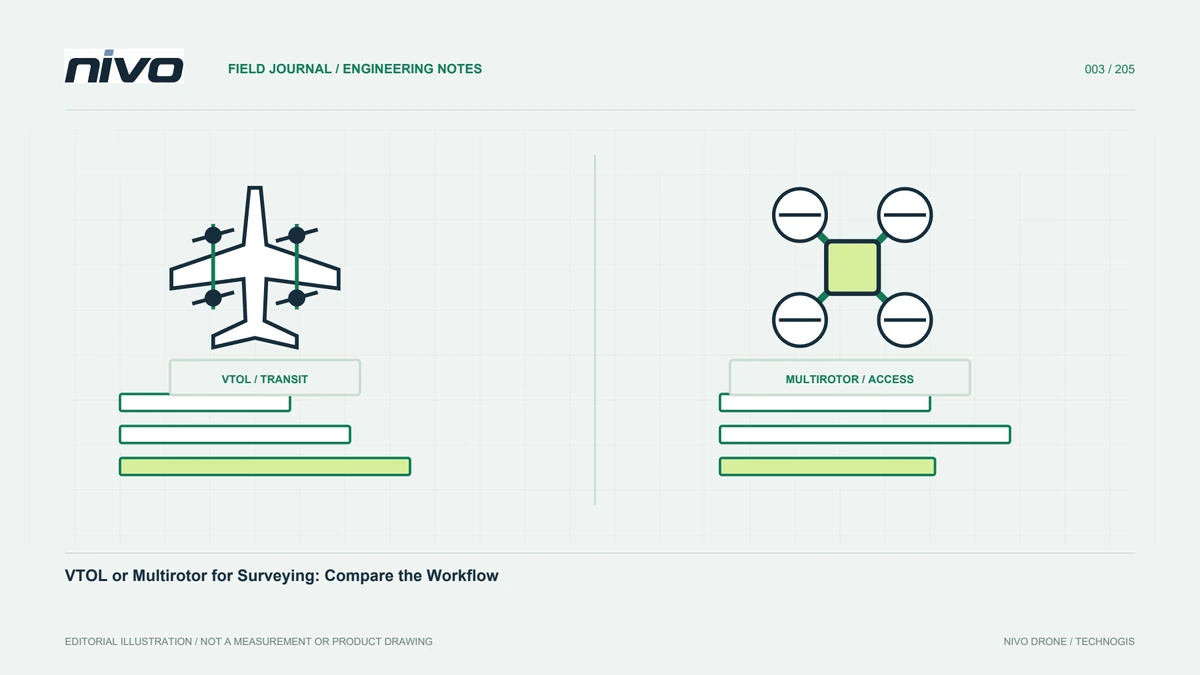
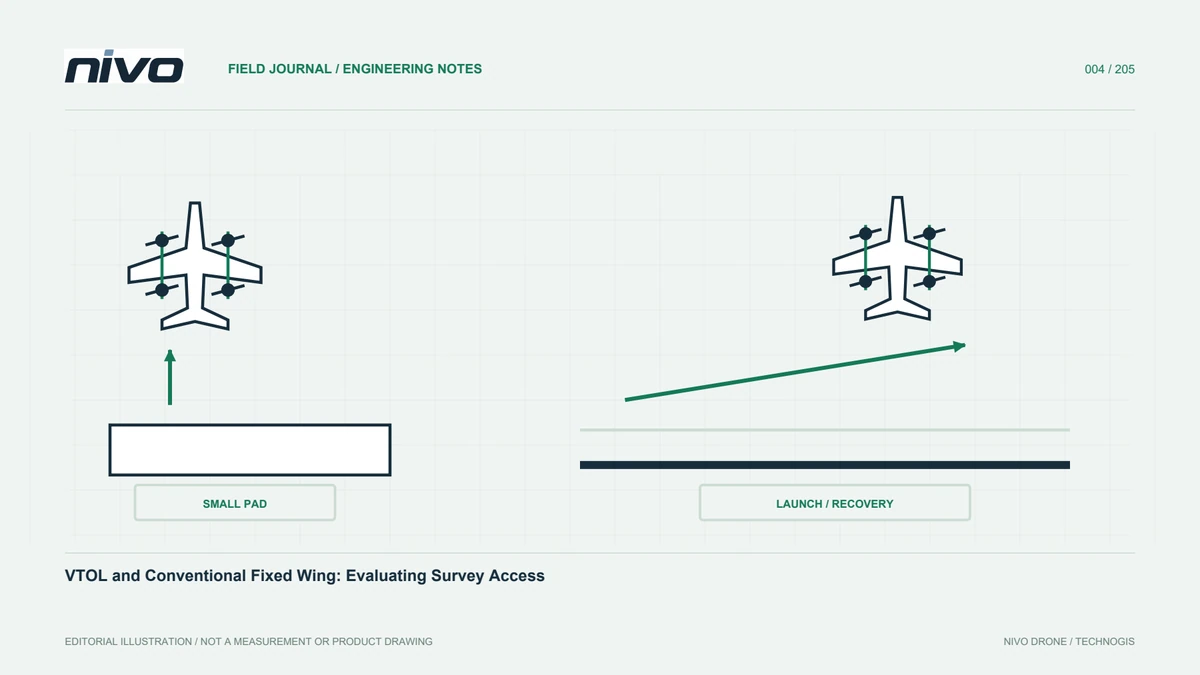
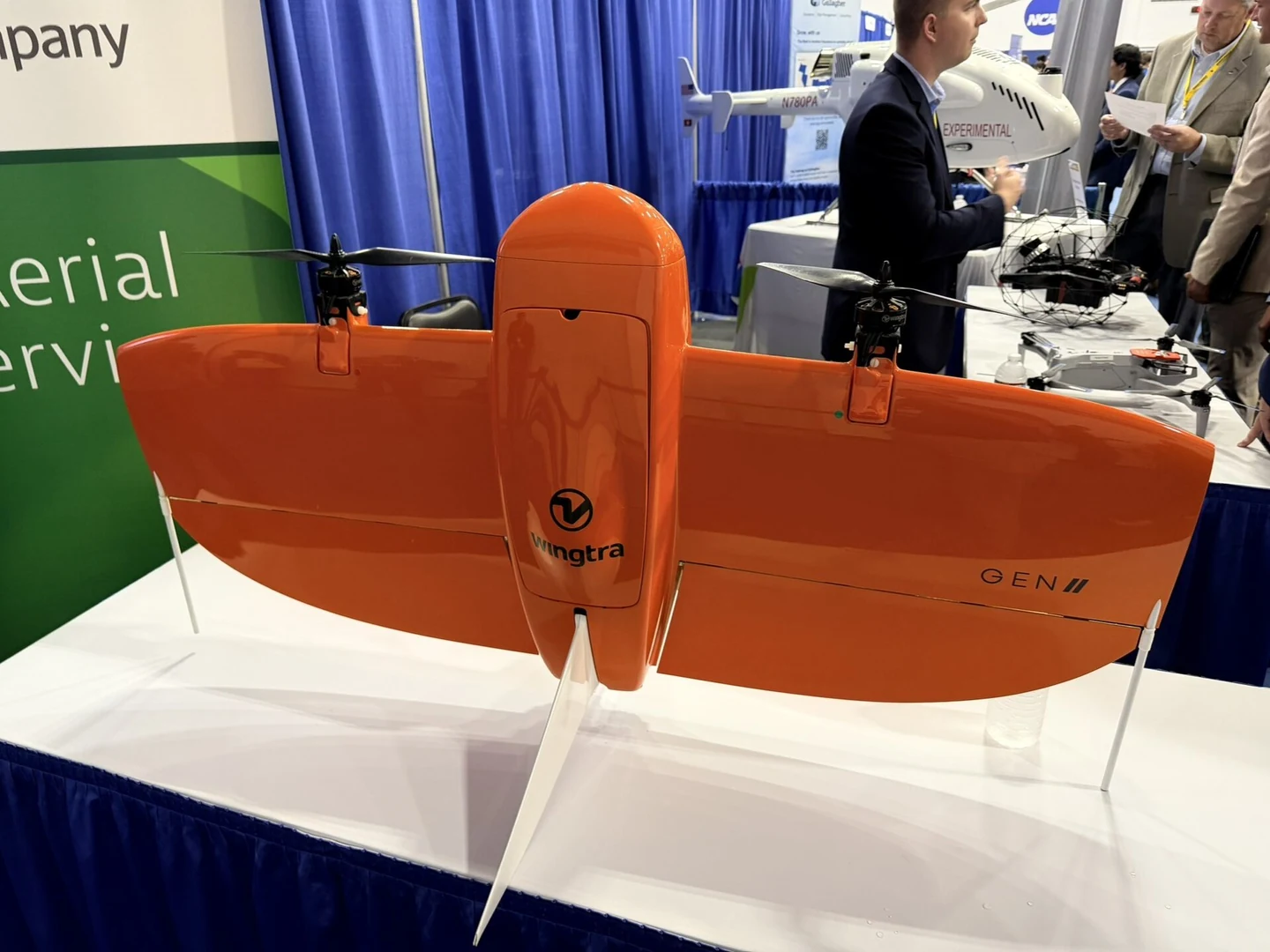
Both VTOL and conventional fixed-wing aircraft can support cruise acquisition. Departure and recovery are a visible difference, with consequences for logistics. Conventional fixed-wing does not always mean a runway: designs may use other manufacturer-defined methods. Describe the actual departure method, recovery system, staff, and equipment for each candidate. Avoid declaring one category easier before examining the survey and environment. A useful comparison concerns offered configurations, not assumptions that apply only to some aircraft with a similar overall shape.
Assess the final approach to the site
Internal roads may change after rain or construction activity. Open ground on a map may be inaccessible with all the equipment. Consider carrying wings, fuselage, batteries, and support devices from the vehicle. Evaluate any launching equipment together with setup and transport procedures. VTOL also needs handling and structural checks. Include this final stage of access rather than only the drive from the office. It can determine staffing, preparation time, and whether the proposed daily schedule is realistic for the team.
Review recovery as well as departure
A convenient departure does not establish a suitable return. Site access, wind, and human activity may change while the aircraft is working. Review recovery needs throughout the operation. For VTOL, include the transition towards vertical flight and management of access to the landing area. Define alternatives for changed conditions. Detailed actions must follow the aircraft manual and responsible operator. The plan should not assume that a clear departure area will remain unchanged until the final phase of a long survey.
Understand the hybrid arrangement
Vertical capability introduces components and control considerations. Its team needs appropriate inspection knowledge for motors, propellers, joints, and relevant structures. Conventional designs have their own requirements associated with launch and recovery equipment. Counting visible parts is not a sufficient complexity assessment. Compare maintenance tasks, training, and methods of identifying condition changes. Include the people who will maintain the system. Their requirements can reveal recurring work that is easy to overlook during a short demonstration or an initial procurement presentation.
Estimate productivity using a real plan
Include travel, line entry, turns, acquisition, and return. Consider terrain and acquisition blocks. Repeated small sites may be dominated by setup and relocation, while a continuous region may benefit more from efficient lines. Compare equivalent image requirements and explain different assumptions about speed, resolution, or overlap. Accepted data is a more meaningful productivity measure than theoretical distance. It connects the aircraft comparison to what the project actually receives and to the effort needed to correct or repeat inadequate acquisition.
Review the sensor workflow
Sensor integration must suit aircraft dynamics and the mission profile. An orthomosaic camera needs an image sequence appropriate for processing, while other instruments may need different orientation, power, and timing support. Understand how position and events are recorded. Request evidence for custom mounts. A device listed as an option is not proof of readiness. Ask about supporting equipment, checks, and delivered files. This avoids discovering unresolved integration responsibilities only after purchase or when the field team is already preparing a production mission.
Consider who maintains the process
The configuration must remain usable by the available staff. Review experience, maintenance skills, personnel changes, checklists, and training. An easy interface does not prove readiness for the complete workflow. A demonstration can appear simple while leaving storage, battery handling, or support unresolved. Request the documents that will actually be supplied. The equipment and data teams need a process they can repeat, rather than expertise held only by the presenter. This matters particularly when the first trained operator is unavailable for a later project.
Choose a representative test
A test should address the real project questions. An open field may not represent changing terrain or limited access. Agree on evidence, conditions, and assessment methods. Involve the processor in inspecting images and position records. Distinguish standard capabilities from work needing adaptation. The result need not become a universal performance claim. Its value is a clear boundary around what has been demonstrated, allowing both parties to identify remaining assumptions and agree how they affect the proposed service or operating plan.
Decide using several scenarios
A forestry team with few clearings may prioritise operating access and approved recovery methods. Open-terrain work may place more weight on continuous lines and existing support equipment. Both can be reasonable with clear evidence. Assess several routine scenarios instead of selecting one catalogue figure. Use product pages for shortlisting, then decide from the configuration, training, and tests. Save the reasoning so that a later revision can be discussed against original assumptions rather than repeating a category-level argument without project context.
Illustrative case: comparing recovery logistics before procurement
Imagine a team evaluating VTOL and conventional fixed-wing proposals for a hypothetical land survey. Both offers include example imagery, but their departure and recovery arrangements differ. Rather than assuming that every conventional design needs the same ground infrastructure, the buyer asks each supplier to document its actual method and supporting equipment. Field staff then trace the journey from vehicle unloading to the operating area, including the handling of wings, batteries, and any additional apparatus. The operator reviews site suitability under the relevant aircraft procedure. The return phase receives its own assessment instead of being treated as the reverse of departure. The processor compares representative files using equivalent output requirements. When one proposal relies on a preparation step absent from the initial schedule, the manager includes that work in the comparison rather than ignoring it to preserve a preferred aircraft choice. The accepted test records configuration, conditions, responsibilities, and deliverables. This hypothetical decision does not declare a universal winner. It establishes which arrangement fits the organisation's recurring sites and staff. A later project with different access can therefore be reviewed against documented assumptions, rather than against an oversimplified rule about which aircraft category is always easier.
Keeping an existing recovery workflow can be reasonable when its equipment, staff, and sites already fit the recurring job. Adopting a different aircraft arrangement can also be reasonable when it removes a documented logistical constraint. The acceptance comparison should show both the work retained and the work newly introduced, including training and transport responsibilities. A short demonstration cannot answer those questions by itself. The handoff therefore includes the representative field sequence and the assumptions about site availability, allowing the buyer to distinguish an operational benefit from a preparation task merely transferred to another person.