Comparing Agrios Workflows Across Fragmented Agricultural Parcels
Compare fragmented-field operations through access, setup, movement, support readiness, task identity, and measured local cycles rather than total hectares alone.
Describe the parcel network
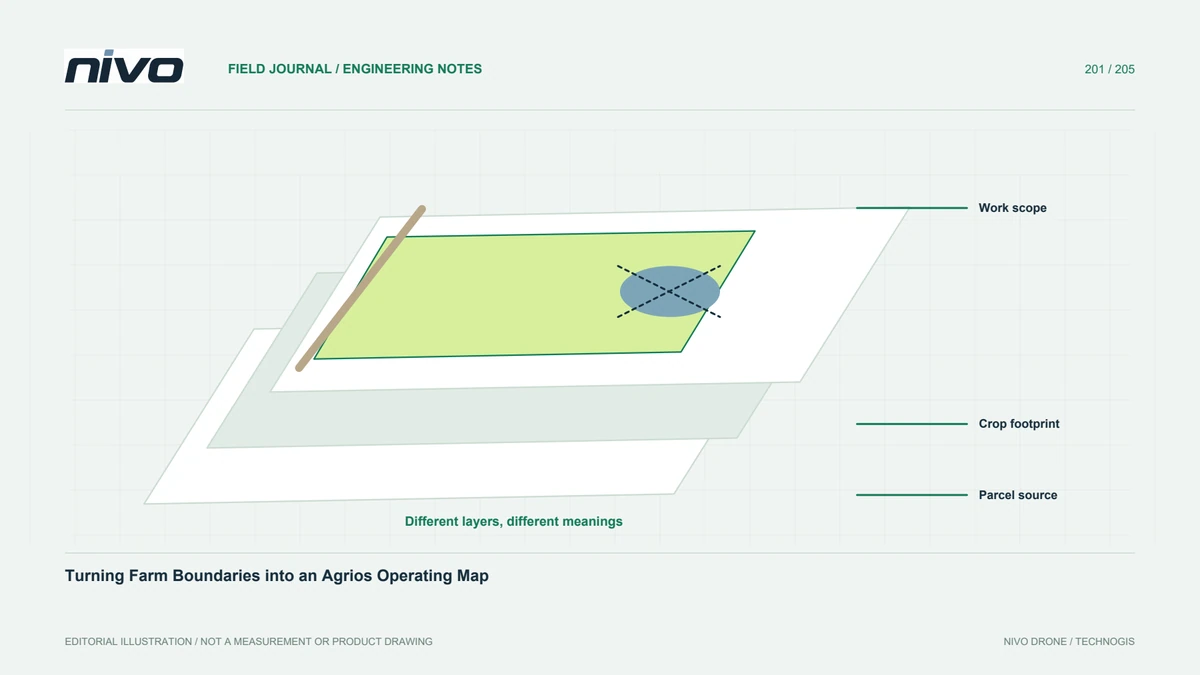
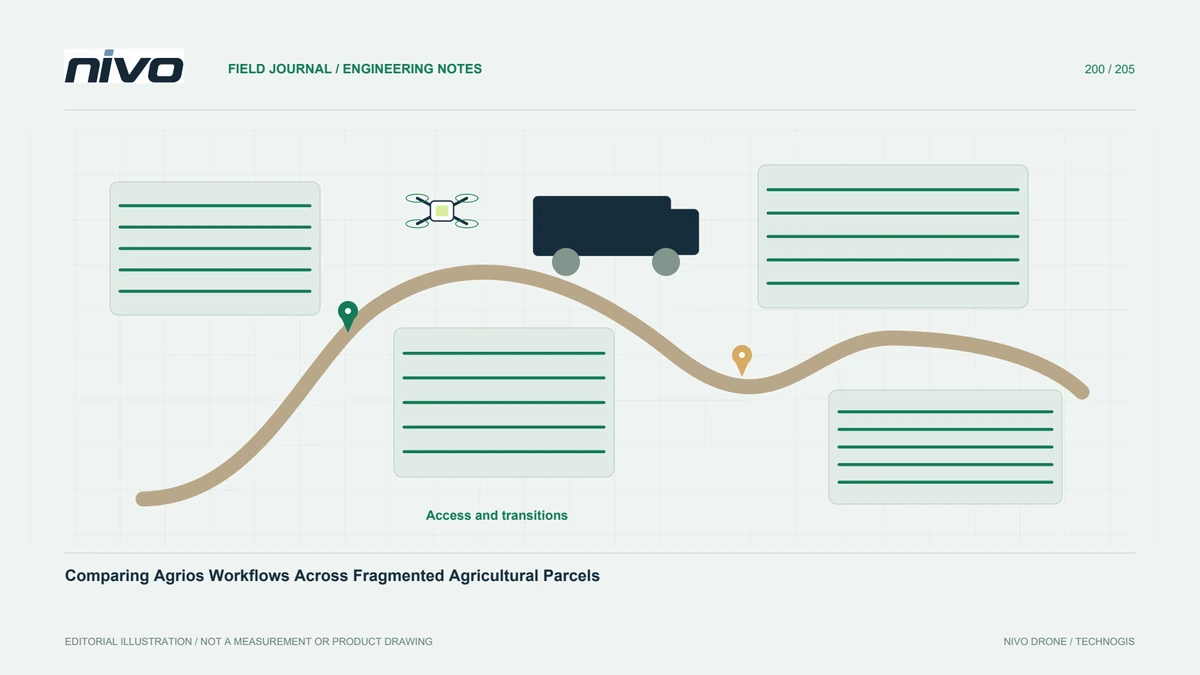
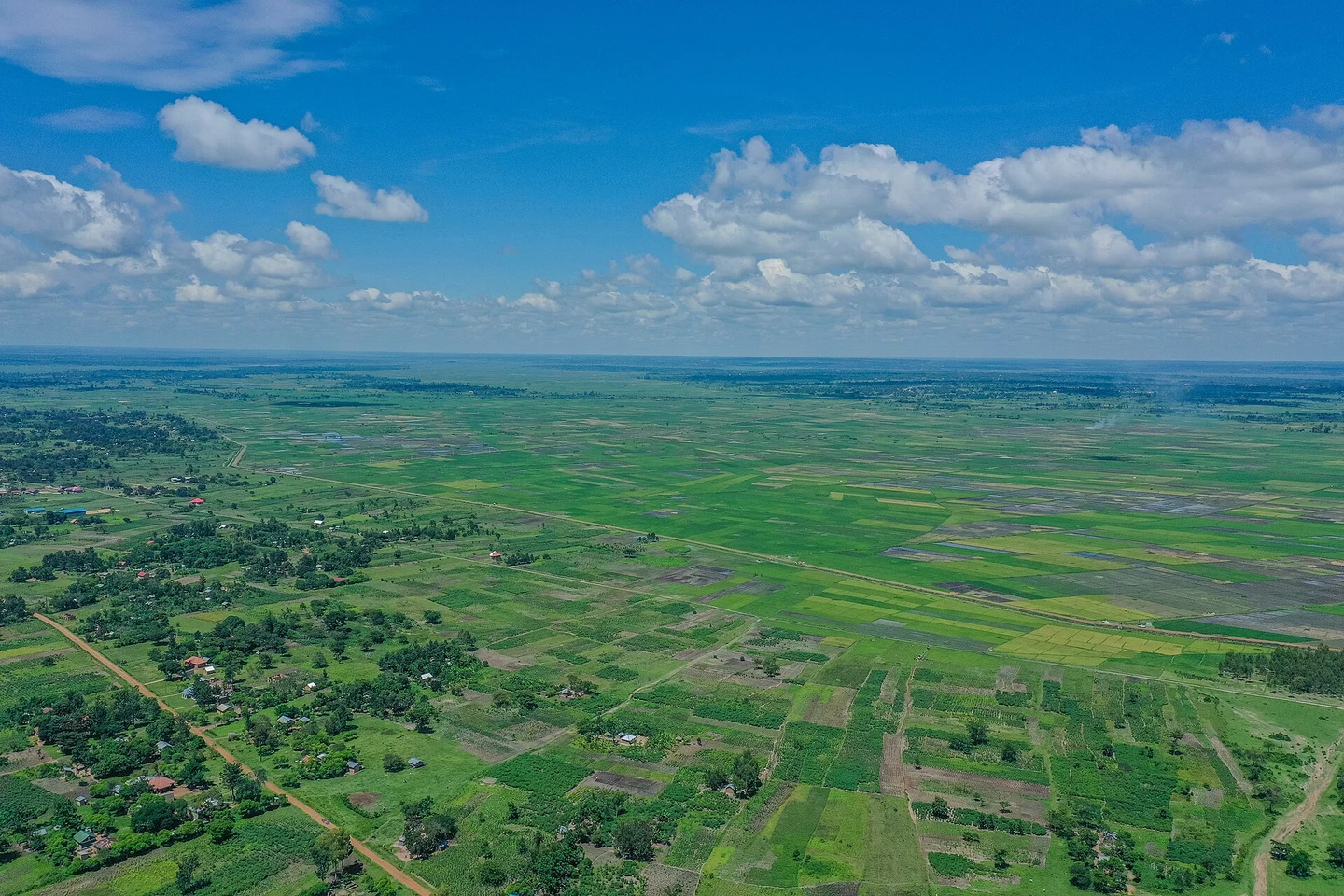
A farm's total area does not reveal how work is distributed. Separate parcels can differ in access, shape, relief, obstacles, and support availability. Build a parcel list and identify the relationships between them before estimating a workday. Penn State discusses small and irregular fields as part of the drone-application context, but that does not establish productivity for a specific Agrios arrangement. The operating question is how the complete team moves between the actual tasks.
Distinguish movement and application
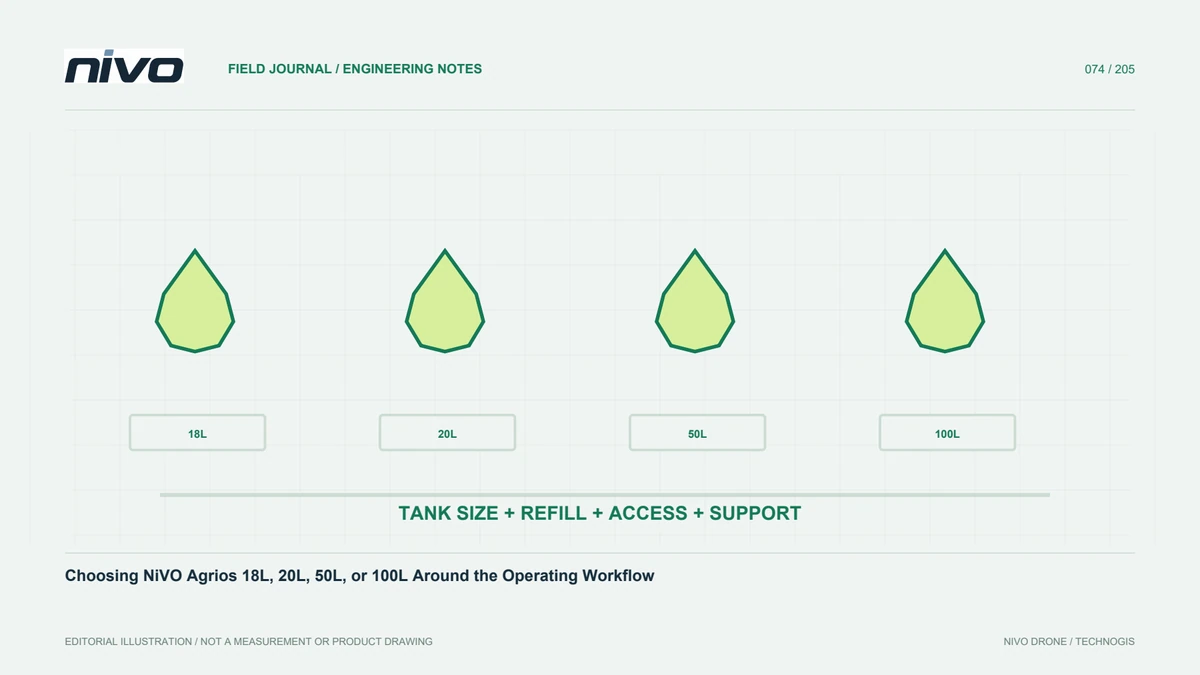
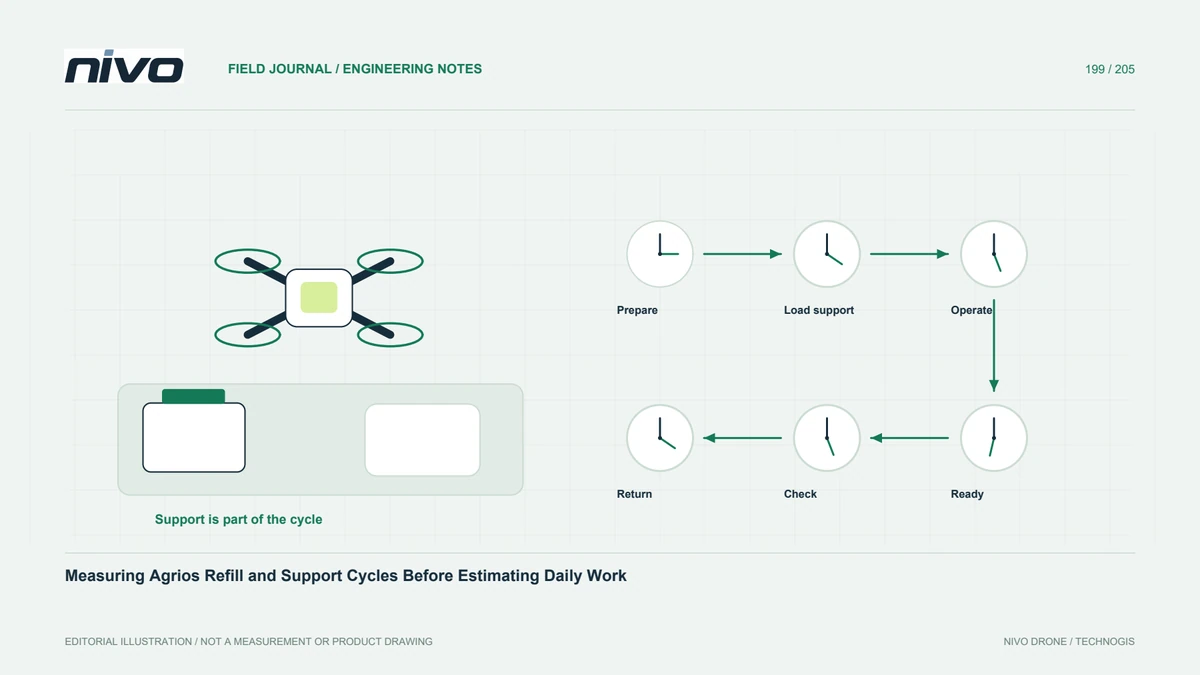
Create separate planning categories for transport, setup, checks, task execution, waiting, and post-task handling. Record where the support vehicle can actually reach, not merely the straight-line distance between parcel centers. A route that looks short on a map may require a different access sequence on the ground. Do not assume that a larger tank eliminates these transitions. Use the categories to expose which parts of the day are governed by logistics rather than nominal payload volume.
Keep parcel and task identities linked
Assign each work item a stable parcel identity and a confirmed technical requirement. Different crops or products must remain distinguishable through preparation, recording, and handover. This article does not prescribe mixtures or doses; those decisions follow appropriate qualified assessment and applicable instructions. A movement plan that reduces travel but creates confusion between tasks is not an improvement. Keep the identity trail clear even when several neighboring owners or crews share one support arrangement.
Compare realistic support scenarios
Evaluate alternatives using actual access and team constraints, such as one central support point versus an appropriately planned move between groups of parcels. State assumptions for energy, transport, staffing, and permitted operating locations. Do not treat either arrangement as universally preferable. If a needed specification is unconfirmed, leave it as a question for NiVO consultation. The comparison should show what must be true for each option to work, not conceal unknowns inside an impressive daily-area estimate.
Trial representative transitions
Observe a small sequence containing the kinds of parcel changes expected in routine work. Use the time definitions from the cycle study and record interruptions with reasons. The responsible technical team also checks task quality, because a fast transition cannot justify inadequate application or omitted checks. Keep measured observations separate from planning assumptions. A trial on easy adjacent fields should not be presented as evidence for remote, obstructed, or otherwise different parcels that were never included.
Select the supported workflow
Document why the preferred arrangement fits the parcel network and what could change the decision. Capacity options such as 18L, 20L, 50L, and 100L remain configuration choices to evaluate with confirmed specifications. Provide the map, support plan, trial record, and outstanding questions during Agrios consultation. The useful result is a repeatable local operating design, without claiming that the largest capacity always wins or that one observed sequence establishes performance for every farm and season.