Mission Stop Triggers and Reviewable Field Decisions
Connect changed site conditions, equipment findings, data quality, decision roles, and restart requirements before schedule pressure shapes the field response.
Define what can invalidate the plan
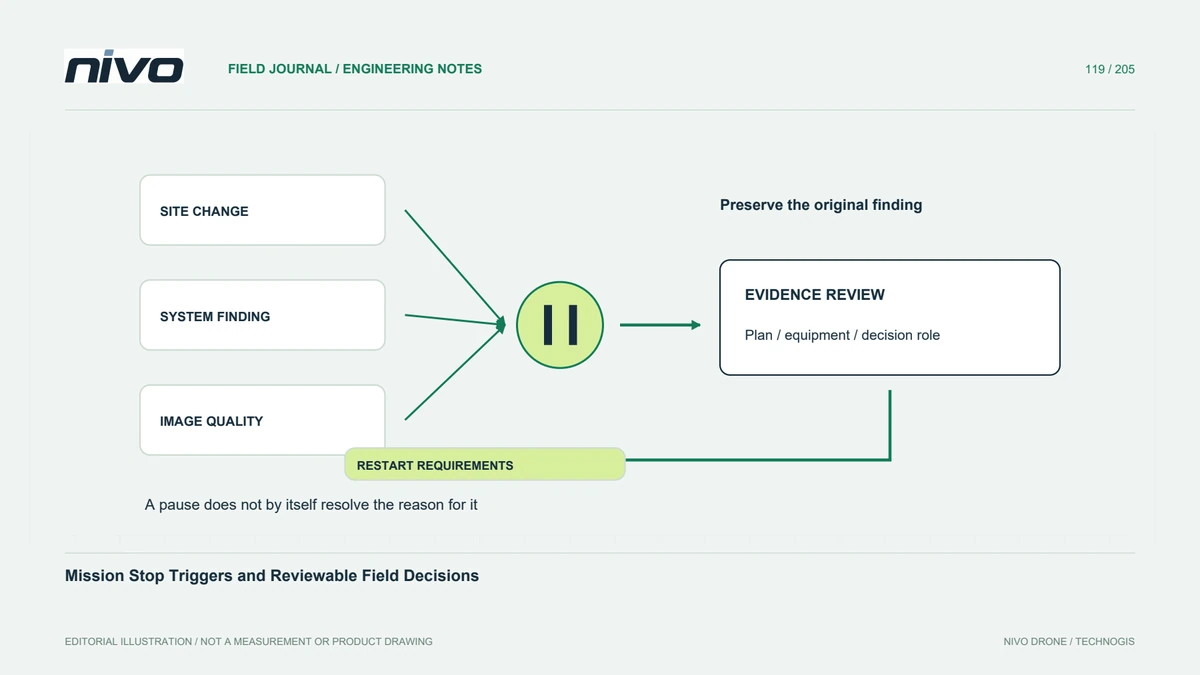
A mission plan depends on assumptions about the site, equipment, people, information, and operating conditions. Identify changes that require a pause or reassessment through the actual aircraft and operator procedures. Avoid replacing those instructions with a universal article checklist. The useful preparation question is which observations can make the accepted plan no longer applicable and how the team recognizes that change before continuing from habit.
Keep condition reports factual
Reports should identify what changed, where, and when, with relevant evidence. A vehicle entering an assessed area, an unexplained system message, and unusable image quality present different questions. Do not turn every observation into a guessed root cause. Clear reporting lets the responsible person decide which procedure applies. Preserve important uncertainties instead of minimizing them because the previous portion of the mission appeared successful.

Assign authority before the situation develops
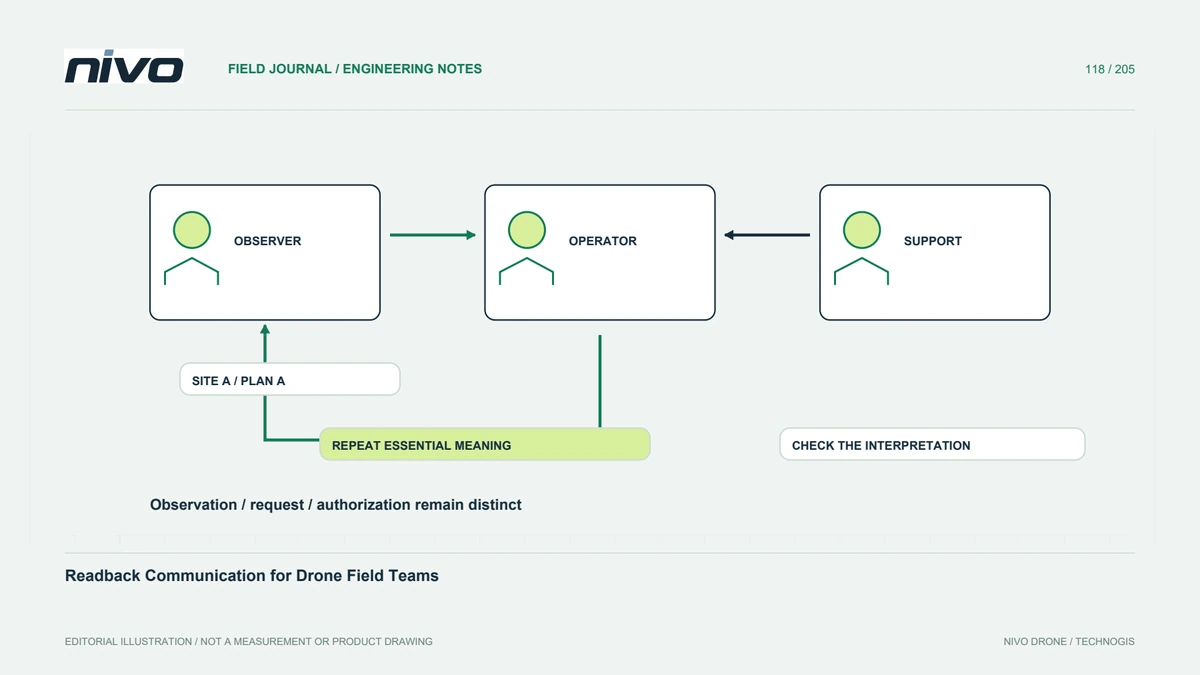
The team should understand who reports a concern, who makes the operational decision, and who handles technical or data follow-up. Those responsibilities must align with the approved operating arrangements. A client request or a colleague's reassurance does not automatically resolve an equipment or site limitation. Brief communication expectations in advance so that stopping or reassessing is a defined action rather than an improvised negotiation under schedule pressure.
Separate immediate response from later investigation
The aircraft's procedures govern immediate handling. Afterward, preserve logs, mission state, environmental context, and observations needed to understand the event. Do not delay an appropriate operational response merely to gather a better screenshot. Equally, a resumed normal display does not erase an unresolved finding. The review should distinguish what was done at the time from the later explanation, keeping both traceable without assuming they answer the same question.
Specify what supports a restart
Restart or continuation requires the relevant plan, equipment, and conditions to be accepted through the responsible process. Record changed assumptions, completed checks, and any revised mission or data requirements. A pause alone does not resolve the reason for it. If information remains insufficient, identify the next action rather than treating lost time as evidence that work must resume. Data recapture and aircraft readiness may require separate decisions.
Learn without rewriting the event
Retain the original observation, decision basis, response, and subsequent findings. Review whether triggers were recognizable and responsibilities clear. Use clearly hypothetical training examples where needed, while distinguishing them from actual project records. This supports NiVO mission preparation and honest evaluation without inventing universal stop thresholds. The outcome is a decision history that helps another team understand why the plan changed and what evidence allowed the work to proceed afterward.