Reviewing Drone Parameter Differences Without Blind File Copying
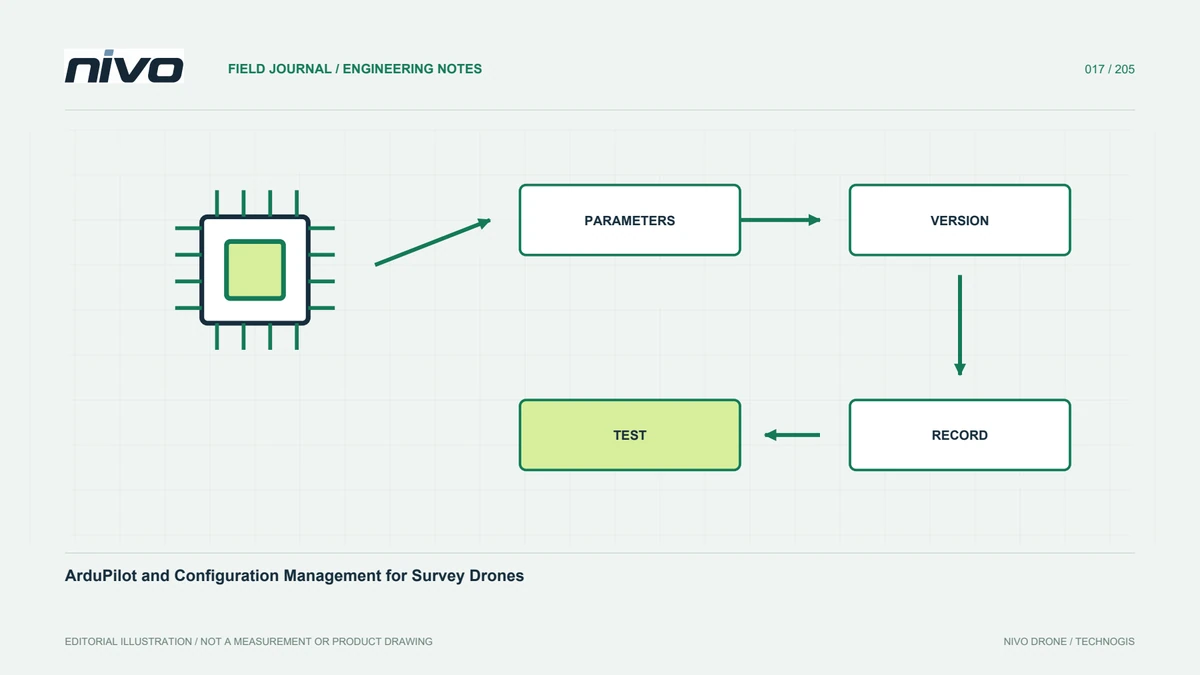
Compare parameter snapshots through aircraft identity, software context, functional grouping, verified readback, and explicit acceptance of each intended change.
Establish that the snapshots are comparable
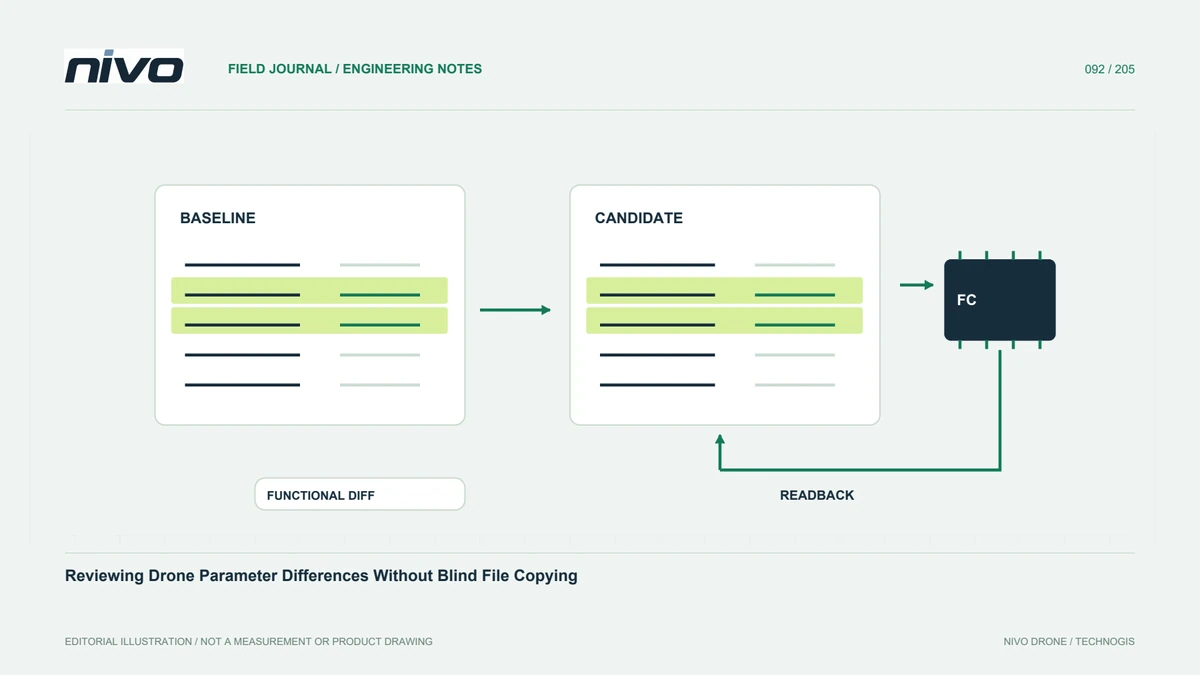
A parameter difference is meaningful only when the files' origins are known. Record aircraft, controller, firmware, download time, and the configuration stage each snapshot represents. Distinguish a workshop proposal from values actually read from the aircraft. Similar filenames are insufficient. This preparation prevents a file belonging to another unit, sensor arrangement, or software generation from being treated as the definitive baseline merely because its date looks recent.
Group differences by operational function
Review related settings together rather than sorting only by alphabetical order. Sensor selection, output mapping, communications, mission behavior, and logging can have dependencies. Connect each proposed difference with the reason for the change and its supporting instruction. A small number of changed values is not automatically low impact. Conversely, a long diff can include documented metadata or software changes that need interpretation rather than blanket rejection.

Distinguish intent from device state
A saved configuration file expresses content in that file; it does not establish what the connected controller currently uses. Follow the applicable process for applying changes and verifying actual readback, including any restart requirement in the documentation. Communication messages and ground-station behavior need interpretation in their implementation context. Preserve evidence of the final state instead of assuming that pressing an upload button completed every intended modification.
Investigate missing and renamed entries
A setting absent from a snapshot may reflect software differences, conditional visibility, an incomplete transfer, or another cause. Do not automatically add it back from an old file. Consult documentation for the exact firmware and device. Record unresolved names and their significance. The reviewer should explain whether a function remains supported and how it is configured, rather than measuring success by making two files textually identical.
Tie changes to observable checks
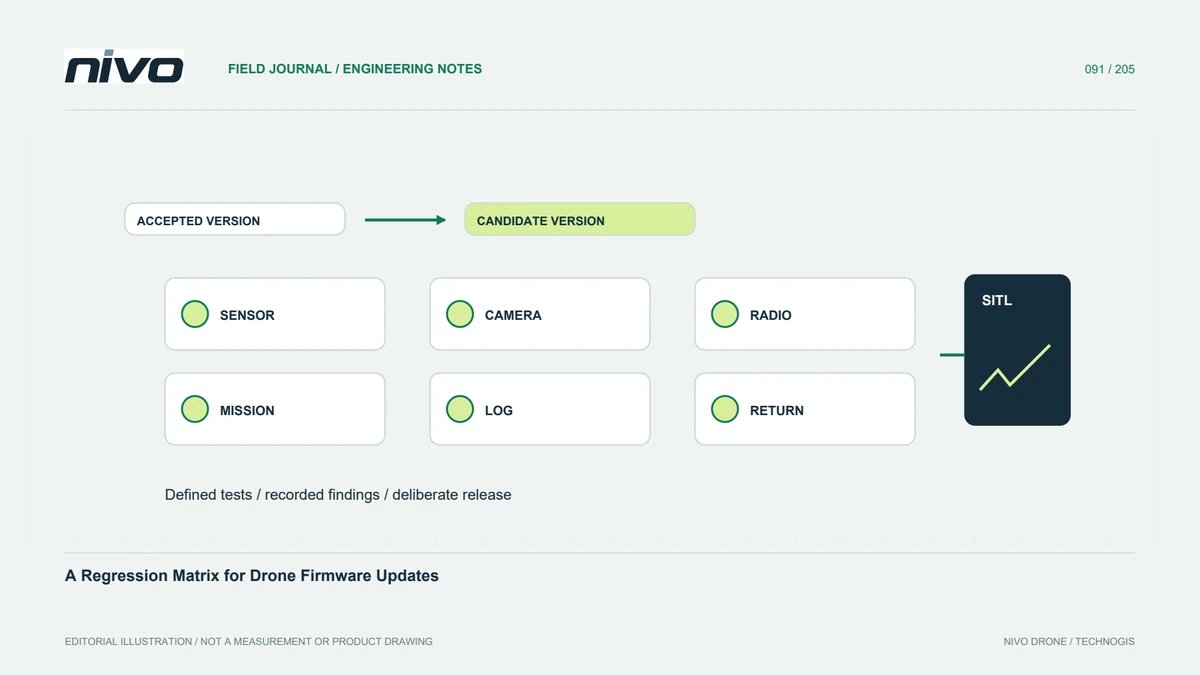
For every relevant group, define evidence that the intended function behaves correctly within the approved validation process. A payload-output change needs different observations from a logging change. Preserve the unchanged baseline and avoid unrelated edits during evaluation. If a result is unexpected, a focused diff helps identify what deserves investigation. It cannot establish the physical cause on its own, but it narrows questions without losing configuration history.
Publish the accepted configuration reference
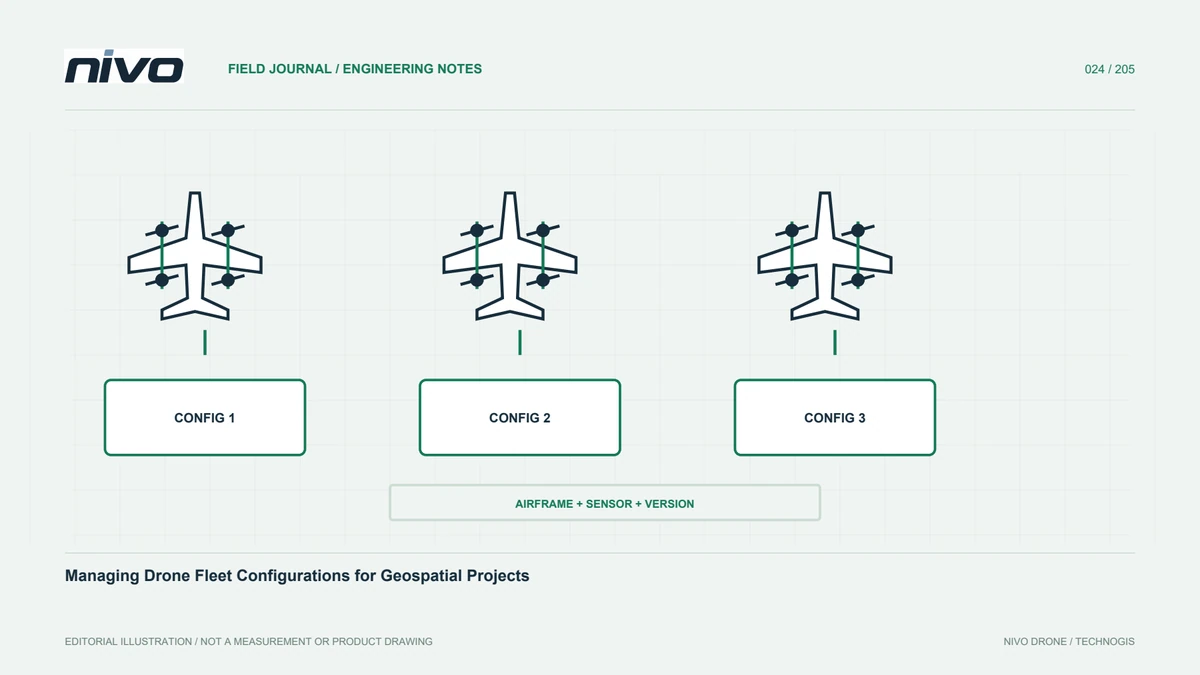
Keep the approved snapshot, verified equipment identity, reasons, review responsibility, and acceptance evidence together. Make draft and released files visibly distinguishable. A later technician should locate the applicable reference without asking which attachment in a message was final. This supports NiVO fleet consistency while acknowledging legitimate unit-specific differences, and prevents convenience-driven file copying from silently replacing a controlled engineering decision about the actual installed system.