A Regression Matrix for Drone Firmware Updates
Review firmware changes through equipment identity, retained baselines, simulation, installed-function checks, and evidence tied to a controlled release decision.
Define why an update is proposed
An available firmware release is not a complete reason to change an operational aircraft immediately. Identify the problem, required capability, or maintenance objective and read the applicable release information. Record the controller target, vehicle type, and current installation. This establishes the expected benefit and prevents a fleet from receiving an update simply because another unit used a similarly named download. The responsible technical process determines when a change should proceed.
Preserve a recoverable baseline
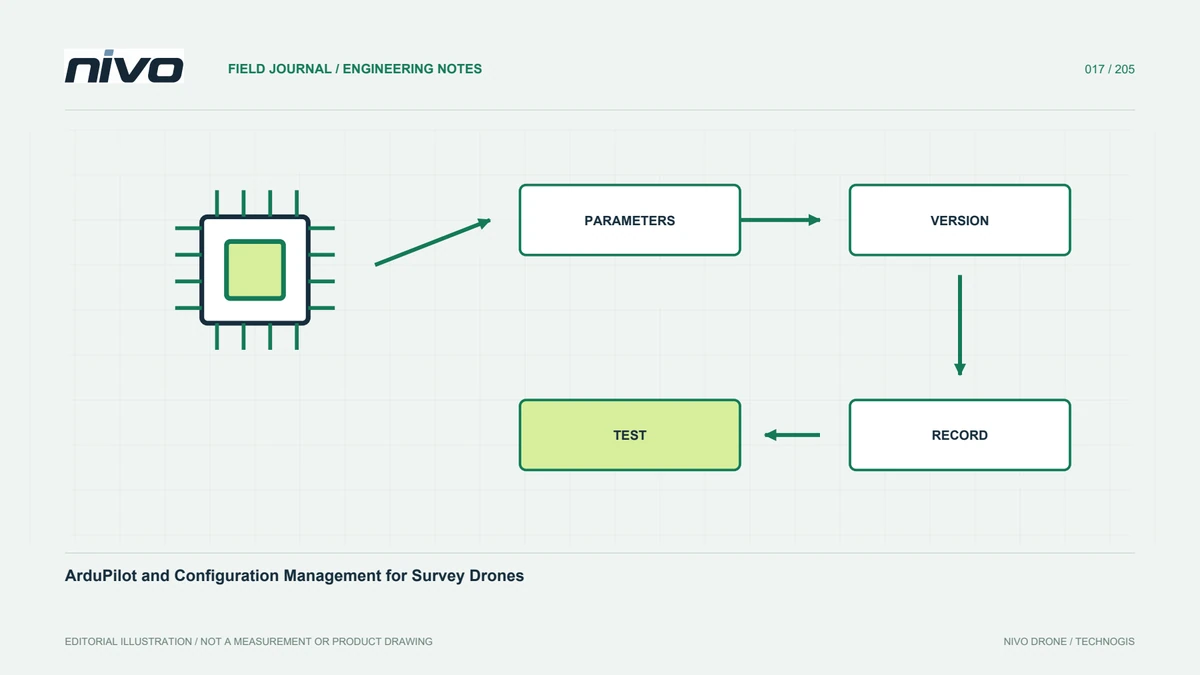
Before authorized work, identify the existing firmware, parameters, calibration references, connected devices, and accepted mission examples. Preserve supporting records in an accessible project location. A screenshot of the version number is not a complete baseline. Establish which recovery steps are actually supported for the board and software combination. Do not assume that loading an older file will automatically recreate all previous settings or reverse every change.
Build checks around installed functions
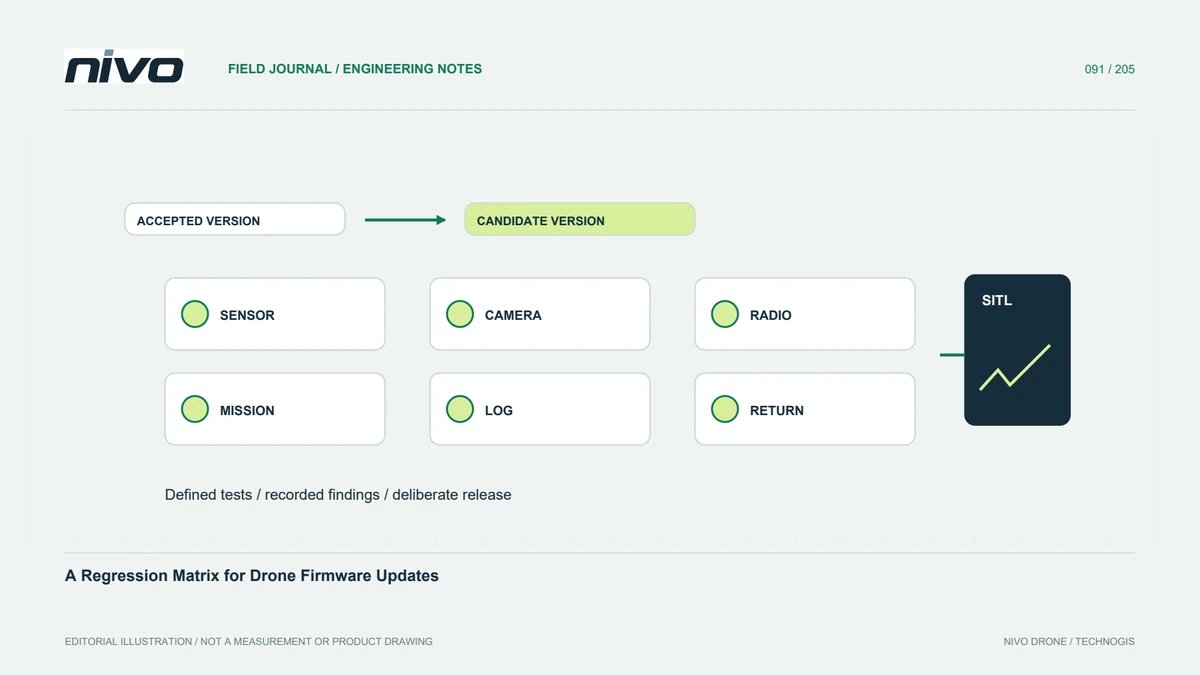
Create a matrix connecting each relevant function with its configuration, expected observation, test environment, and reviewer. Include sensors, communications, payload commands, mission interpretation, logging, and applicable contingency behavior. The matrix should reflect the supplied aircraft rather than every possible autopilot feature. It exposes missing evidence: a successful startup can confirm software runs while leaving the camera interface or return behavior completely unexamined.
Use simulation for the questions it can answer
Software-in-the-loop testing can examine supported mission logic and workflows without treating a real aircraft as the first experiment. Record the simulator, software version, model, and assumptions. Simulation does not prove wiring, propulsion condition, or installed sensor performance. Keep those checks separate. A useful result states what behavior was exercised and which physical questions still require the aircraft's approved ground and operational validation process.
Review differences before expanding deployment
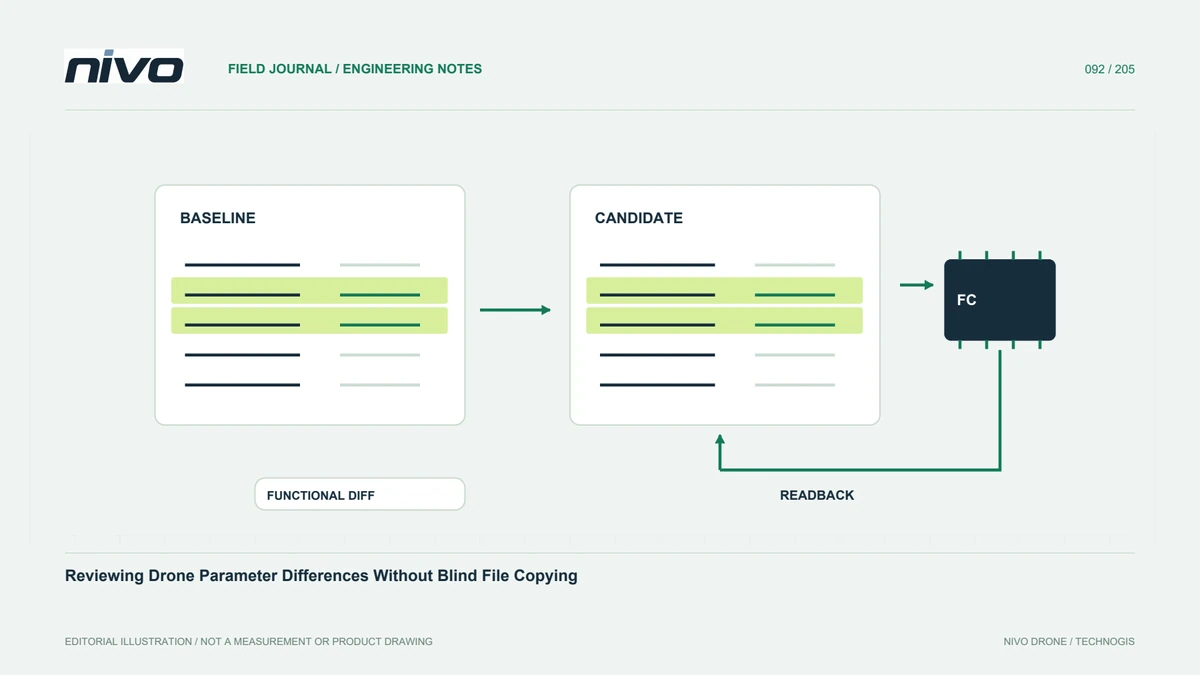
Compare expected and observed results, including changed defaults, renamed settings, device discovery, and recorded data. Investigate differences rather than copying a previous parameter file indiscriminately. Keep the evaluation bounded to the configuration actually tested. If an unresolved issue affects a required function, retain a clear status and escalation route. Fleet-wide adoption should follow demonstrated applicability, not the absence of a visible error during one informal demonstration.
Release a complete operational reference
The final package should identify the accepted firmware, configuration, test evidence, remaining limits, and updated instructions. Ensure operators and support staff can recognize which aircraft carries the approved arrangement. Retain the prior baseline and the decision history. This makes a NiVO firmware discussion reviewable and gives future troubleshooting a reliable starting point, while preventing a version number alone from being mistaken for complete readiness.