Sony α7R V for High-Resolution Aerial Image Acquisition
Evaluate the Sony α7R V through required feature detail, lens geometry, motion control, reliable triggering, aircraft integration, and a practical data-processing workflow.
Put resolution in the context of the survey
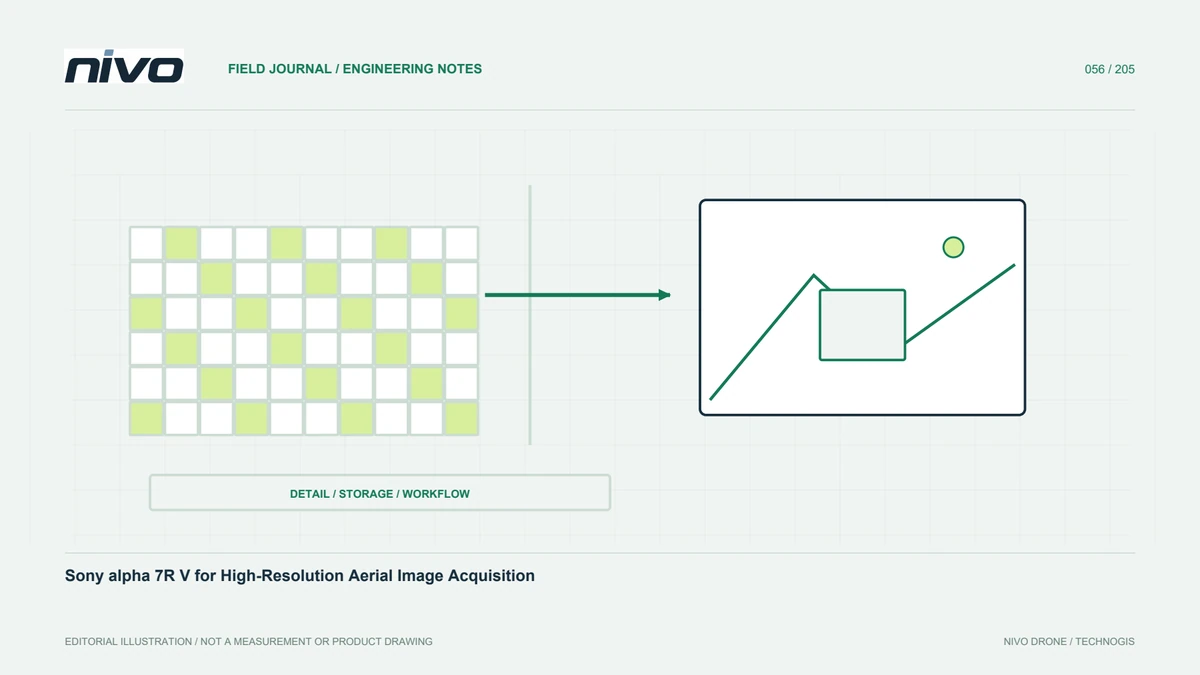
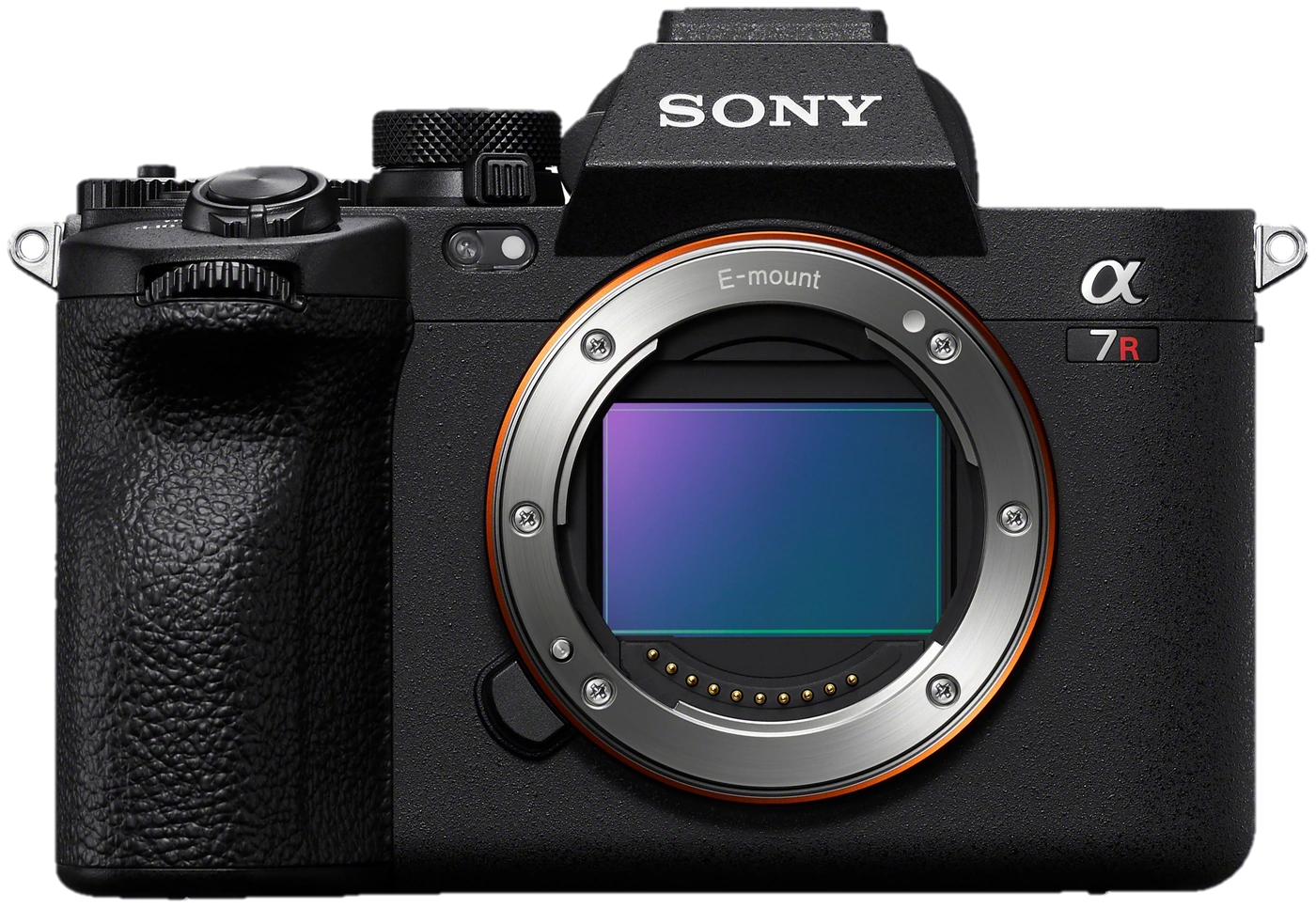
Sony specifies the α7R V as a full-frame camera with approximately 61 effective megapixels. For aerial work, connect this resolution to feature detail and acquisition design. The lens, mount, triggering, platform movement, and lighting determine what information survives. Identify whether the job requires small-feature recognition, structure documentation, or an orthomosaic for regional analysis. Each purpose changes coverage, storage, and acceptance requirements. Megapixels should support a defined information need rather than replace a clear description of the project.
Evaluate the lens as part of a measurement system
Interchangeable lenses strongly influence coverage, edge sharpness, distortion, and installed mass. A convenient photographic lens is not automatically the easiest mapping configuration to reproduce. Select focal length, then establish how focus and aperture remain controlled within a block. Document zoom locking where relevant. Test different parts of the frame on varied textures and depths. Treat a lens change as a configuration change requiring evaluation, rather than an accessory swap assumed to have no consequences for geometric processing.
Design ground detail and coverage together
Ground-detail estimates require sensor dimensions, image size, focal length, and distance to the surface. Fine-detail requirements can substantially increase photograph and route counts over large areas. Compare several scenarios against acquisition and processing costs. Pay attention to the highest terrain and its effect on coverage and overlap. If only a small area needs extra detail, consider purpose-specific blocks with planned geometric connections. Use actual output examples to show recipients what they can expect rather than presenting calculations as guaranteed recognition performance.
Inspect movement at original pixel scale
A sharp-looking preview can conceal blur in the full image. Inspect building lines, road edges, and texture across sequences. Relate changes to flight direction, frame position, and capture time. Test exposure, focus, and shutter modes with reference to the camera documentation and actual mount. Handheld stabilization features should not automatically be assumed optimal for every airborne installation. Separate optical, focus, and movement symptoms. Recording one change at a time makes improvements understandable and reproducible for the next operator.
Demonstrate repeated-capture performance
Before flight, run capture sequences using the planned format, card, and power arrangement. Check interval consistency while files are written and the image count grows. Compare commands with stored images. Where GNSS supports positioning, investigate timestamp relationships as well. Timing errors that are invisible in individual photographs can create systematic georeferencing problems. If the configuration cannot maintain the required interval, revise the mission design. An assumed overlap reserve is not a substitute for measuring missing captures and validating the trigger integration.
Plan the data workflow before fieldwork
Large files affect copying, review, and processing. Measure these demands with a representative trial. Allow space for originals, backups, working data, intermediate products, and deliverables. Label cards and flight blocks so that different devices or settings are not mixed unknowingly. Verify copies before reusing media. Test rapid-delivery requirements on the actual processing computer. This exposes bottlenecks early and allows sensible block organization without sacrificing completeness, source traceability, or the ability to return to the original evidence.
Accept the configuration through final outputs
A configuration should be tested through the required deliverables, not just successful image capture. Use representative texture and relief. Examine alignment, detail, model geometry, and independent checkpoints where measurement is intended. Document coordinates and control methods so that accuracy statistics can be understood. Separate image-quality problems from positioning and processing issues. The acceptance record should state what the trial demonstrated and which conditions still need testing before the system is used for a larger operational survey.
Discuss NiVO integration around the actual need
Review the camera, lens, mount, wiring, power, balance, and maintenance access together for the selected NiVO aircraft. A payload catalog does not approve the same arrangement across all models. Bring target examples, project extent, required detail, outputs, delivery time, and available computing capacity to the discussion. The result should be a documented configuration and acceptance plan. High resolution then serves a specific assignment rather than becoming an isolated objective unrelated to processing capacity or project success.
Demonstrate when additional resolution is valuable
Ask the recipient to assess representative target images and explain whether the additional detail changes a decision. Compare that benefit with handling time and acquisition demands. If it offers no operational advantage, simplify the design without changing the acceptance requirement. If it matters, retain the example as an inspection standard. An evidence-based decision explains both why one configuration is selected and when an alternative would be more practical, helping the team defend its choices without relying on specification comparisons alone.
Illustrative case: including processing capacity in an α7R V trial
Imagine a hypothetical survey unit selecting an α7R V configuration for construction documentation. The camera trial produces detailed photographs, but the delivery schedule requires a processed map shortly after fieldwork. Instead of treating processing as a later responsibility, the team copies the trial dataset through its normal storage system and runs the intended workflow on the computer assigned to the project. It records copying, review, alignment, and output preparation separately, together with the lens and capture settings that produced the images.
Suppose the main delay comes from reorganizing files and finding incomplete blocks rather than from image reconstruction itself. The response is not to claim that more computing power automatically solves the problem. The team revises naming, assigns a person to field completeness checks, and tests the handover again. Any proposed block division must retain the geometric connections needed by processing. The final acceptance package includes readable target examples, positioning checks, verified backups, and a realistic end-to-end timetable. It states the conditions actually tested and the circumstances requiring renewed evaluation. This scenario illustrates why the value of a high-resolution camera depends on delivering usable information within the decision window, not simply returning from the field with many large photographs.
The decision meeting contrasts purchasing a more powerful computer with improving data organization and review responsibilities. Each option is evaluated against the measured stage causing delay, rather than an assumed hardware shortage. For handover, the trial package must move through the normal team without its author reorganizing files privately. Completion means another processor can identify valid blocks, locate backups, run the documented settings, and explain the delivery estimate. That criterion tests organizational readiness as well as image quality and makes later resource requests easier to justify with evidence.