Telemetry Packet Loss and Delay Are Different Investigation Questions
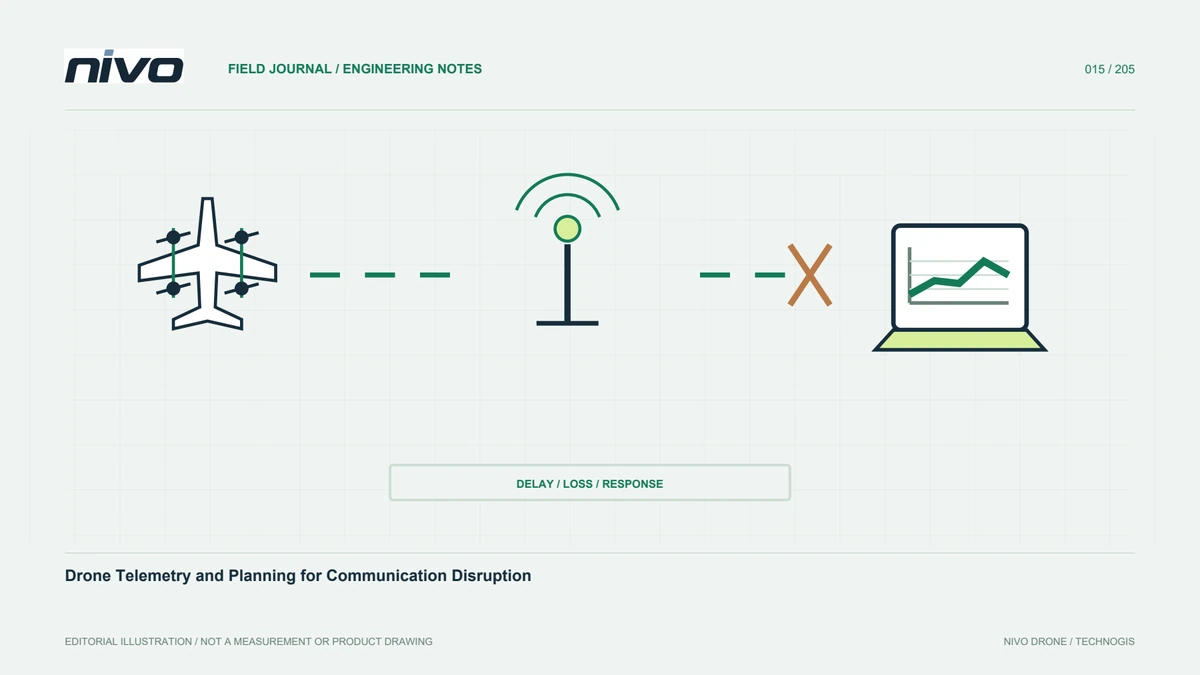
Distinguish missing messages, delayed displays, recording gaps, and protocol counters before attributing a telemetry symptom to radio range or hardware failure.
Describe the observed symptom precisely
A frozen display, a late message, and a missing log interval are different observations. Record which application, device, and message stream were affected, together with time and connection arrangement. Do not immediately label every interruption as radio loss. A clear symptom statement identifies whether the investigation concerns delivery, processing, display, or recording, allowing technicians to select evidence instead of replacing the radio because it is the most visible communication component.
Identify the path and recording points
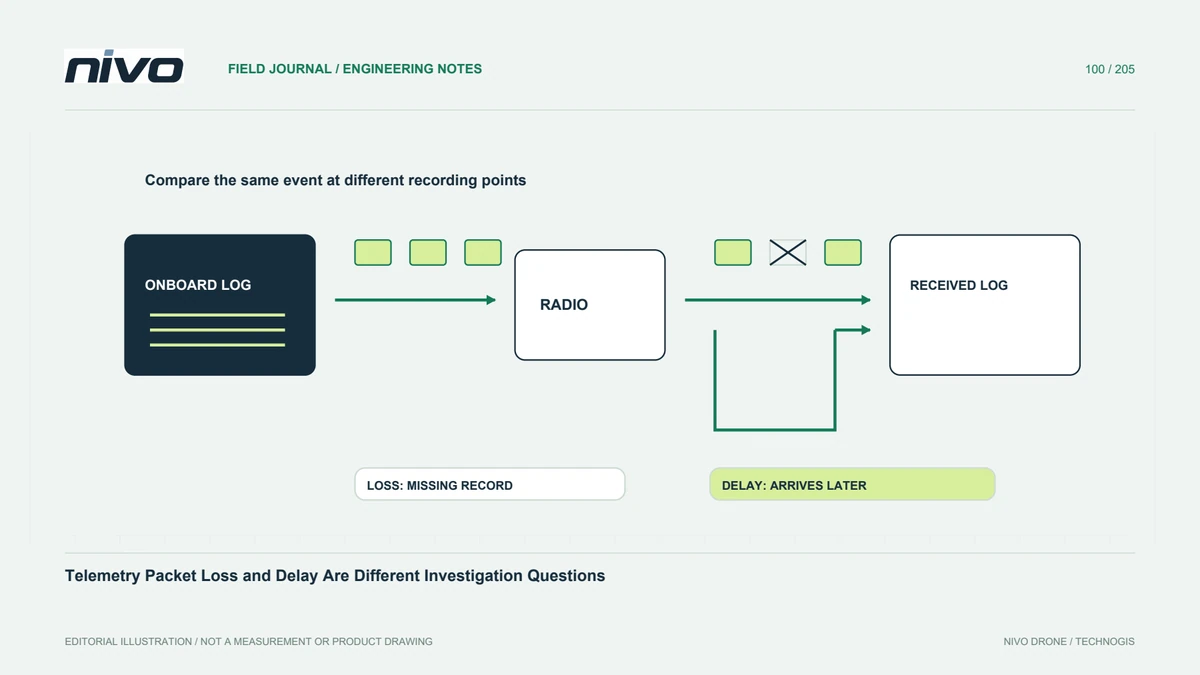
Draw the route from the sending component through interfaces, modem, network where relevant, ground computer, and application. Mark where each available log was captured. A recording made after a dropped connection cannot independently describe what the sender produced. Distinguish onboard data from received telemetry. These identities help locate the possible failure stage and explain why two logs can differ without one being an inaccurate copy of the other.
Interpret sequence information in context
MAVLink provides sequence information used in packet-loss assessment, but its interpretation depends on the stream and components being examined. Follow the protocol documentation and the application's implementation. Multiple senders, routing, recording boundaries, and retransmitted or redundant paths deserve attention. Do not calculate a confident loss percentage from an unexplained screenshot. Preserve the original capture and method so another reviewer can reproduce what was counted and understand its limitations.
Separate delay from missing information
A message may arrive late rather than disappear. Compare appropriate timestamps and clock relationships before calculating latency. Application refresh behavior and competing traffic can influence the visible experience. A smooth display also does not prove every message arrived. The review should state which delay was measured, between which points, and under which load. Avoid converting one observed pause into a universal connection-latency specification for the installed aircraft.
Compare traffic and link evidence
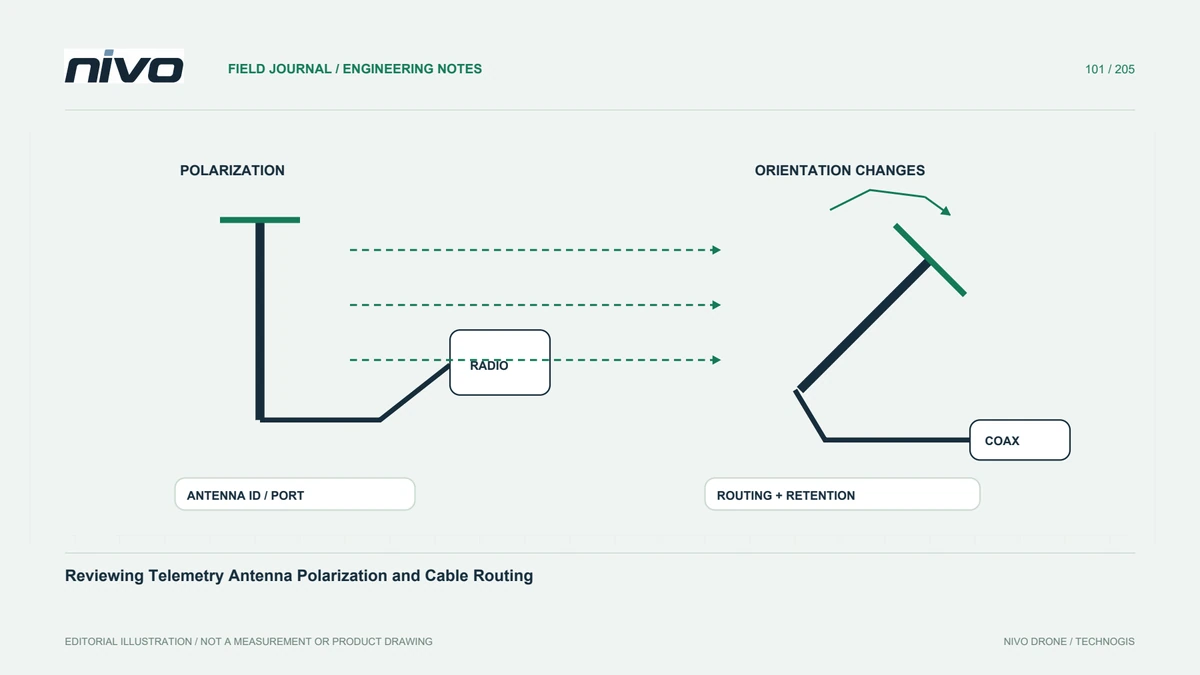
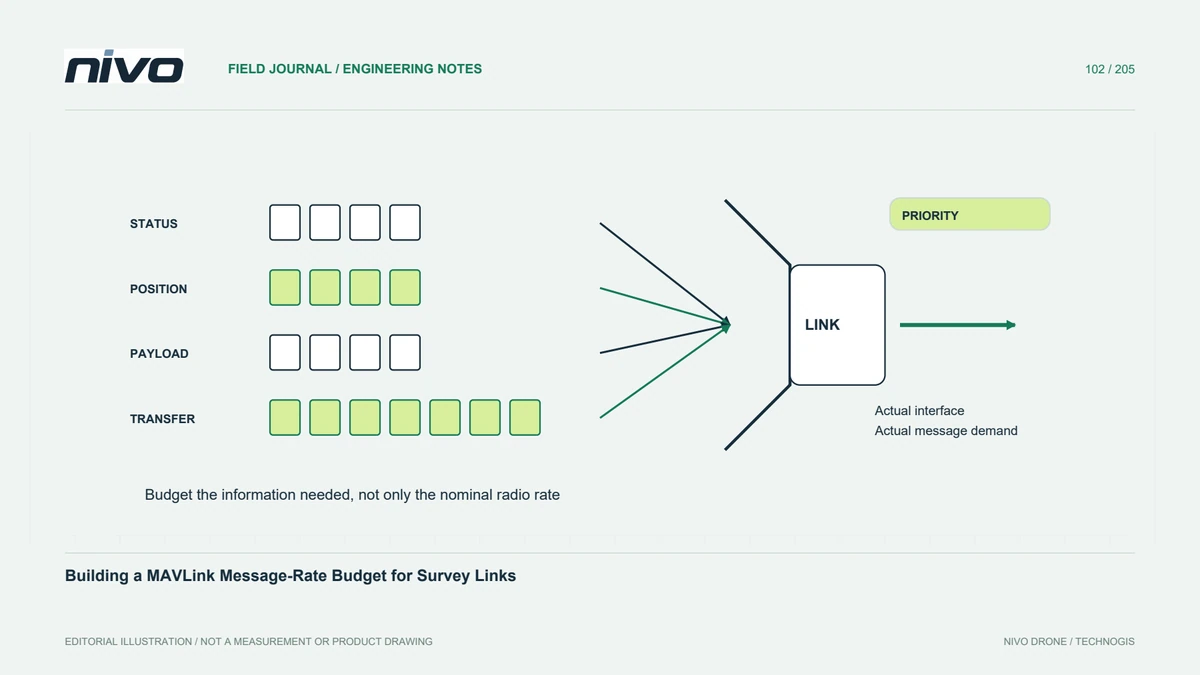
Review requested message rates, relevant modem indicators, connection changes, and computer activity alongside the symptom. A reduced message rate may answer a different problem from moving an antenna. Define the hypothesis and use approved checks that preserve operating responsibilities. Change one relevant factor at a time where practical. Keep unaffected intervals as comparison evidence, and do not create an improvised in-flight link failure solely to obtain a more dramatic recording.
Report a bounded conclusion
Summarize the observed stage, measurement method, supported cause, unresolved questions, and proposed follow-up. Keep flight-contingency decisions separate from retrospective communication analysis. The resulting record helps NiVO support distinguish radio, interface, software, and data-recording issues. It also prevents packet-loss counters, signal indicators, or a responsive map from being treated individually as complete proof that the entire command and telemetry system will perform reliably under every operating condition.