Building a MAVLink Message-Rate Budget for Survey Links
Prioritize telemetry needs by message purpose, rate, traffic overhead, competing transfers, and verified behavior on the actual survey communication path.
Start with the information users need
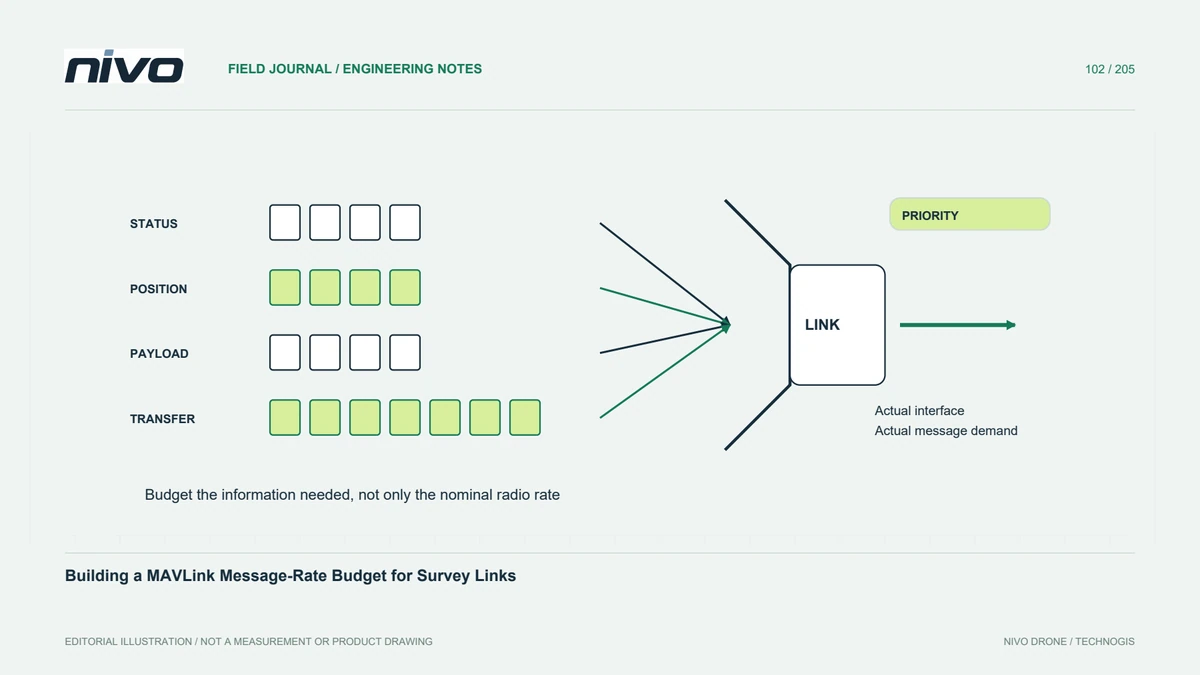
A telemetry stream should serve specific operational and review tasks rather than display every available message as often as possible. Identify which components consume position, attitude, status, payload information, and other relevant data. Separate live supervision from information retained onboard for later analysis. This gives each requested message a purpose and prevents a visually busy ground station from being mistaken for a carefully designed communication workflow.
Describe the actual communication bottleneck
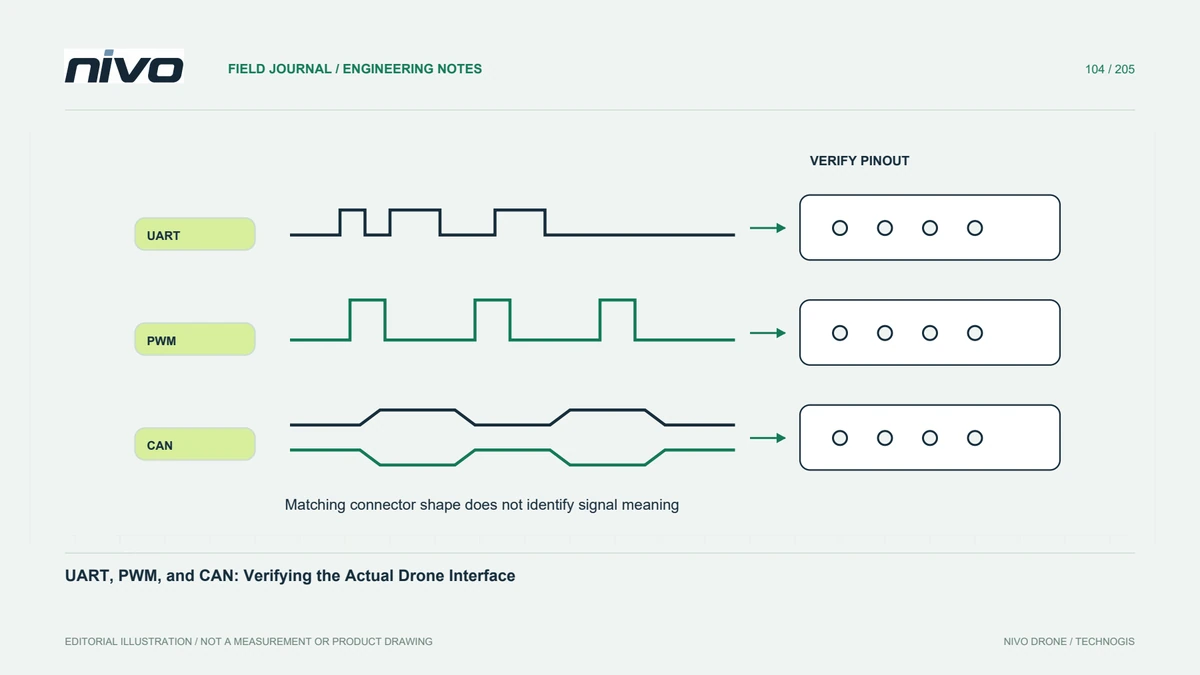
The usable path includes serial interfaces, radios or network connections, routing components, and receiving applications. A modem's headline data rate does not automatically describe available MAVLink throughput throughout that path. Record interface settings and competing users of the connection. Distinguish one direction from the other. A useful budget identifies where congestion could occur instead of applying the same message-rate expectation to every cable, modem, and network arrangement.
Account for more than message payloads
Message size, requested frequency, protocol overhead, and additional transactions all contribute traffic. Parameter retrieval, mission transfer, file activity, and several consumers can change demand. Use the implementation's documentation when estimating and requesting rates. A simple table can connect message groups with purpose, expected frequency, and priority. Keep estimates distinct from measurements so an apparently comfortable calculation is not presented as proof that the installed link has sufficient capacity.
Verify requests and observed delivery
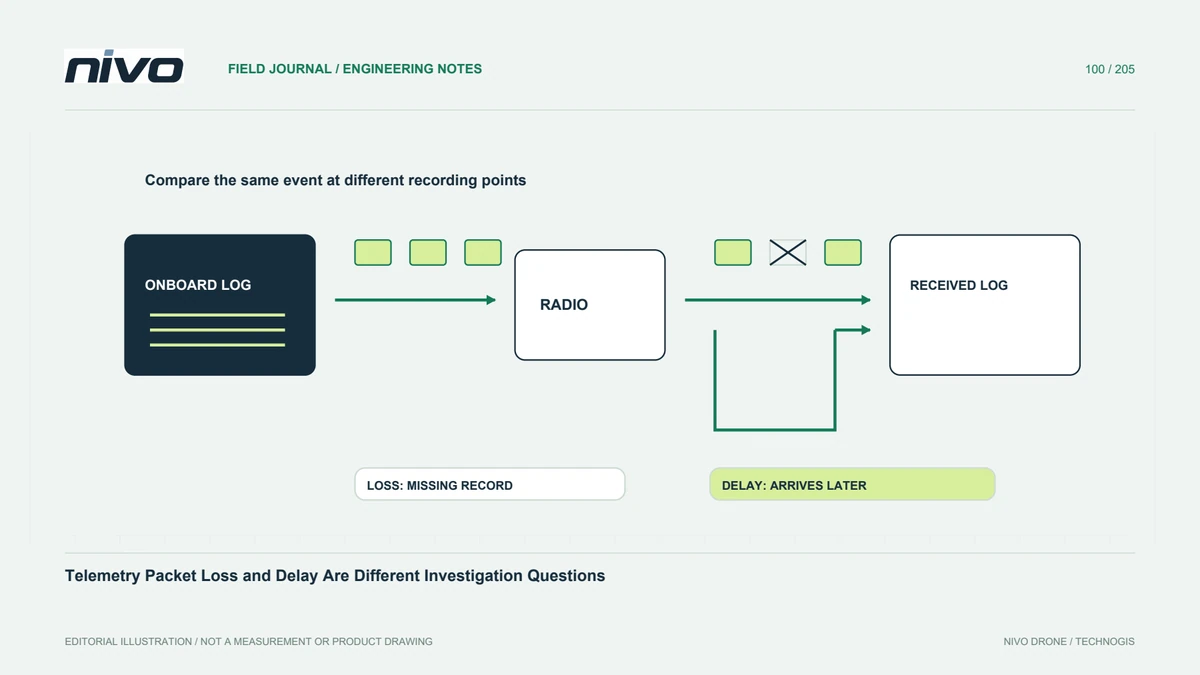
A rate requested by software is not necessarily the rate a receiver observes. Check actual timestamps, recording location, and system behavior under representative approved conditions. Note adaptive behavior or implementation limits where applicable. A faster screen refresh can hide repeated data, while slower display refresh need not mean every message was lost. Preserve the measurement method so another reviewer can reproduce which part of the information path was assessed.
Evaluate competing tasks deliberately
Review what happens when required preparation or support transactions use the same connection. Do not introduce unplanned traffic during an operational mission to create a stress test. Competent personnel should select a suitable environment and acceptance criteria. If a needed function becomes unreliable, identify whether priorities, rates, interfaces, or workflow need revision. Removing useful messages indiscriminately can solve apparent congestion while leaving operators without information their approved process requires.
Keep the budget with the configuration
Retain component identities, message purposes, requests, observed rates, traffic assumptions, and accepted limits. Update the record when a payload or ground application changes. This helps NiVO teams discuss telemetry requirements before adding another device to the link. The result is an understandable information design supported by measurements, rather than a universal rate recipe or an assumption that increasing every stream automatically improves supervision and data quality.