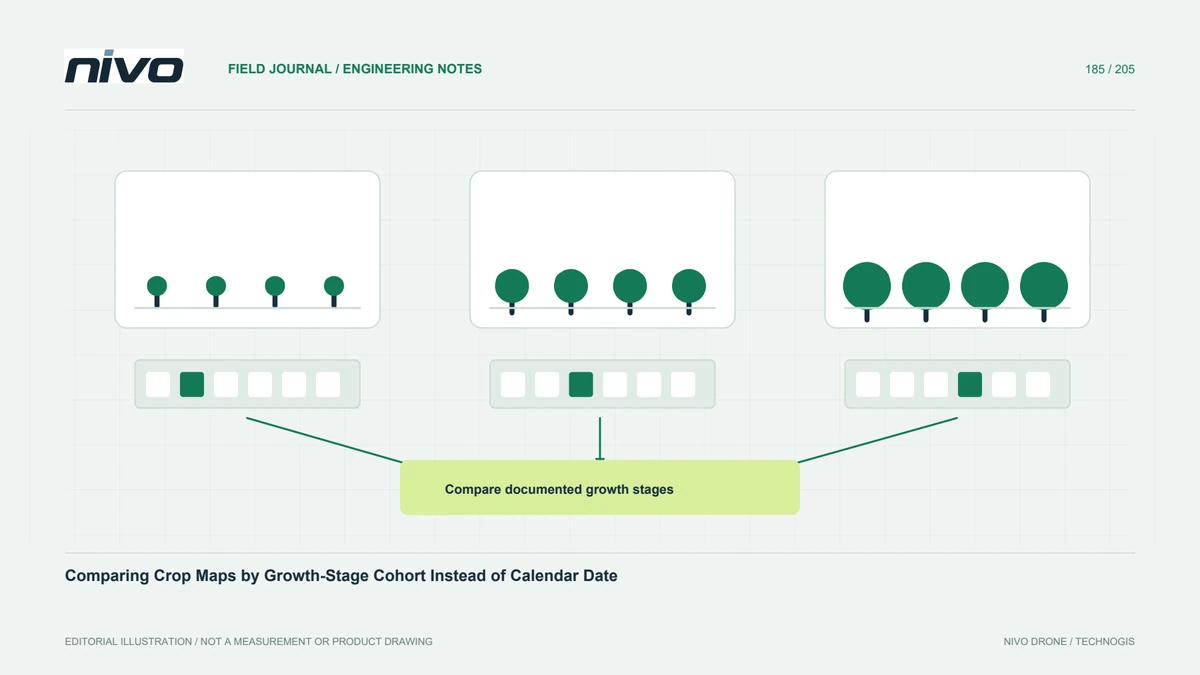
Comparing Crop Maps by Growth-Stage Cohort Instead of Calendar Date
Group comparable crop observations using recorded planting and growth-stage information, while retaining actual dates, management history, and sensor-quality differences.
Define the comparison question
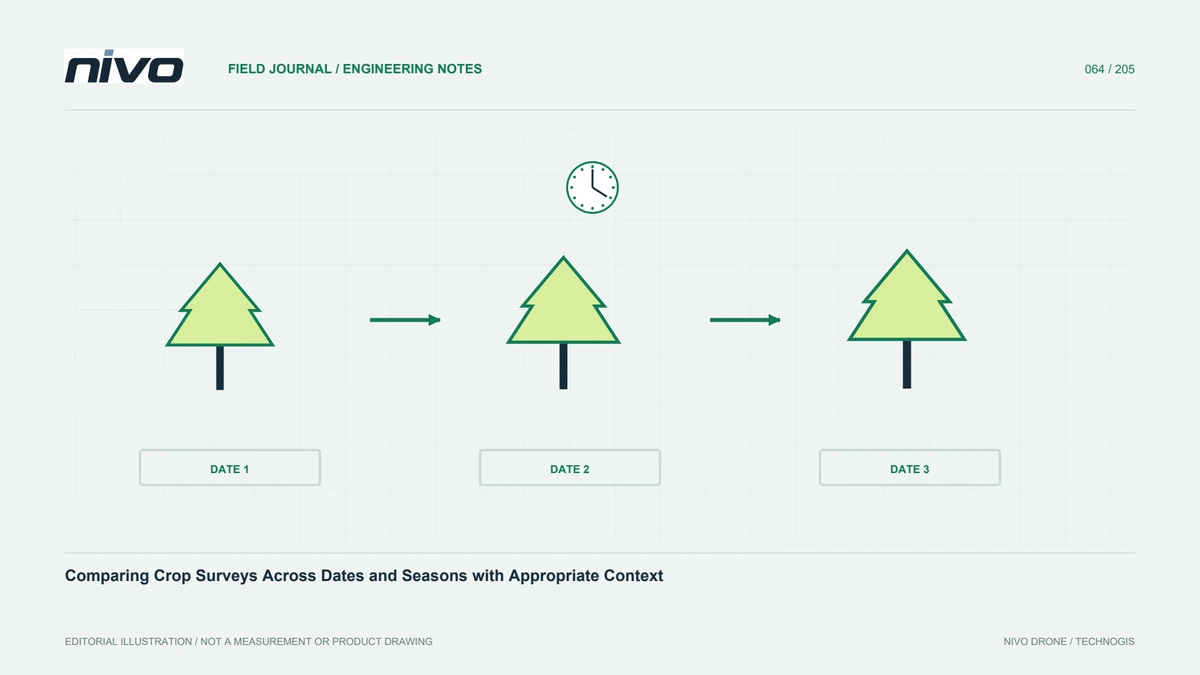
Two parcels observed on the same day may be at different developmental stages. A direct index ranking can therefore combine crop development with the management difference being investigated. Decide whether the question concerns current whole-farm appearance or comparison of similar crop cohorts. Both can be useful, but they answer different questions. Establish the intended comparison before arranging flights or constructing a dashboard that automatically ranks every parcel from highest to lowest.
Build a trustworthy cohort record
Connect parcel identity with crop, variety where relevant, planting date, observed development stage, and major management events. Distinguish confirmed records from estimated dates. If part of a parcel was replanted, keep its spatial history rather than assigning one age to the entire area. FAO and university crop guidance show why development and timing matter, but the project needs locally appropriate stage identification rather than transferring another region's calendar schedule as a universal rule.
Retain actual observation dates
Grouping by stage does not make separate acquisitions simultaneous. Keep image dates, field-observation dates, weather context, and sensor configuration visible. A similar developmental label can still cover different soil, water, and management circumstances. Do not erase these differences to make a cohort chart appear simpler. The analyst should be able to explain both why observations were grouped and which remaining factors limit a direct numerical comparison between them.
Check analytical consistency within groups
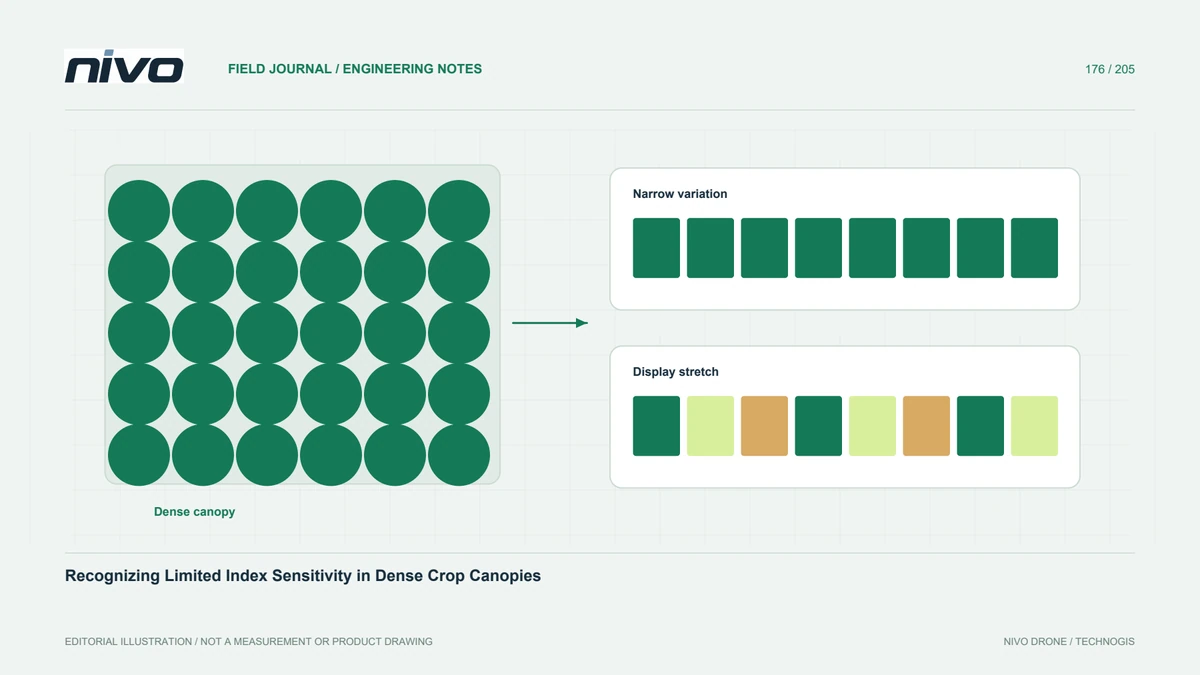
Use comparable index definitions, band identities, correction methods, spatial units, and masking rules where the question requires them. Record exceptions instead of silently mixing versions. Review whether the chosen index remains informative at the development stage represented. A cohort table cannot repair poor calibration or inadequate image geometry. Keep source-quality checks alongside the agronomic grouping so a numerical difference is not attributed to plant development when it arose from a changed processing workflow.
Use field evidence to test explanations
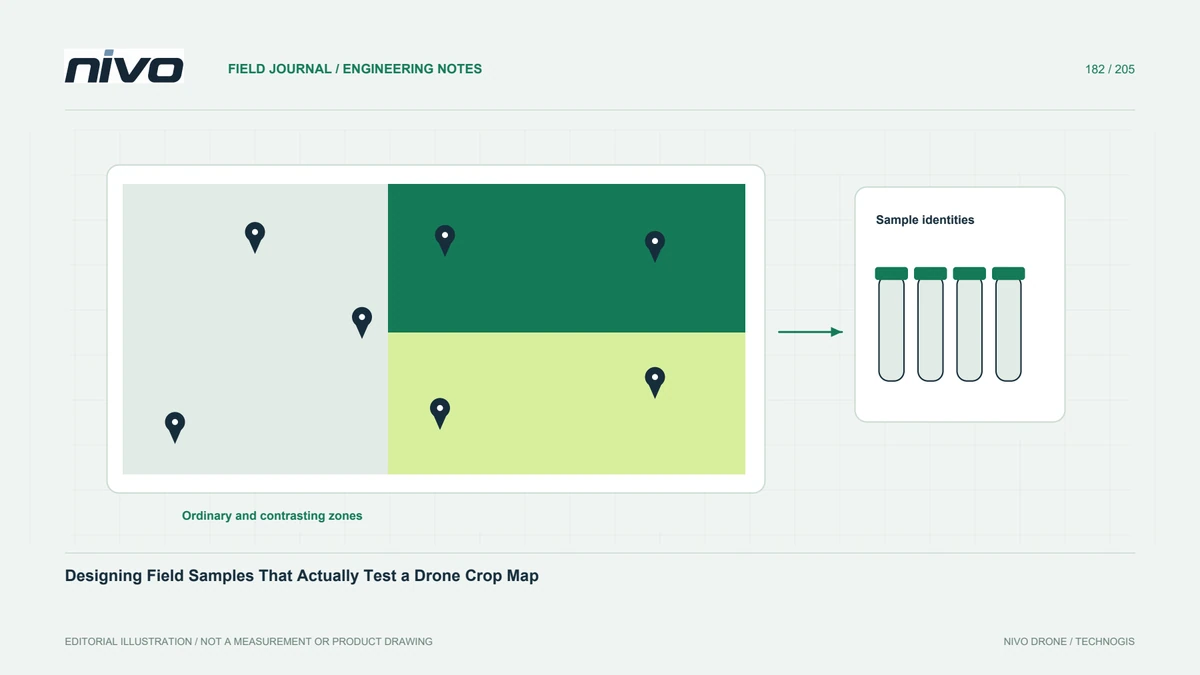
Choose checks across cohorts and within a cohort, including ordinary and unusual zones. Ask the crop adviser whether the observed development records are sufficient and which other evidence is required. Do not treat cohort membership as proof that remaining differences must come from treatment. Soil, variety, weather, and management can still matter. Preserve conflicting cases because they help identify when a simple grouping is inadequate for the decision and when a more focused analysis is needed.
Publish an understandable comparison
Provide the cohort definition, included areas, actual dates, stage evidence, analytical versions, and limits. Keep a route back to parcel-level observations rather than delivering only ranked averages. Where records are incomplete, mark a provisional group instead of inventing a precise crop age. Discuss the monitoring schedule and sensor needs with NiVO from this information design. The result should support a clear local question without implying that stage grouping removes every confounding factor or proves a causal treatment effect.