Rolling Shutter in Drone Images: Symptoms, Testing, and Correction Limits
Distinguish rolling shutter from motion blur, assess movement-related geometric effects, and test processing corrections against independently checked survey outputs.
Understand how the frame is read
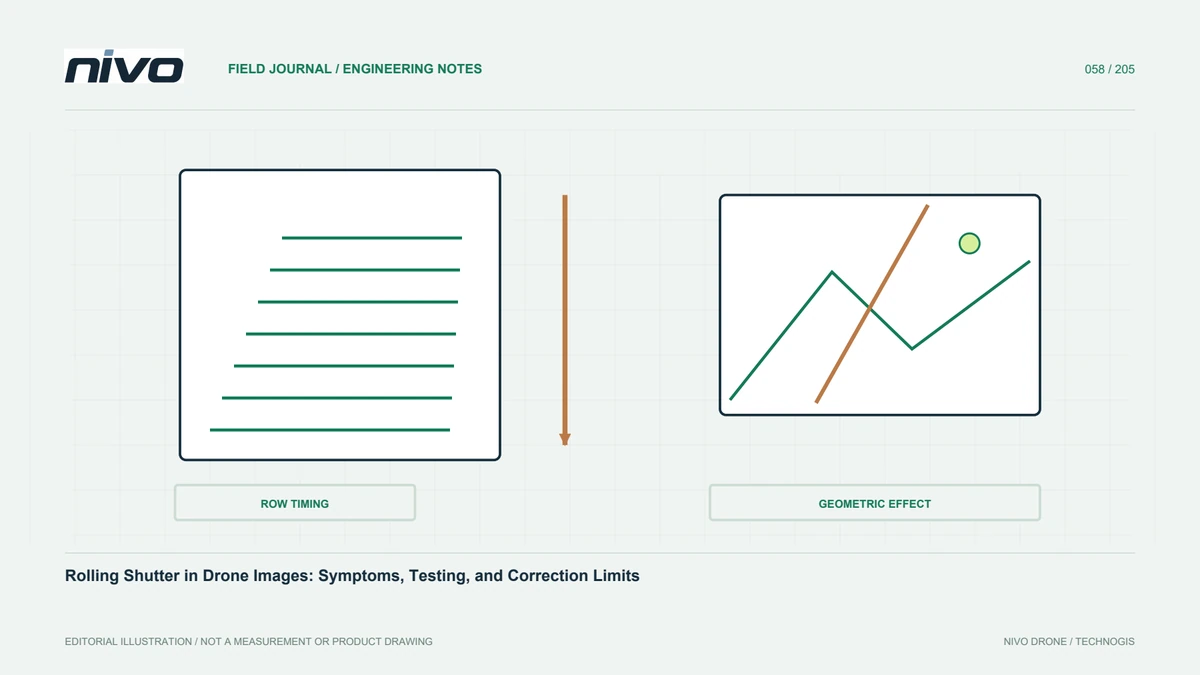
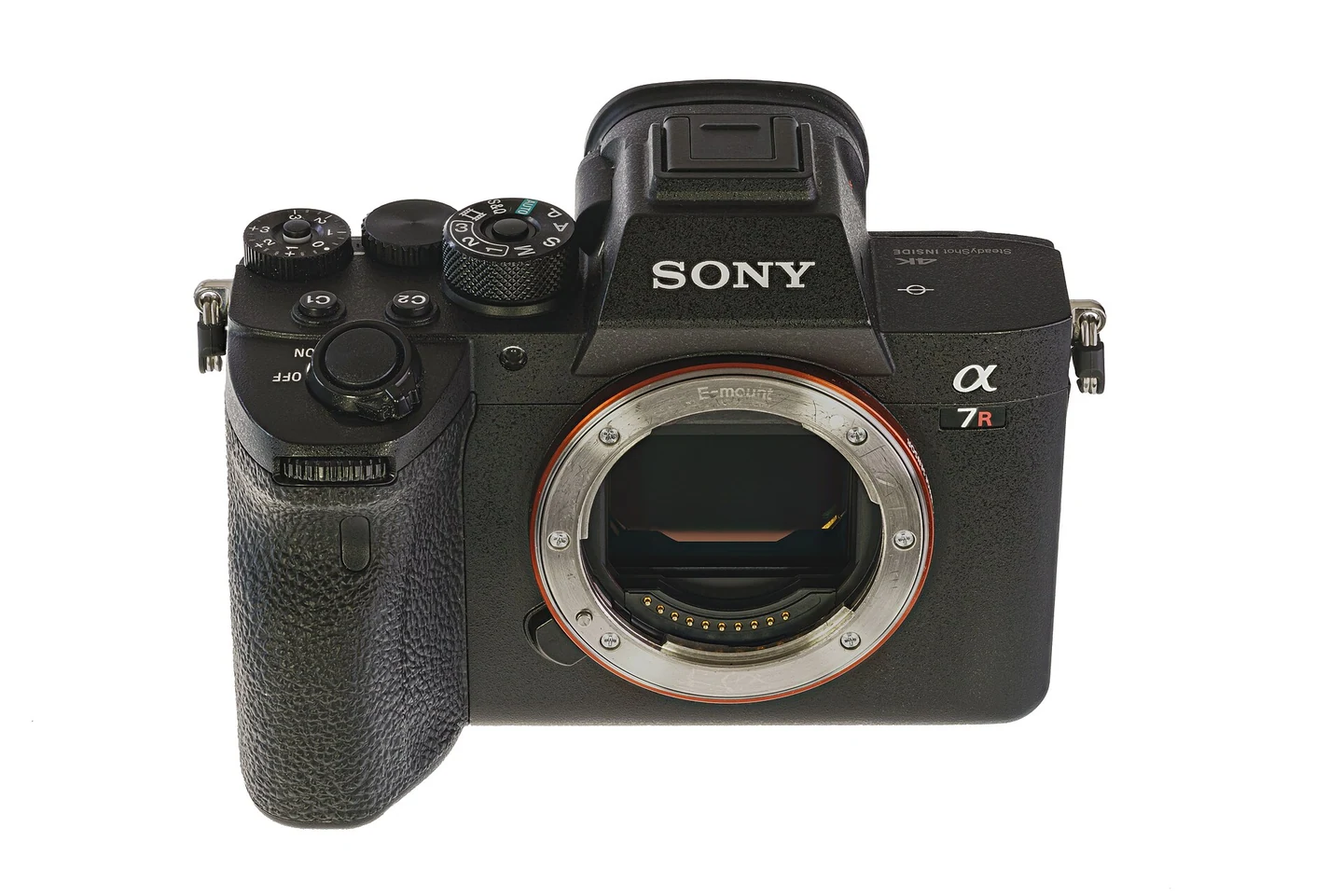
A rolling-shutter sensor can read different portions of a frame at different times. Camera or subject movement during readout means the image may not represent one instantaneous position throughout. Airborne effects can include tilted lines, altered shapes, or geometric inconsistencies between photographs. Their scale depends on sensor behavior and movement. Include the actual shutter mode in payload evaluation. Knowing that a camera has an electronic sensor is insufficient; understand the mode used and how acquisition and processing address its particular characteristics.
Do not confuse distortion with motion blur
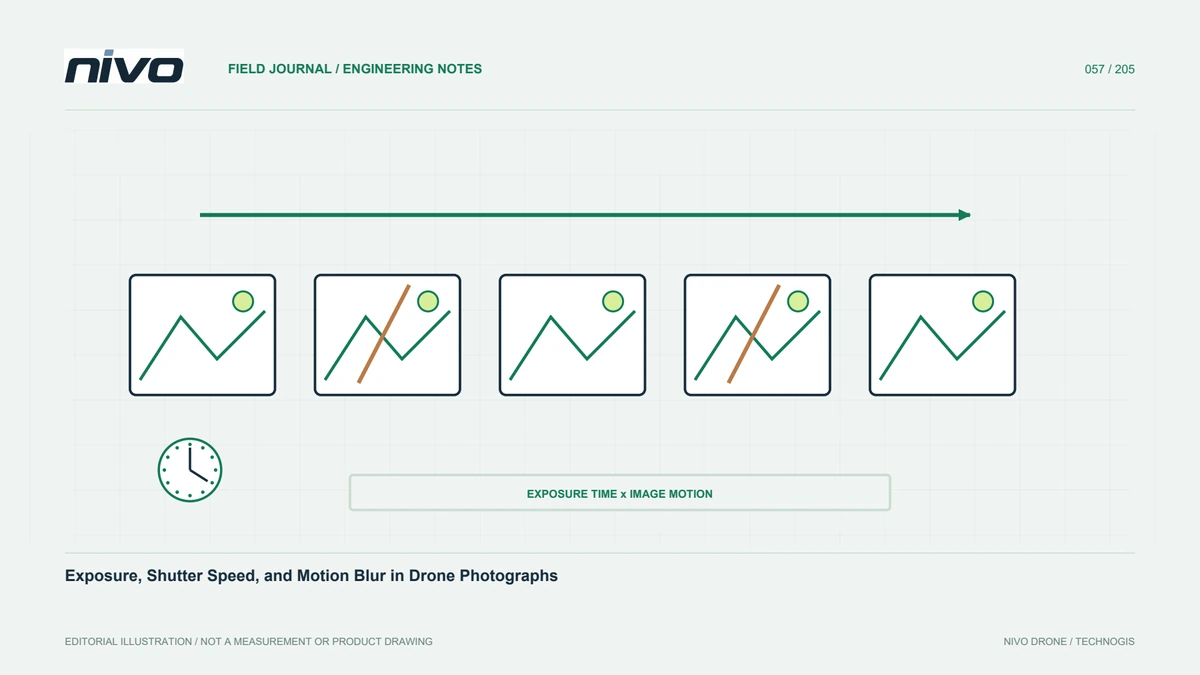
Motion blur integrates movement over exposure, whereas rolling-shutter distortion relates to different readout times across the frame. They can coexist but require different reasoning. Short exposure may limit blur without eliminating readout-related geometry. Geometric correction cannot recover detail already lost to blur. Inspect local sharpness separately from shape. A sharp but unnaturally leaning building line suggests a different question from a broadly smeared edge. Document several frames rather than diagnosing a system from one object that might genuinely be slanted.
Include rotation and vibration in the investigation
Horizontal speed is not the only influence. Camera rotation and vibration can alter viewing direction during sensor readout. An unsuitable mount can produce rapidly changing patterns within and between frames. Start with an installation designed for the platform, checking connections and approved mechanical arrangements. Compare against a known baseline rather than attempting to solve every vibration problem through processing. Conduct trials within approved aircraft limits and with a team that understands the objective. Safe, intact equipment is a prerequisite for useful comparison data.
Choose a test area with inspectable features
Use static lines, corners, textures, and features visible from several directions. Capture a short block with documented settings. Where operationally appropriate, compare movement scenarios without changing many variables together. Preserve original images and navigation records to relate symptoms to flight. Moving targets alone are poor references because their own motion can affect shape. Continue the test through representative processing. Distortion that is unobtrusive in one photograph can still weaken the geometry when many images are combined into a larger reconstruction.
Understand the processing correction options
Some photogrammetric tools model rolling shutter. OpenDroneMap documents a correction option and sensor readout-time settings. An available switch does not mean every camera has a correct parameter or every movement can be fully corrected. Check camera support, definitions, and units for the version in use. Do not enter an unexplained estimate simply to make processing proceed. Obtain suitable evidence or technical advice where needed. Retain parameters with outputs and judge changes through geometric quality rather than whether the processing task reaches completion.
Compare outputs against independent checks
Process the trial with the configurations under consideration and assess checkpoints excluded from control. Inspect spatial and elevation-dependent errors, surface consistency, and connections between model areas. A correction that improves one residual statistic may not improve every aspect. Record sensitivity and choose a configuration whose behavior can be explained. Understand control-survey uncertainty and coordinate references so camera effects are not confused with other errors. A clear comparative result is more useful than assuming the correction must always be enabled for an unfamiliar dataset.
Prioritize acquisition prevention
Consistent images give processing a stronger foundation than uncontrolled movement and installation changes. Use a tested operating range, inspect mechanical stability, and maintain a reproducible camera profile. If a combination repeatedly causes problems, reconsider its suitability for the project. The issue is not only shutter technology but whether the team can preserve acceptable results under field conditions. Do not replace payload acceptance testing with a promise of later correction. Select the configuration that produces sufficient evidence through checks operators and processors can actually perform routinely.
Track camera changes carefully
Shutter mode, firmware, resolution, or readout settings can change processing assumptions. Log each change, its reason, and the test result. Retain camera and lens identities to avoid unknowingly mixing different devices. Check settings before flight if the camera has served another purpose between surveys. Keep a baseline package containing images, parameters, and independent checks. It helps identify deterioration without restarting every experiment and improves support discussions by replacing a vague accuracy complaint with a specific, reproducible configuration and dataset.
Turn evidence into operating boundaries
Finish testing with a clear statement of accepted configurations, tested conditions, and triggers for renewed evaluation. Provide symptom examples operators can recognize and criteria for pausing acquisition. For measurement projects, document how quality was demonstrated and what uncertainty remains. One trial does not cover every environment or terrain type. Defined boundaries make rolling-shutter evaluation part of systematic quality control. Camera and mission decisions can then follow observed behavior rather than persuasive technical terminology or assumptions that a software option guarantees a satisfactory result.
Illustrative case: testing a rolling-shutter explanation
Imagine a hypothetical team reviewing a reconstruction with inconsistent building edges. Individual photographs look reasonably sharp, so the first discussion focuses on adding more control points. Before changing the survey design, the processor checks whether the camera mode and movement could introduce rolling-shutter effects. The team gathers the original images, navigation records, mounting details, and processing parameters. It also checks coordinate references so that a positioning error is not mistakenly attributed to sensor behavior. The proposed explanation remains a hypothesis rather than a diagnosis based on one tilted line.
The reviewers process the same trial dataset with documented alternative settings and compare outputs using independent checkpoints and stable features. They do not invent a readout value merely because the software accepts a number. If a parameter is unknown, its evidence requirement is recorded for technical follow-up. A lower summary residual is considered alongside surface shape and error distribution, not treated as proof that every part improved. The accepted configuration and remaining uncertainty are written into the operating record. A later firmware or shutter-mode change triggers a targeted check against the baseline. This scenario demonstrates how testing can separate acquisition behavior, referencing, and processing assumptions instead of turning one software option into a universal remedy.
The team compares two remedies: a supported processing model and an acquisition change that reduces the problematic movement under approved conditions. It records which remedy addresses the observed symptom and which assumptions remain. Handover requires matched output versions, independent-check identities, and a concise explanation of spatial error patterns. A recipient should be able to distinguish improvement in a summary number from improvement in the actual features that matter. The case is not closed merely because one output looks straighter or a correction checkbox was enabled during an otherwise unexplained processing run.