Investigating Disagreement Between Two GNSS Receivers
Compare two GNSS sources through physical identity, timestamps, antenna locations, reference definitions, solution states, and the installed selection logic.
Identify the quantities before comparing numbers
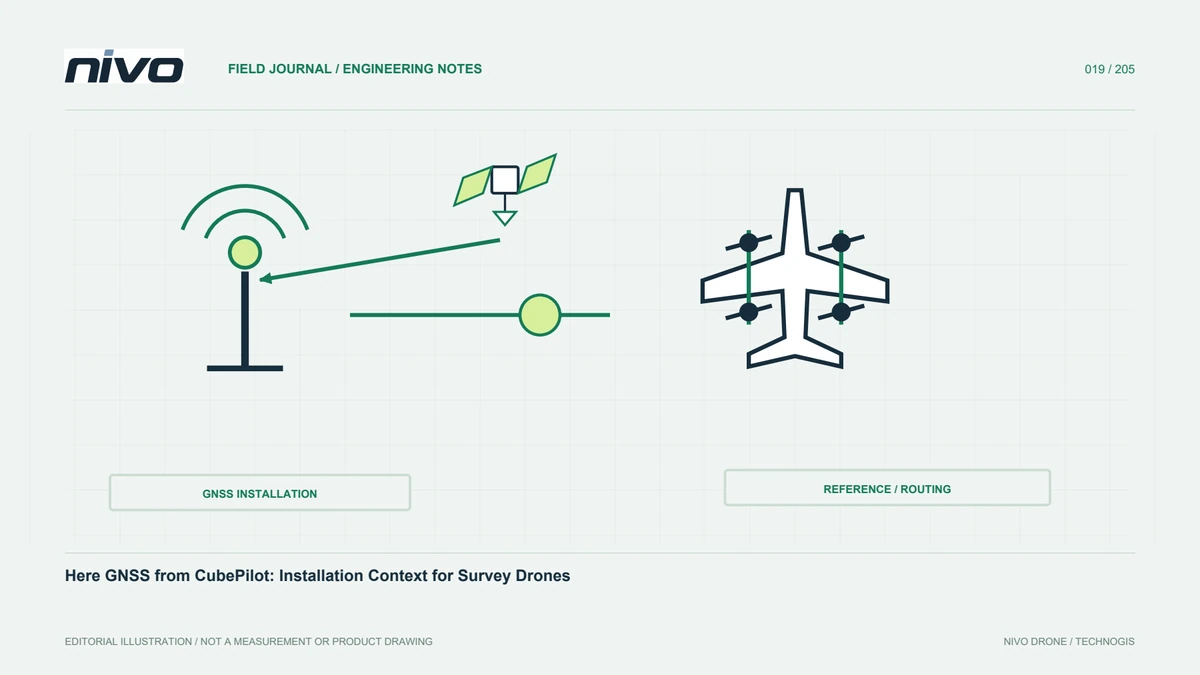
Two GNSS receivers can report positions, quality estimates, or other information that a ground station presents together. Establish which messages and quantities are being compared. Position disagreement is not the same question as heading behavior from a supported multi-antenna arrangement. Record device identities, firmware, antenna installation, and timestamps. A shared map display does not prove both observations represent the same physical point or moment.
Account for the antenna geometry
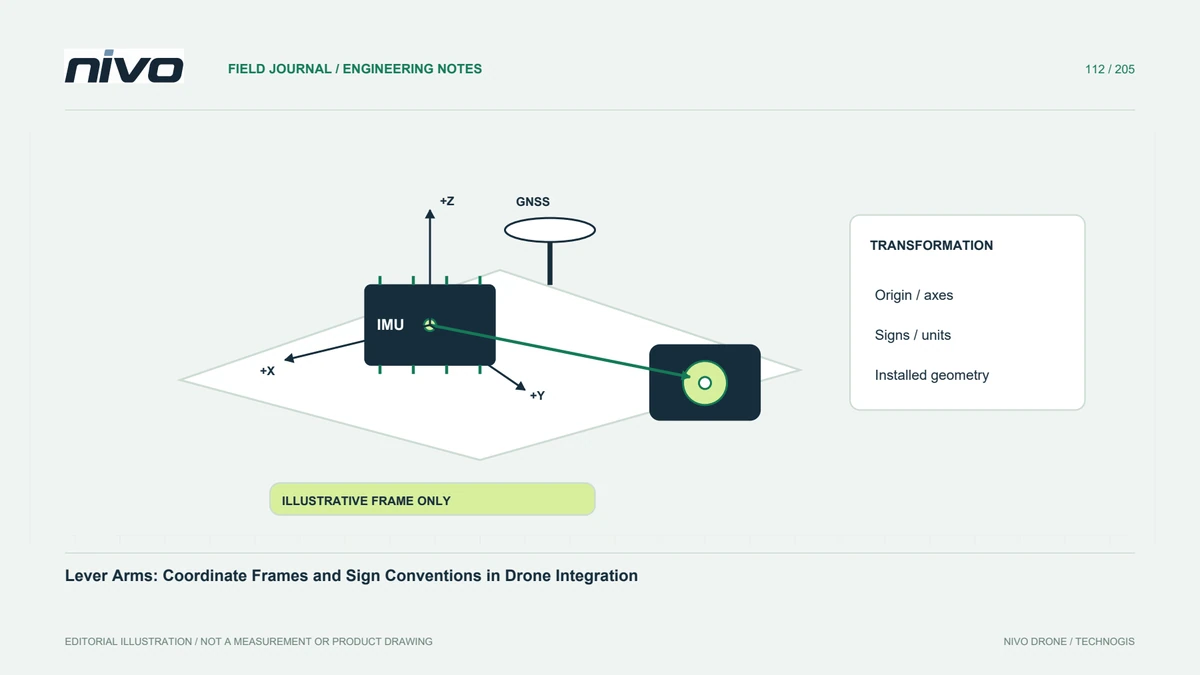
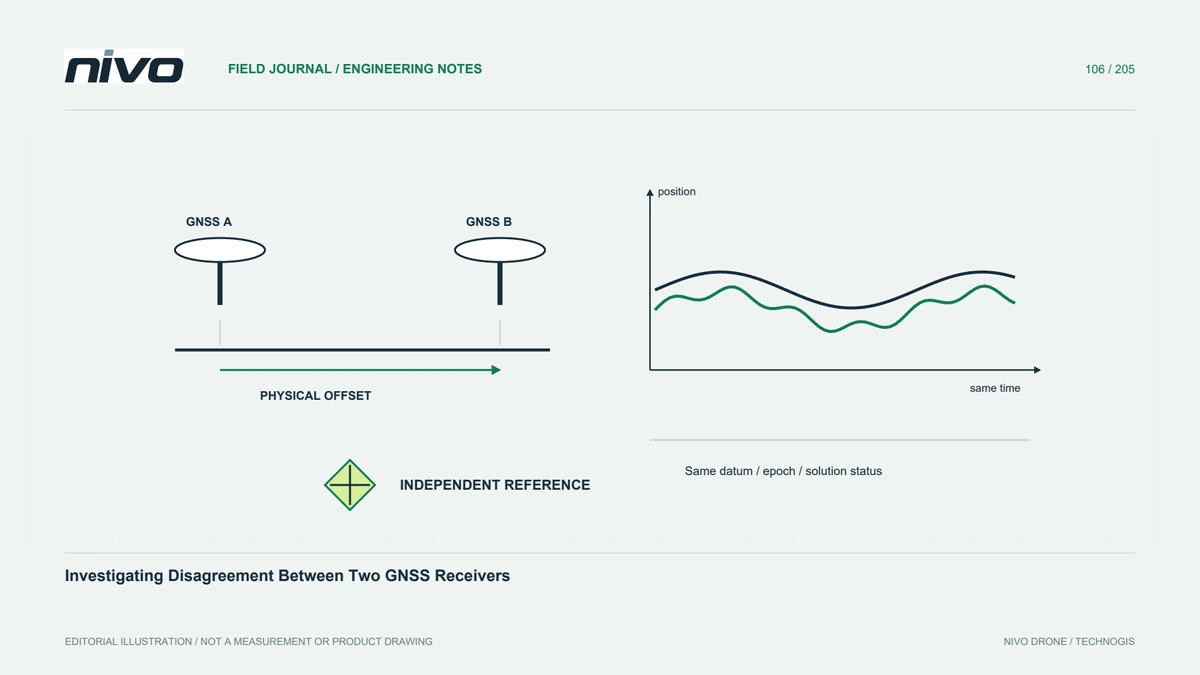
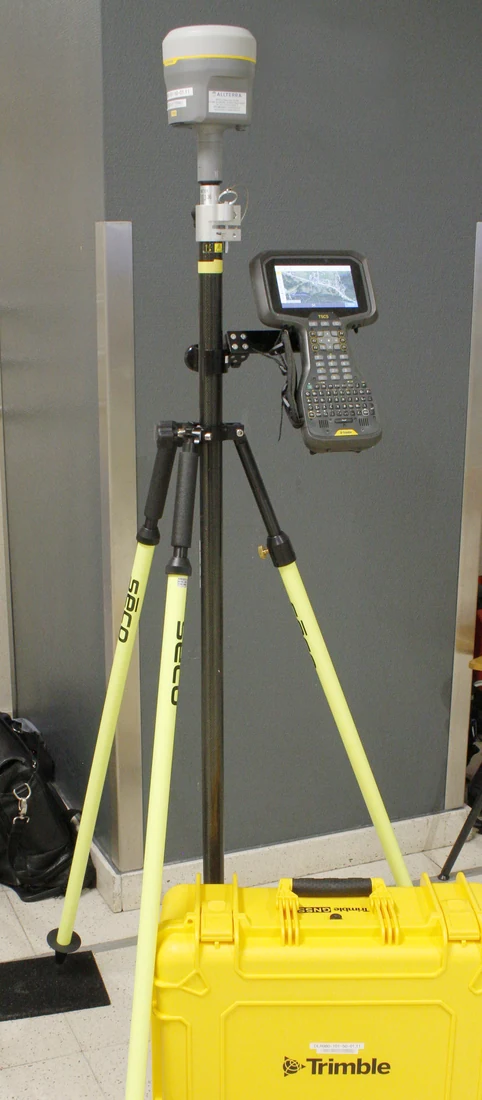
Separate antennas occupy different locations on the aircraft. Their expected relationship depends on mounting geometry, coordinate frames, and the processing or estimator configuration. Preserve the measured installation reference before interpreting a difference as navigation error. Do not force values to coincide by applying an undocumented offset. A valid comparison should state which reference point each observation describes and how any conversion to a common point was established.
Review solution conditions individually
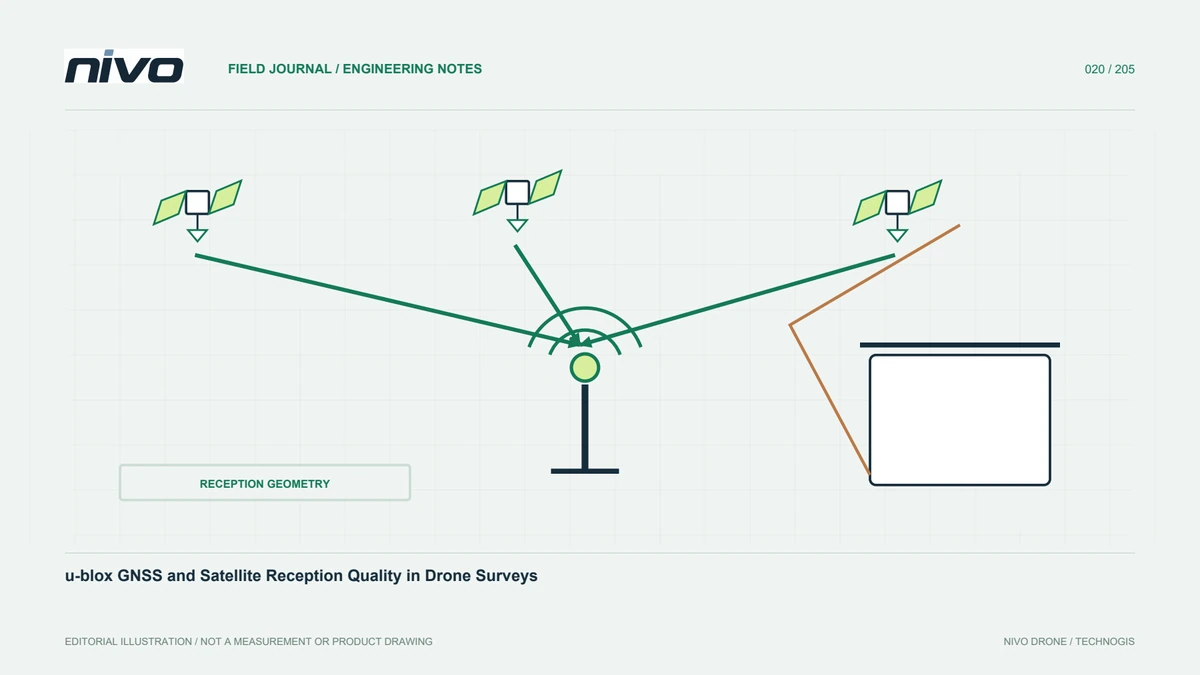
Compare satellite visibility, reported solution state, correction availability where relevant, and available quality information for each device. Similar satellite counts do not prove equivalent observations or error behavior. Different antennas, nearby structures, or receiver settings can produce different conditions. Preserve the original messages and the definitions used by each manufacturer. A receiver's self-reported quality estimate is useful context, but it is not independent proof of absolute position accuracy.
Read the actual selection or blending arrangement
A system may select a source, combine supported information, or use another documented arrangement. Confirm the installed implementation and configuration instead of assuming that two connected receivers always produce a particular redundancy benefit. Identify the output used by the aircraft and distinguish it from each raw receiver stream. This helps reviewers understand whether a displayed change reflects source behavior, selection logic, or a mismatch in how records were interpreted.
Use independent evidence for the relevant question
Where position quality matters, define a suitable comparison method with known references, timing, and uncertainty. Agreement between receivers does not exclude a shared error, and disagreement alone does not identify the better source. Keep stationary and moving assessments distinct. Any operational evaluation follows the aircraft's approved process. The technical report should connect its conclusion to evidence rather than simply recommending the receiver whose trace looks smoother on a map.
Retain a source-specific investigation record
Store antenna geometry, device identities, reference definitions, synchronized intervals, configuration, and the checks supporting the decision. Explain unresolved differences and the next relevant action. This gives NiVO support a precise basis for discussing a dual-GNSS installation without converting a hardware count into a promise of navigation performance. Future replacements can then be reviewed against a known arrangement instead of assuming every receiver combination behaves identically.