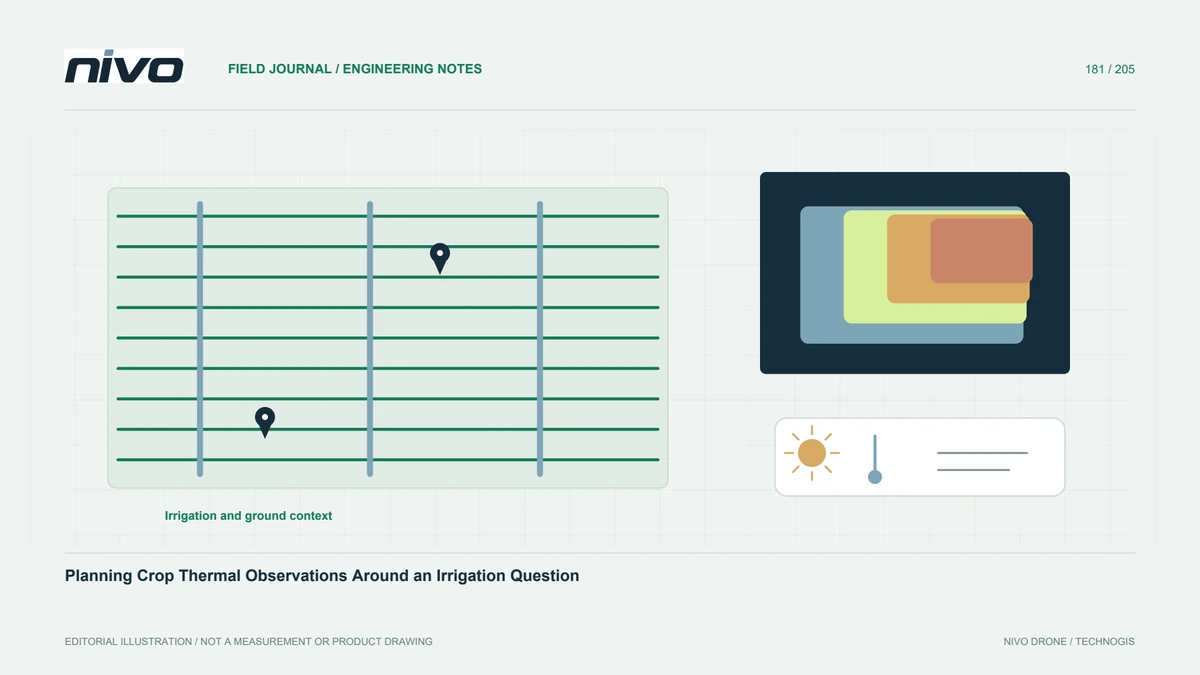
Planning Crop Thermal Observations Around an Irrigation Question
Design crop thermal trials with relevant timing, canopy separation, weather context, irrigation records, and ground evidence rather than diagnosing water stress from color alone.
Practical guides to VTOL aircraft, drone technology, geospatial workflows, payloads and inspection.

Design crop thermal trials with relevant timing, canopy separation, weather context, irrigation records, and ground evidence rather than diagnosing water stress from color alone.

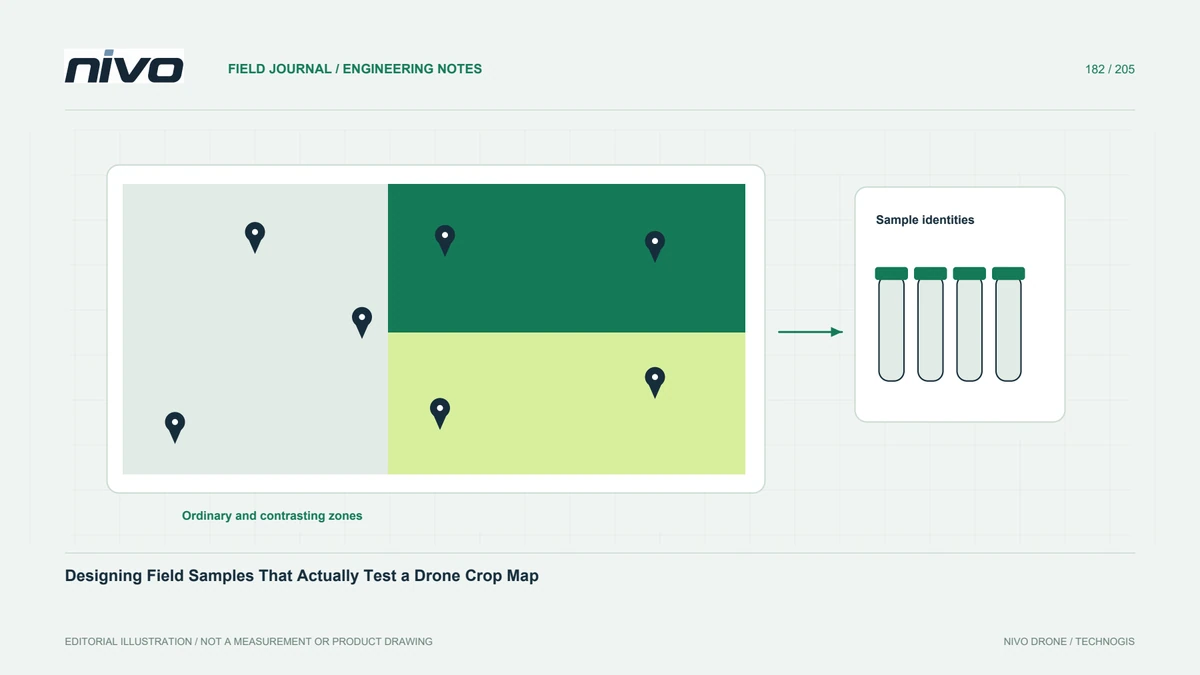
Choose crop-map verification samples across ordinary and difficult conditions, keep them independent from tuning data, and preserve timing and spatial identity.

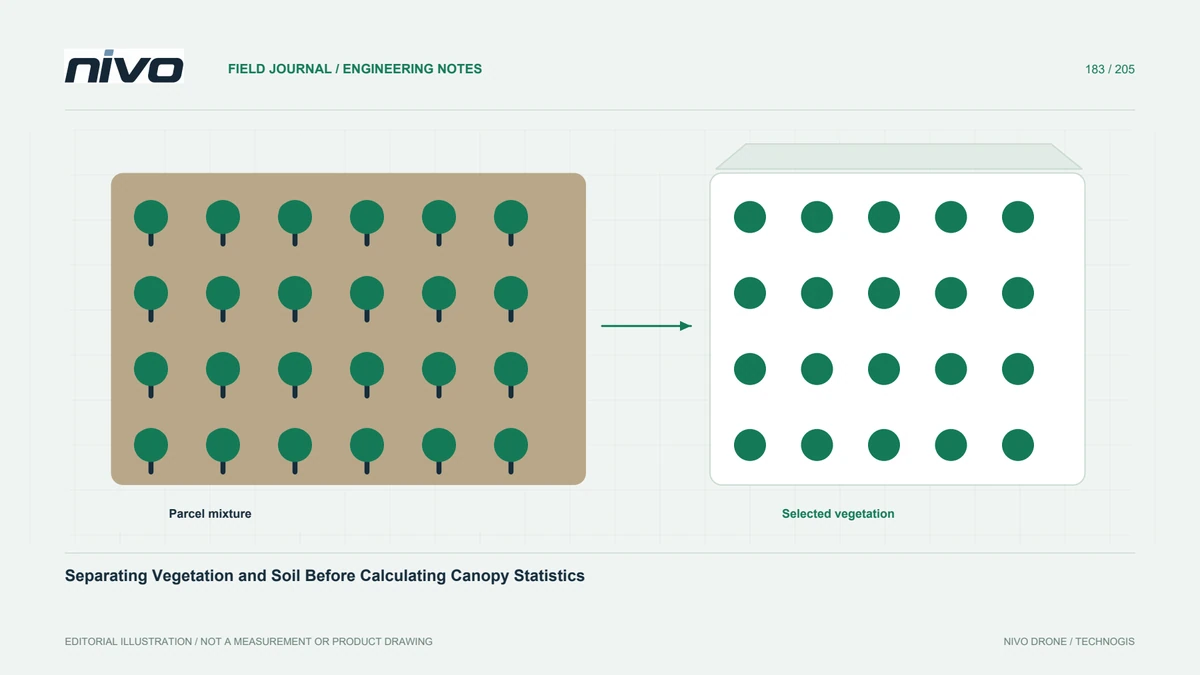
Define whether a crop statistic describes the whole parcel or observed vegetation, then review masks, excluded area, mixed cover, and the consequences for comparison.

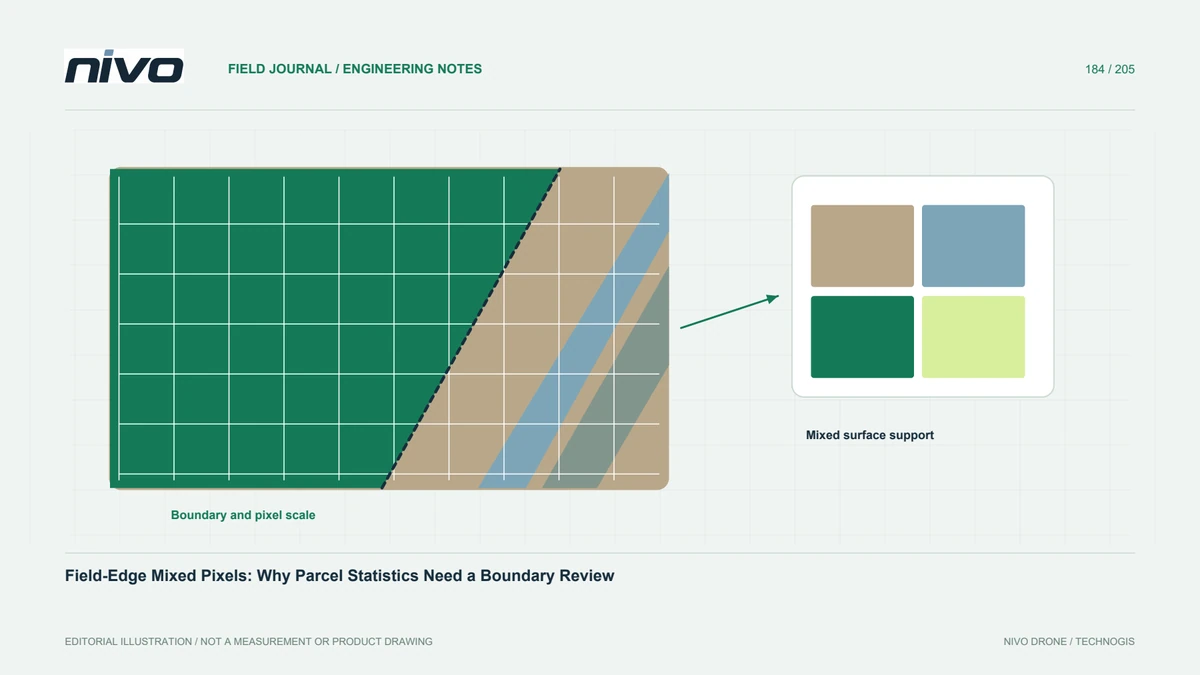
Inspect boundary position, pixel composition, band alignment, and analytical support before interpreting crop-index differences along roads, drains, and neighboring parcels.

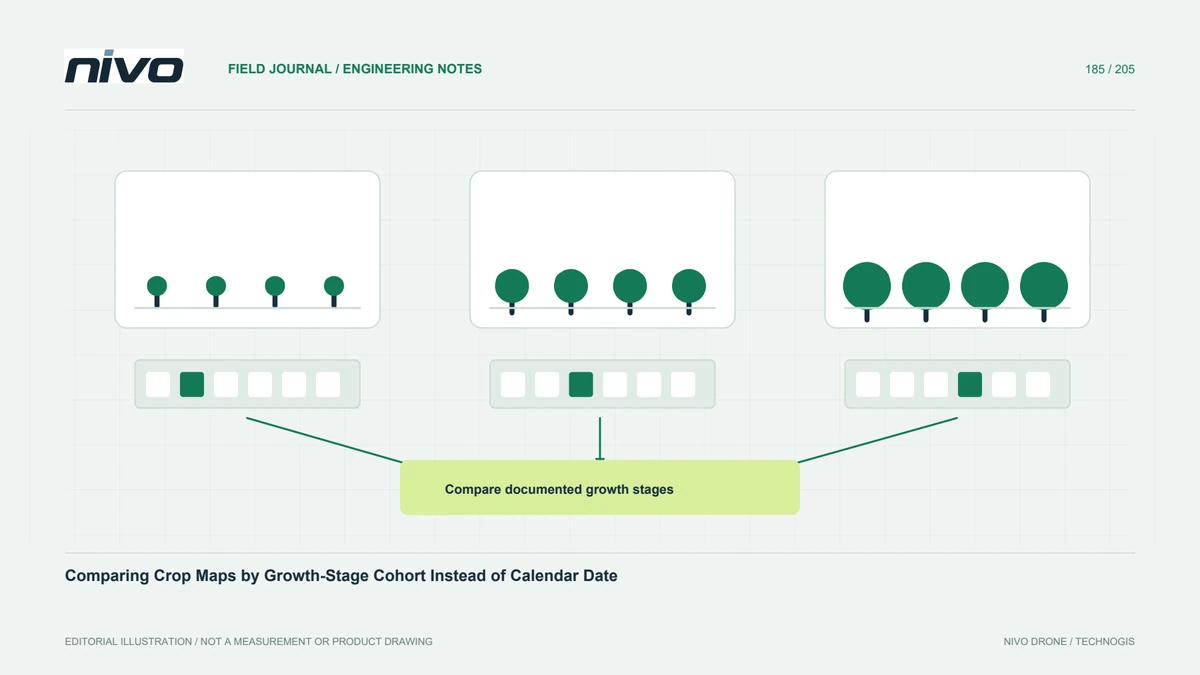
Group comparable crop observations using recorded planting and growth-stage information, while retaining actual dates, management history, and sensor-quality differences.

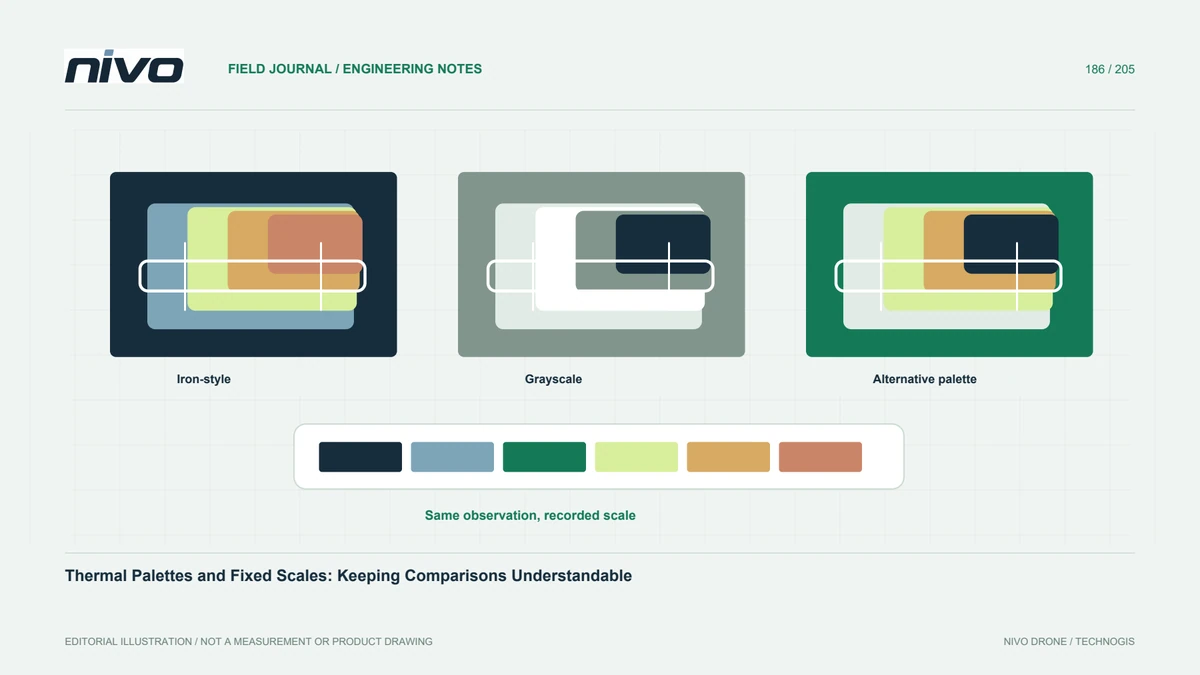
Separate thermal display choices from measurement evidence by retaining scale limits, original files, matching context, and explicit rules for comparative illustrations.

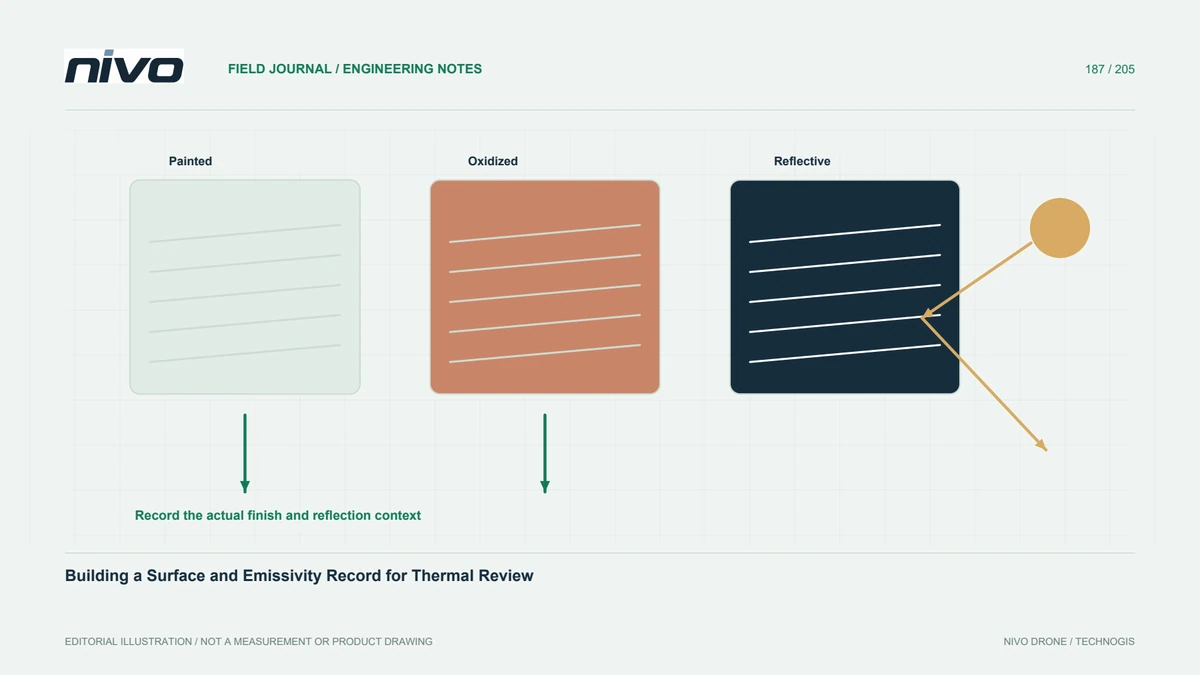
Document material, finish, viewing context, parameter sources, and uncertainty so thermal reviewers can distinguish surface differences from unsupported temperature conclusions.

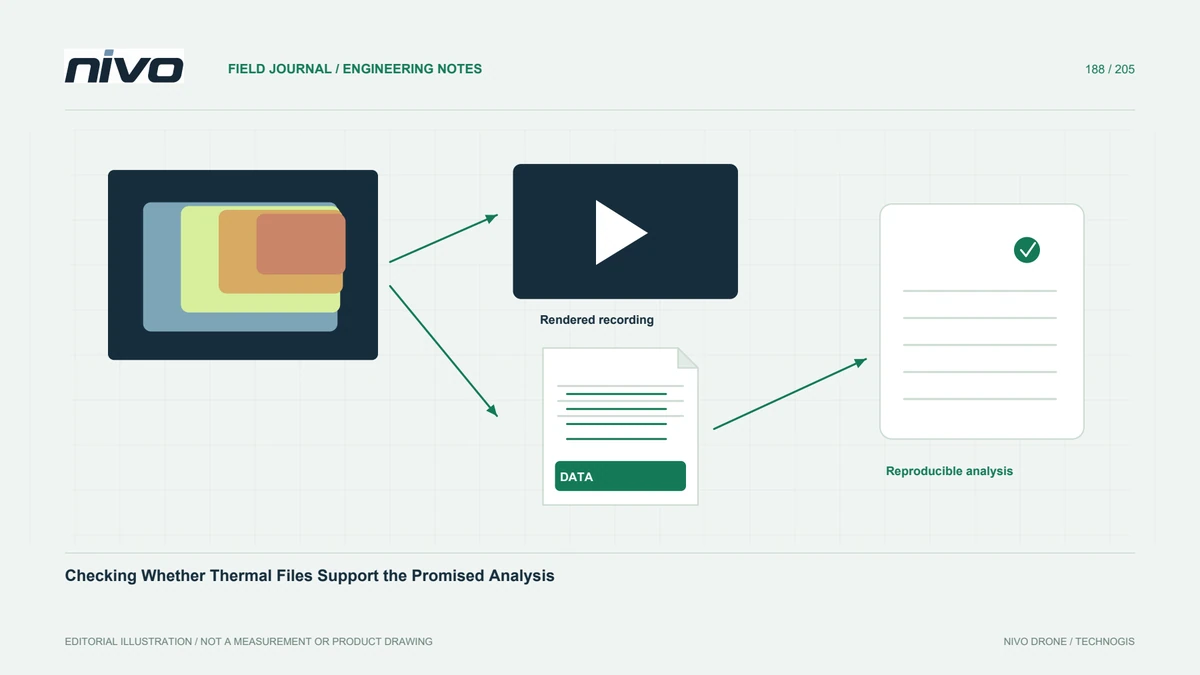
Accept thermal outputs through real sample files, metadata review, software import, parameter traceability, and a demonstrated report rather than a convincing live image.

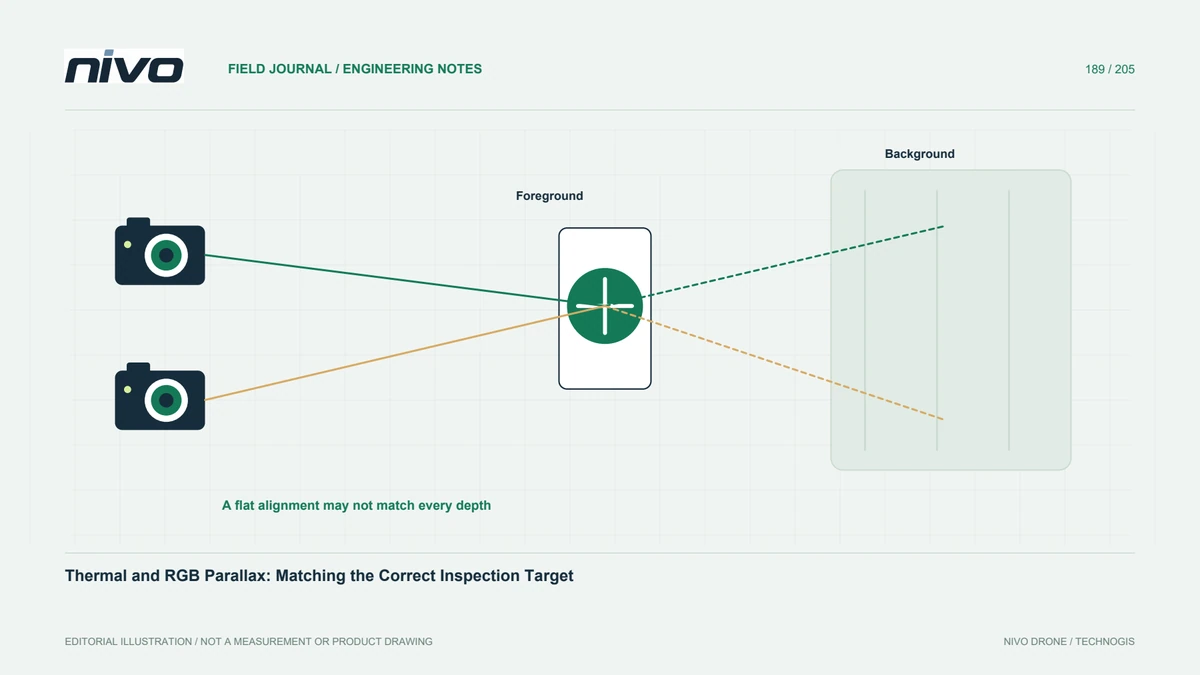
Check target correspondence between thermal and RGB views using original files, scene depth, viewing context, and explicit uncertainty instead of trusting screen overlays.

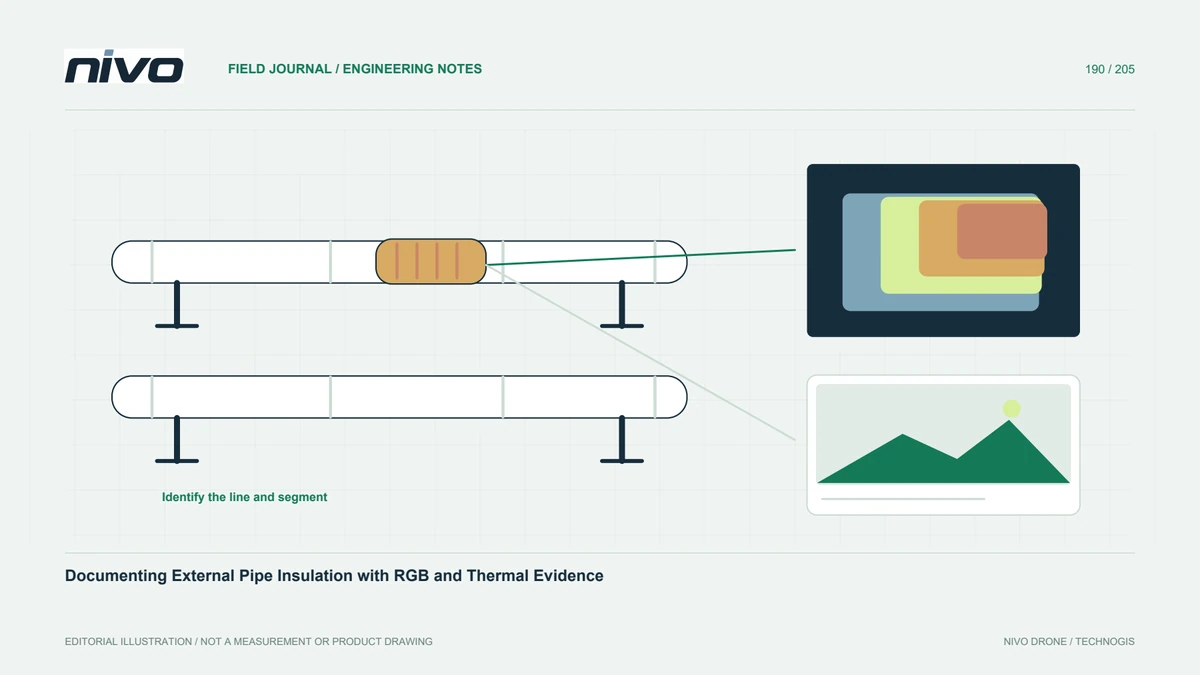
Organize pipe-insulation observations by line segment, visible surface, operating context, and verification question while keeping hidden-condition claims bounded.

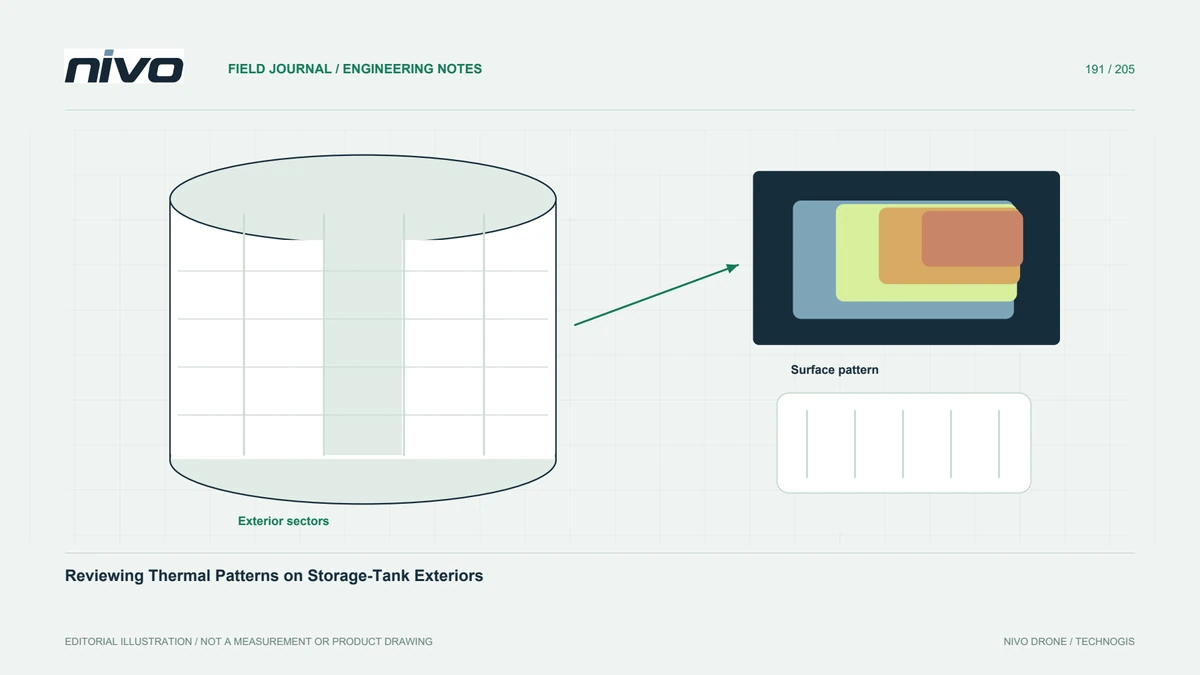
Document tank-surface patterns through stable sector identities, operating context, finish, reflections, and explicit verification needs rather than inferring hidden conditions.

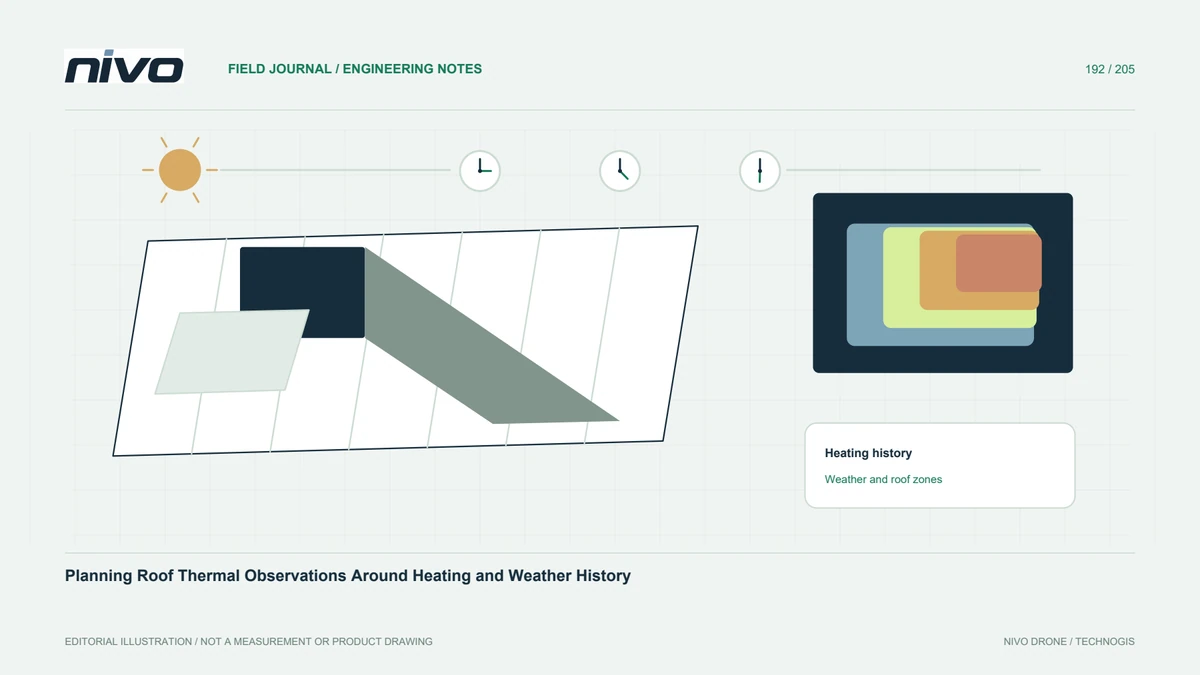
Design roof thermal timing from the building question, material history, prior heating, moisture context, and verification method instead of a universal flight-hour rule.